

What is drawing attention
These subjects emerged from a review of recent reporting and primary announcements. Inclusion reflects observed news attention and relevance to building AI models. It is not a measured ranking of search demand, audience size, or market share.
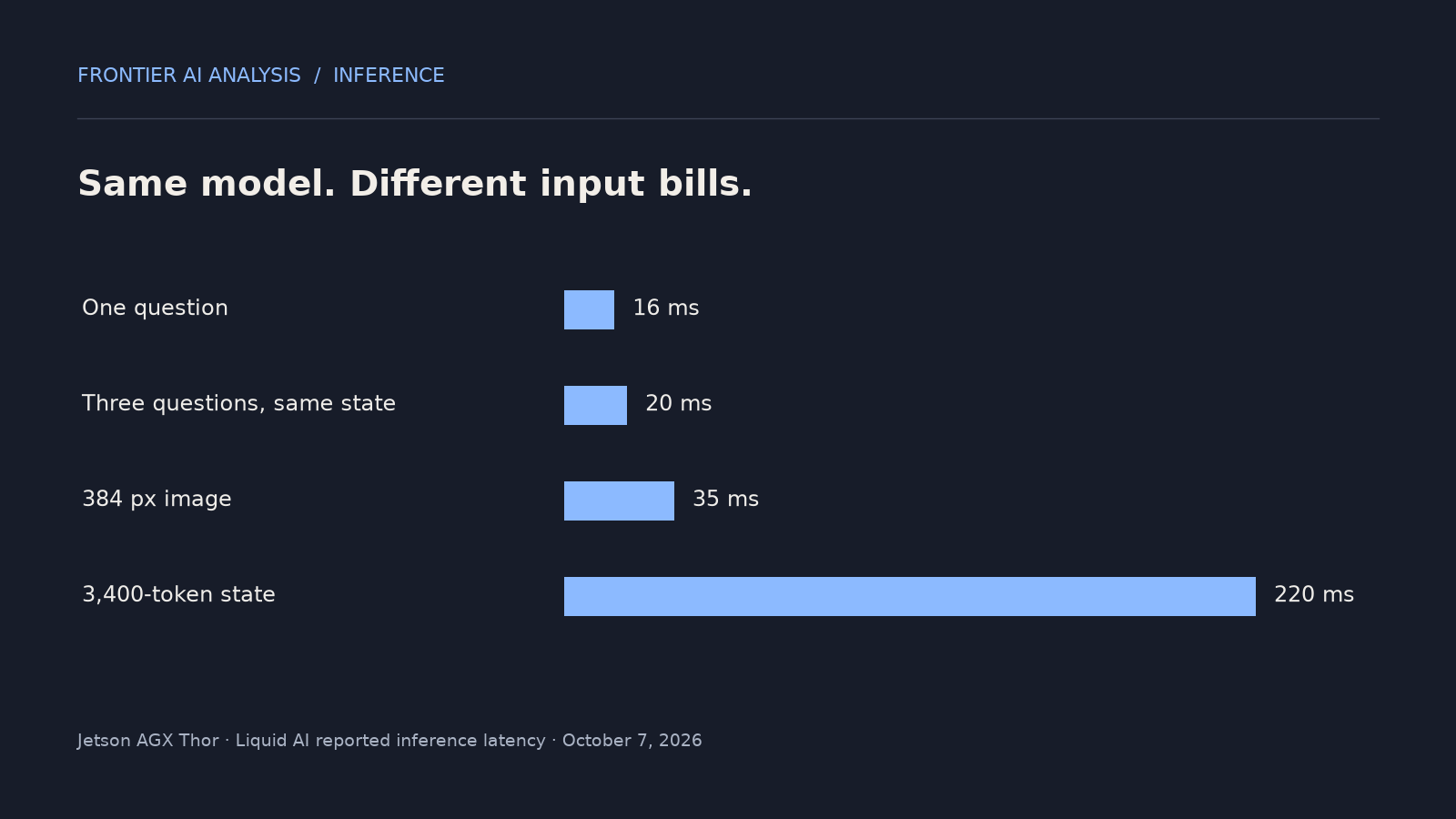
Liquid AI’s fast decisions still have to read the world
The revealing number in the d1 release is the small cost of asking three questions about the same scene.
Basis for selection: Selected for a concrete October development and a distinct physical-AI implication; not a measured popularity ranking.
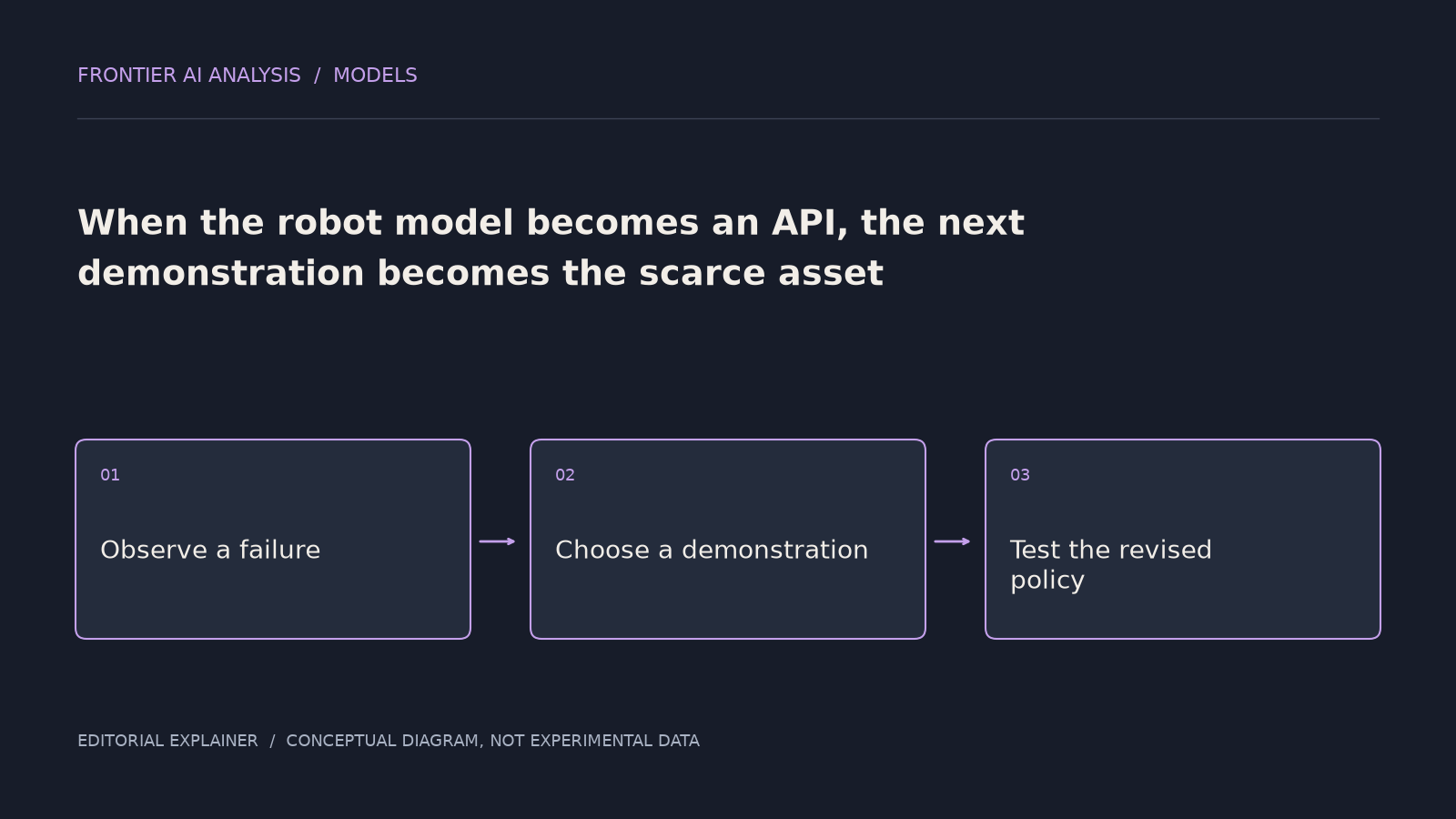
When the robot model becomes an API, the next demonstration becomes the scarce asset
Physical Intelligence’s beta shifts attention from obtaining a model to knowing exactly what to teach it next.
Basis for selection: Selected for a concrete October development and a distinct physical-AI implication; not a measured popularity ranking.
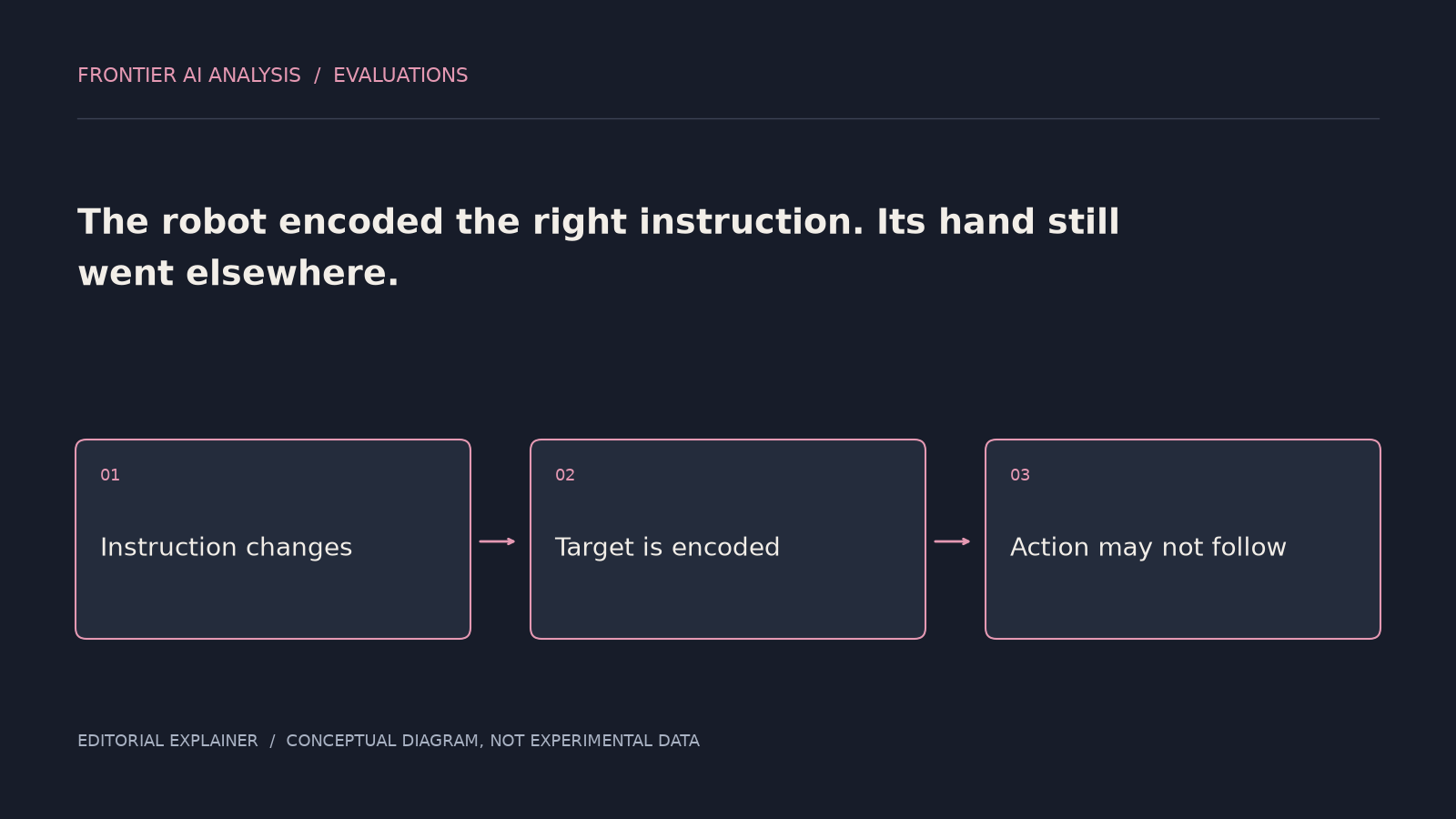
The robot encoded the right instruction. Its hand still went elsewhere.
A new study separates information inside a policy from information that actually governs its actions.
Basis for selection: Selected for a concrete October development and a distinct physical-AI implication; not a measured popularity ranking.
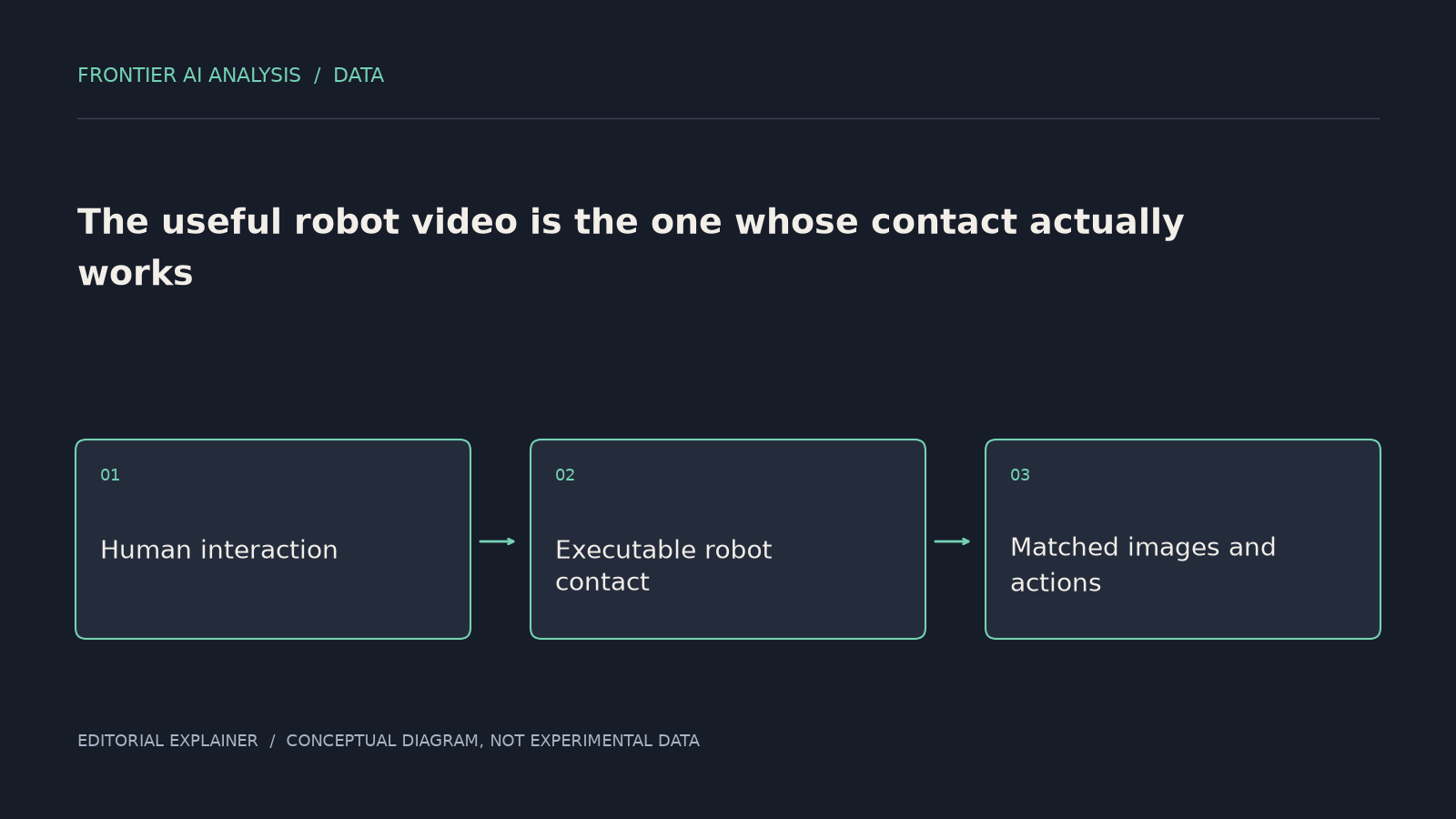
The useful robot video is the one whose contact actually works
EgoMatrix prioritises hand–object relationships over exact scene reconstruction, exposing a weakness in visual realism as a data-quality test.
Basis for selection: Selected for a concrete October development and a distinct physical-AI implication; not a measured popularity ranking.
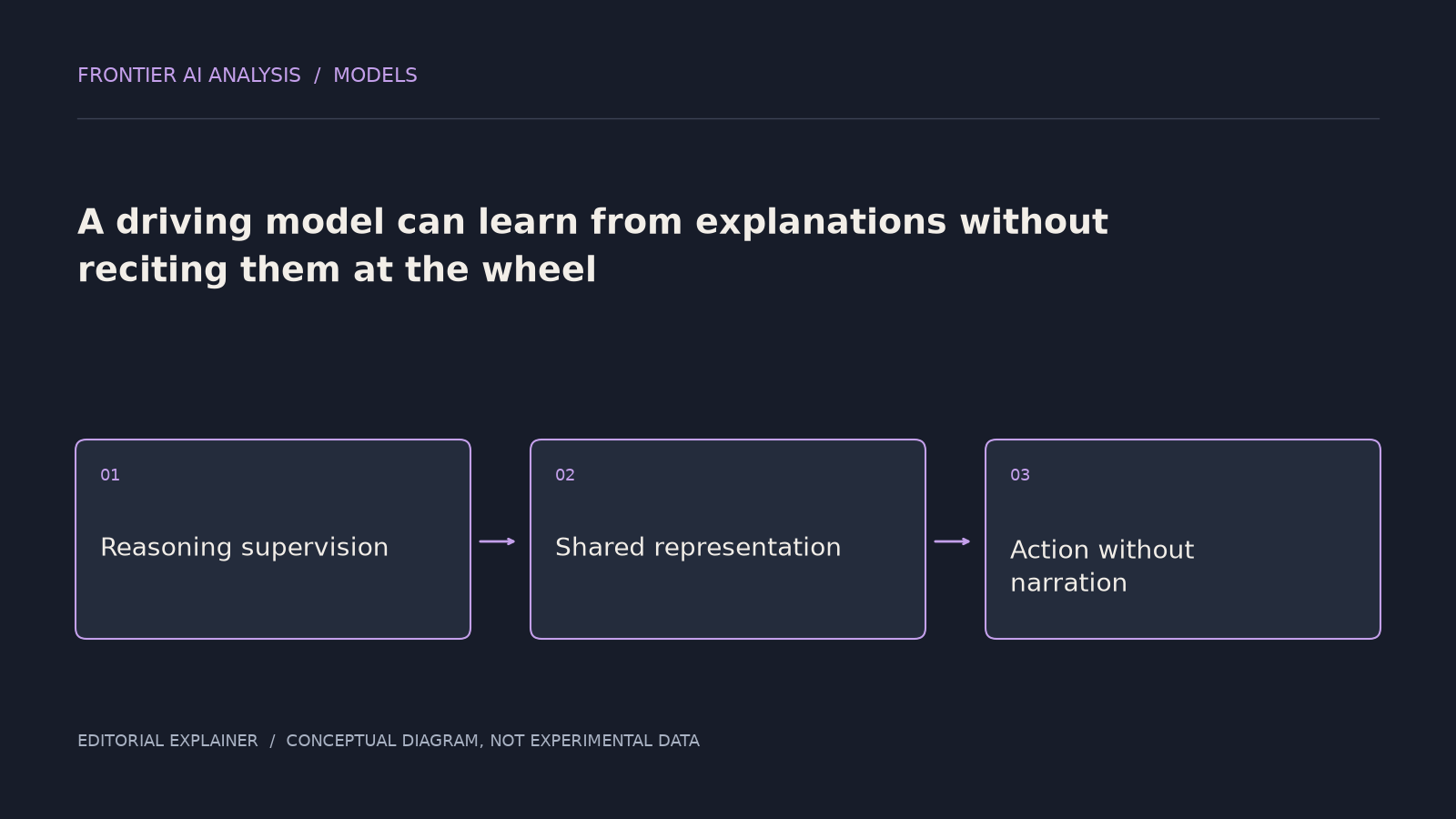
A driving model can learn from explanations without reciting them at the wheel
AUGUstus puts reasoning supervision into training while allowing action-only inference. That also changes what an explanation can prove.
Basis for selection: Selected for a concrete October development and a distinct physical-AI implication; not a measured popularity ranking.
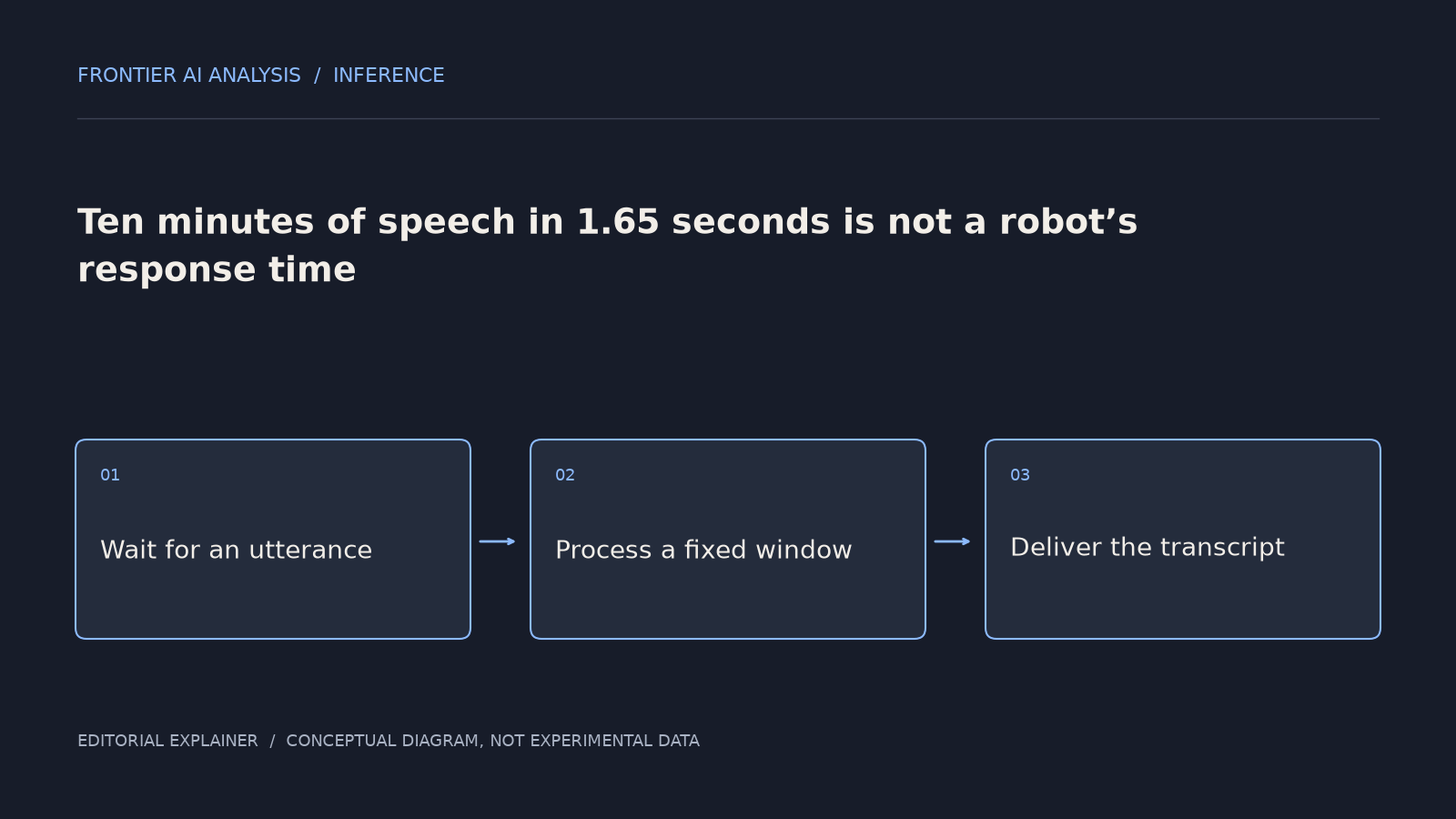
Ten minutes of speech in 1.65 seconds is not a robot’s response time
QVAC’s new on-device recogniser makes the distinction between bulk throughput, short-utterance latency and first-load cost unusually visible.
Basis for selection: Selected for a concrete October development and a distinct physical-AI implication; not a measured popularity ranking.
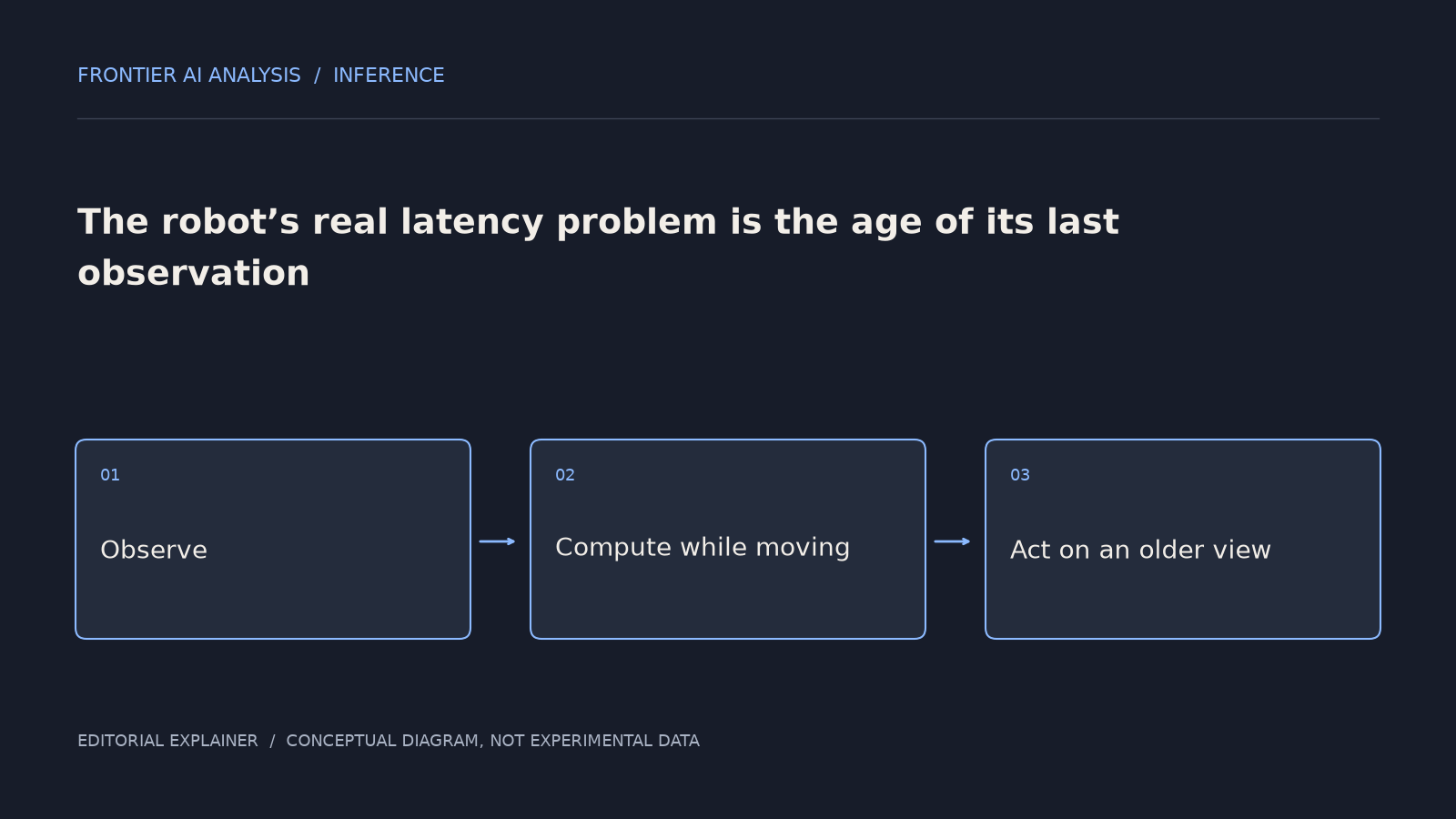
The robot’s real latency problem is the age of its last observation
A KAIST workload study shows why faster inference and more aggressive action overlap do not produce a single best operating point.
Basis for selection: Selected for a concrete October development and a distinct physical-AI implication; not a measured popularity ranking.
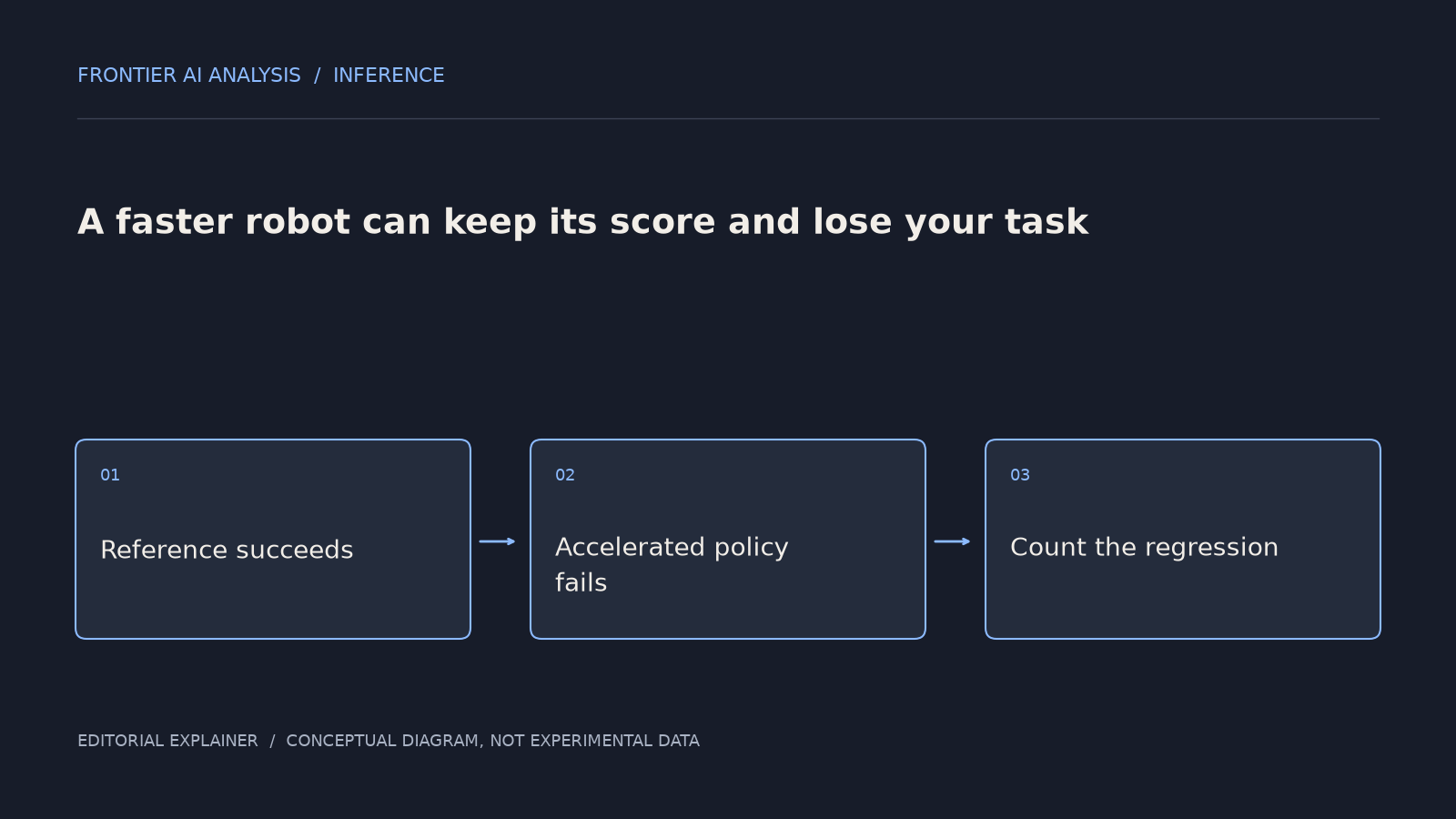
A faster robot can keep its score and lose your task
CARE measures the episodes broken by acceleration, revealing regressions that an unchanged average success rate can hide.
Basis for selection: Selected for a concrete October development and a distinct physical-AI implication; not a measured popularity ranking.
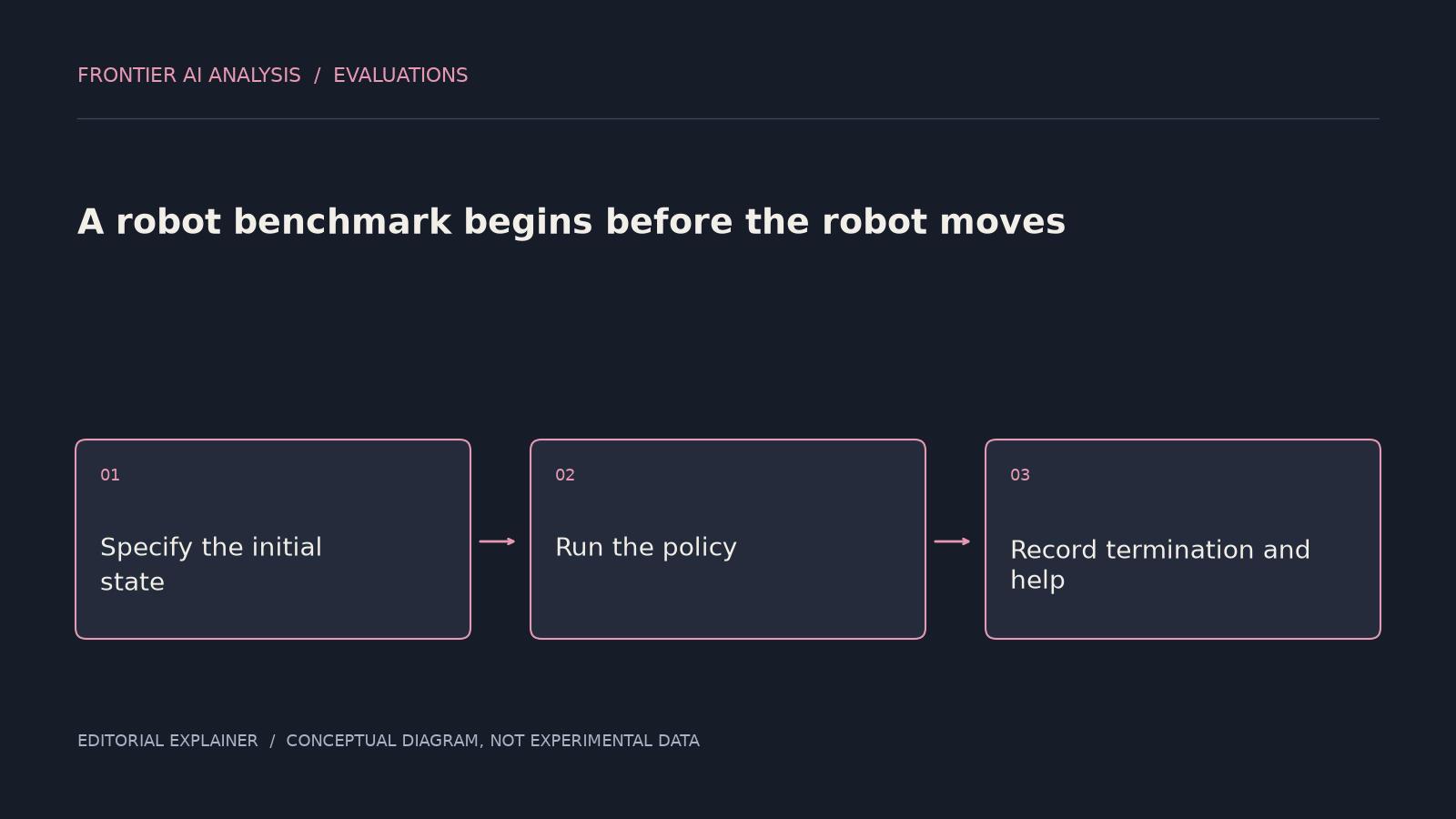
A robot benchmark begins before the robot moves
Inspect Robots makes setup and termination programmable. Those unglamorous steps help determine what a performance score means.
Basis for selection: Selected for a concrete October development and a distinct physical-AI implication; not a measured popularity ranking.
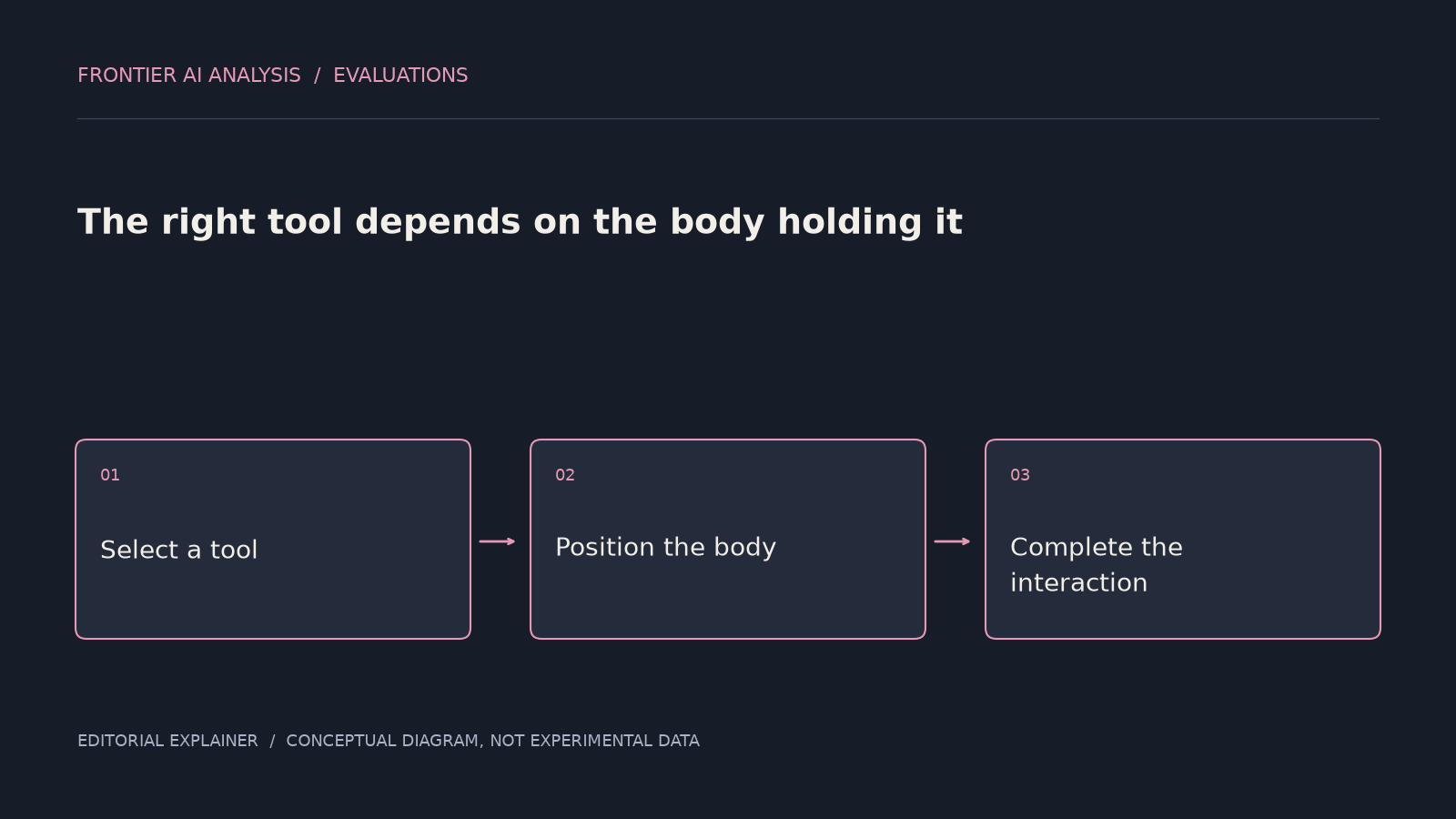
The right tool depends on the body holding it
HumanoidToolBench separates recognising a useful tool from carrying, positioning and successfully using it.
Basis for selection: Selected for a concrete October development and a distinct physical-AI implication; not a measured popularity ranking.
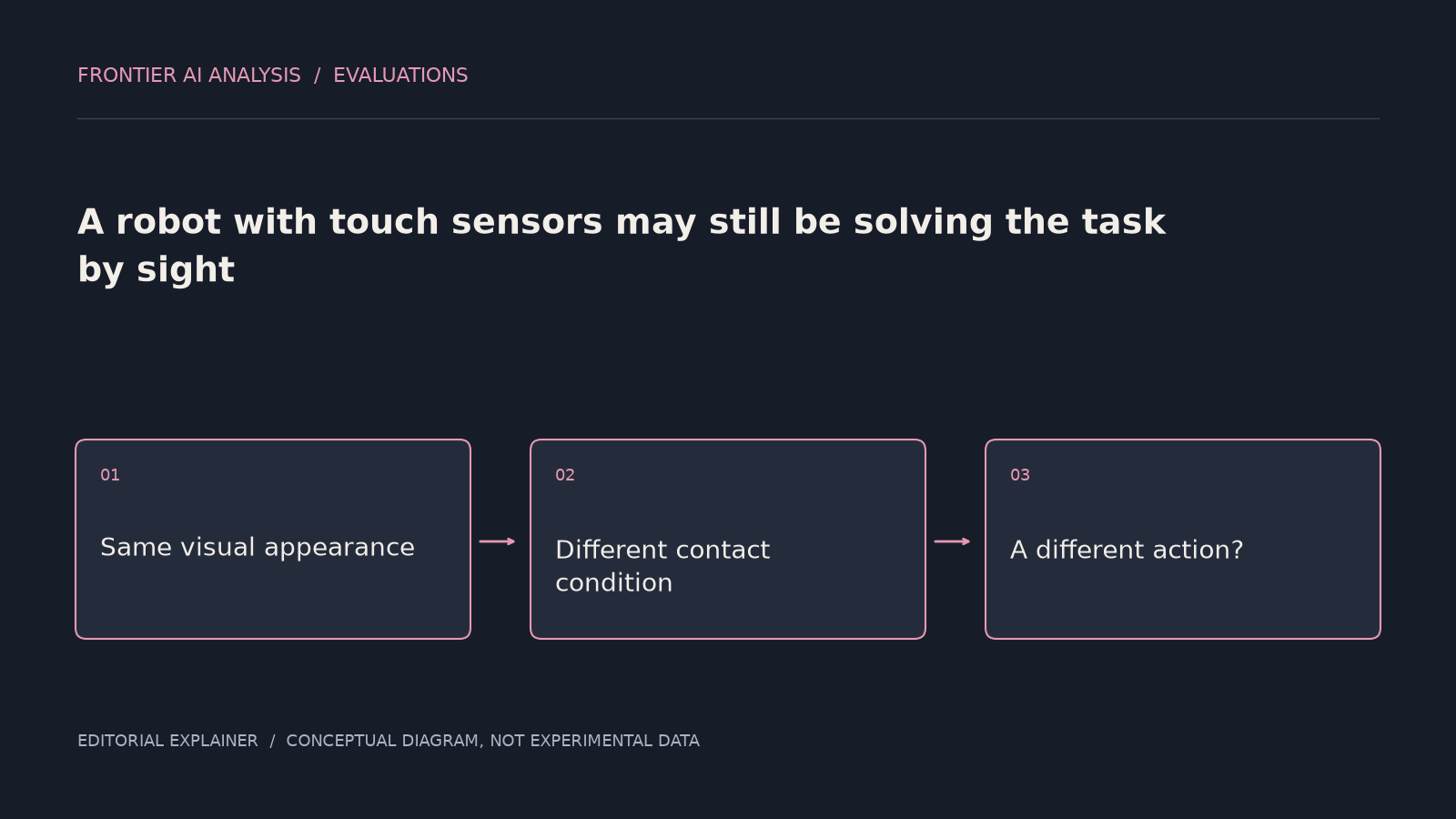
A robot with touch sensors may still be solving the task by sight
OpenViTac’s paired simulation and physical tasks make it possible to ask what tactile input contributes, rather than just whether it is present.
Basis for selection: Selected for a concrete October development and a distinct physical-AI implication; not a measured popularity ranking.
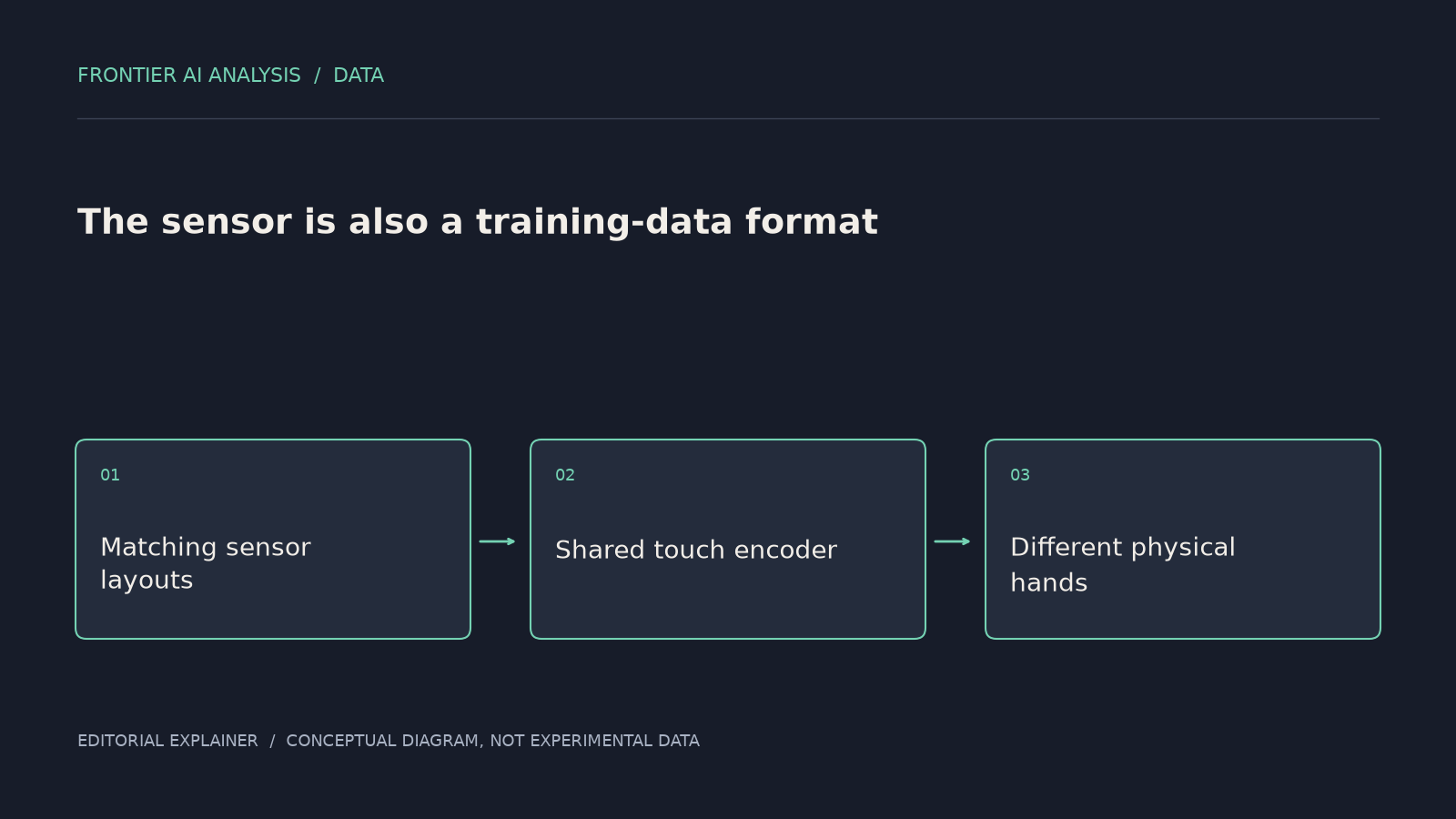
The sensor is also a training-data format
SoTa gives human and robot hands matching tactile layouts, moving part of the alignment problem into hardware.
Basis for selection: Selected for a concrete October development and a distinct physical-AI implication; not a measured popularity ranking.
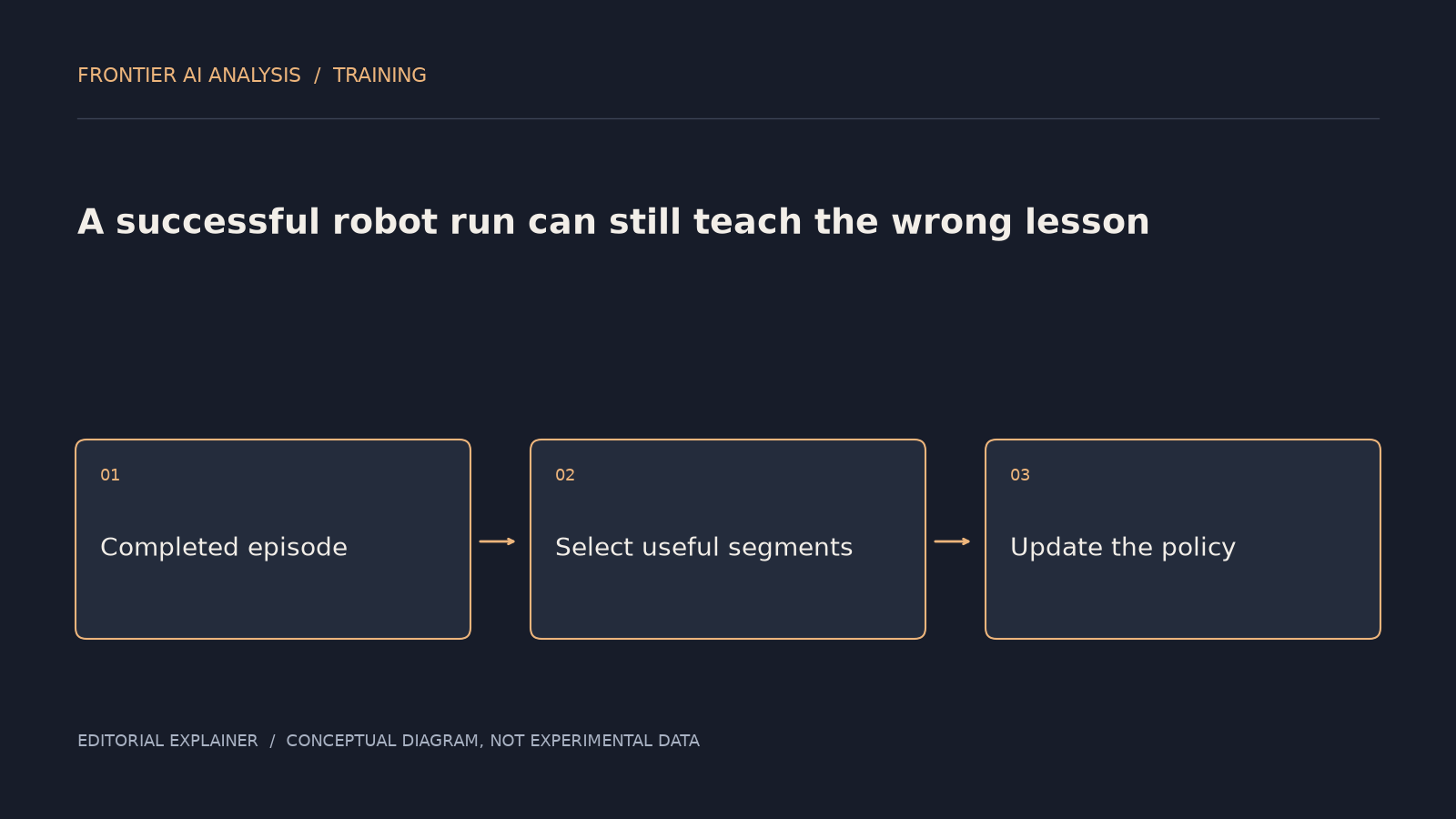
A successful robot run can still teach the wrong lesson
Evo-RL selects useful segments within successful experience, challenging the habit of treating an entire completed episode as an expert demonstration.
Basis for selection: Selected for a concrete October development and a distinct physical-AI implication; not a measured popularity ranking.
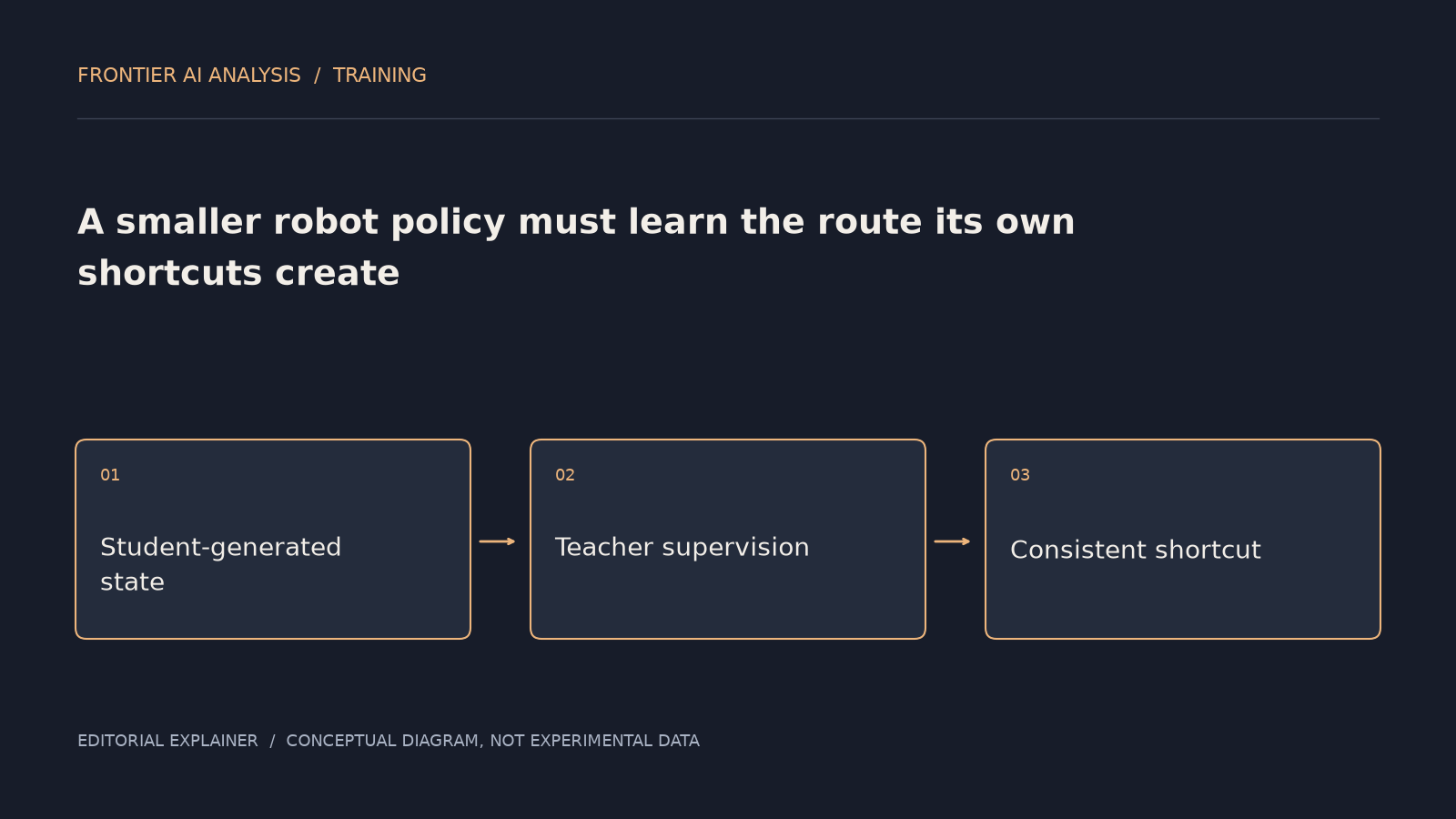
A smaller robot policy must learn the route its own shortcuts create
FastOPD reduces both model size and sampling steps. Its on-policy supervision addresses the states introduced by that compression.
Basis for selection: Selected for a concrete October development and a distinct physical-AI implication; not a measured popularity ranking.
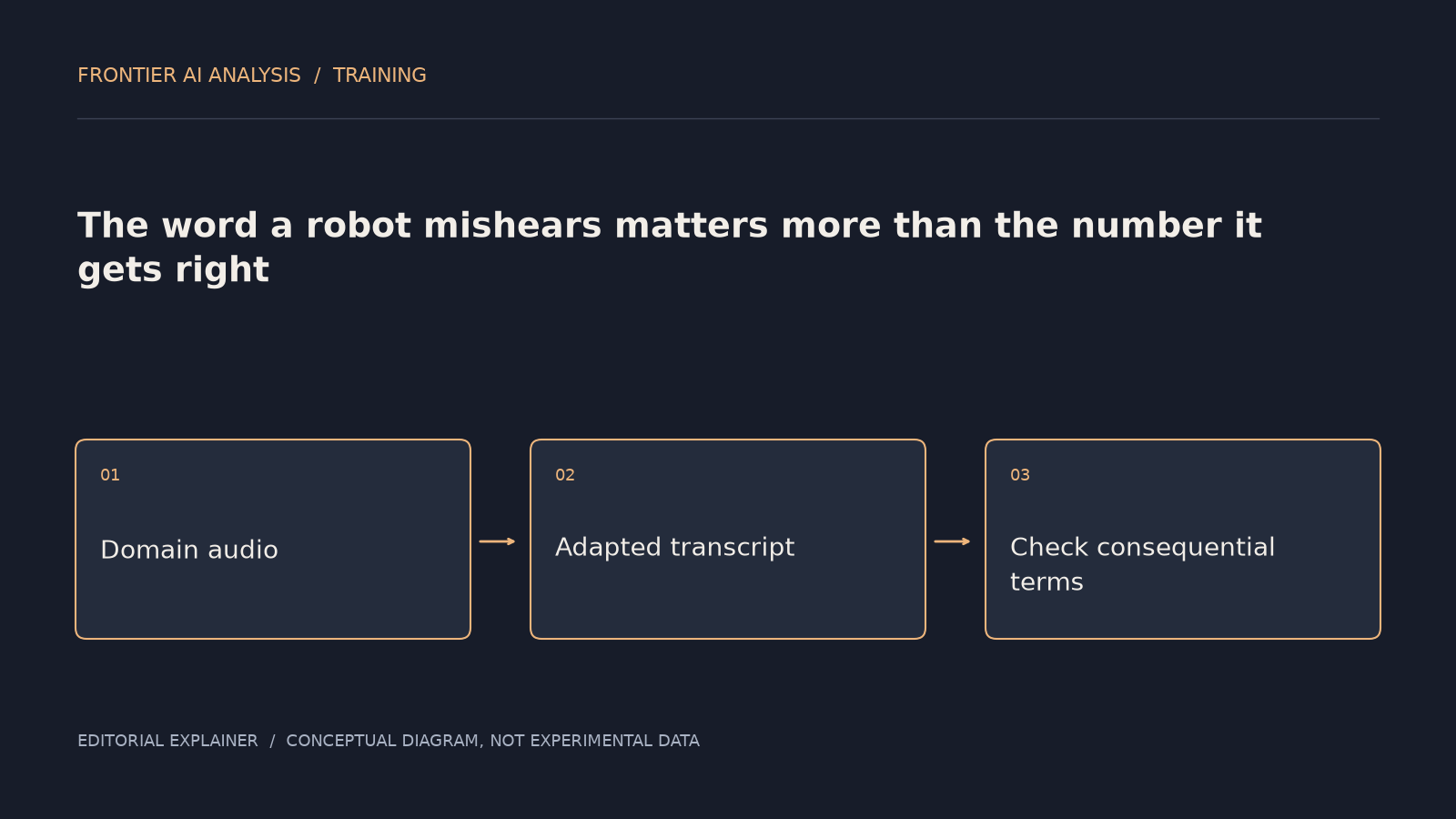
The word a robot mishears matters more than the number it gets right
NVIDIA’s aviation speech study shows the value of domain adaptation—and why aggregate transcription scores are only the start for physical interfaces.
Basis for selection: Selected for a concrete October development and a distinct physical-AI implication; not a measured popularity ranking.
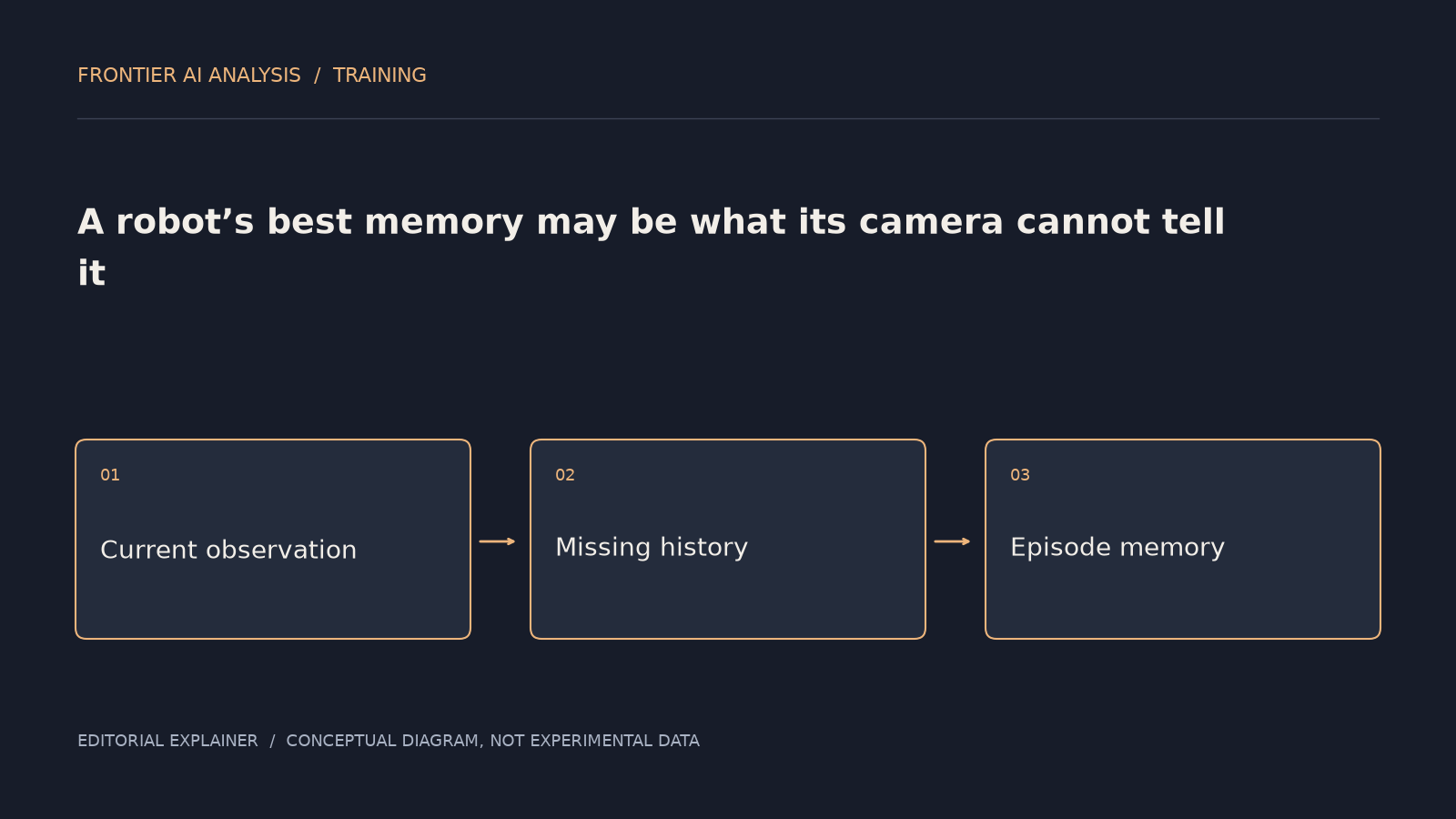
A robot’s best memory may be what its camera cannot tell it
TTT-RM treats memory as the missing part of the present, rather than a larger archive of the past.
Basis for selection: Selected for a concrete October development and a distinct physical-AI implication; not a measured popularity ranking.
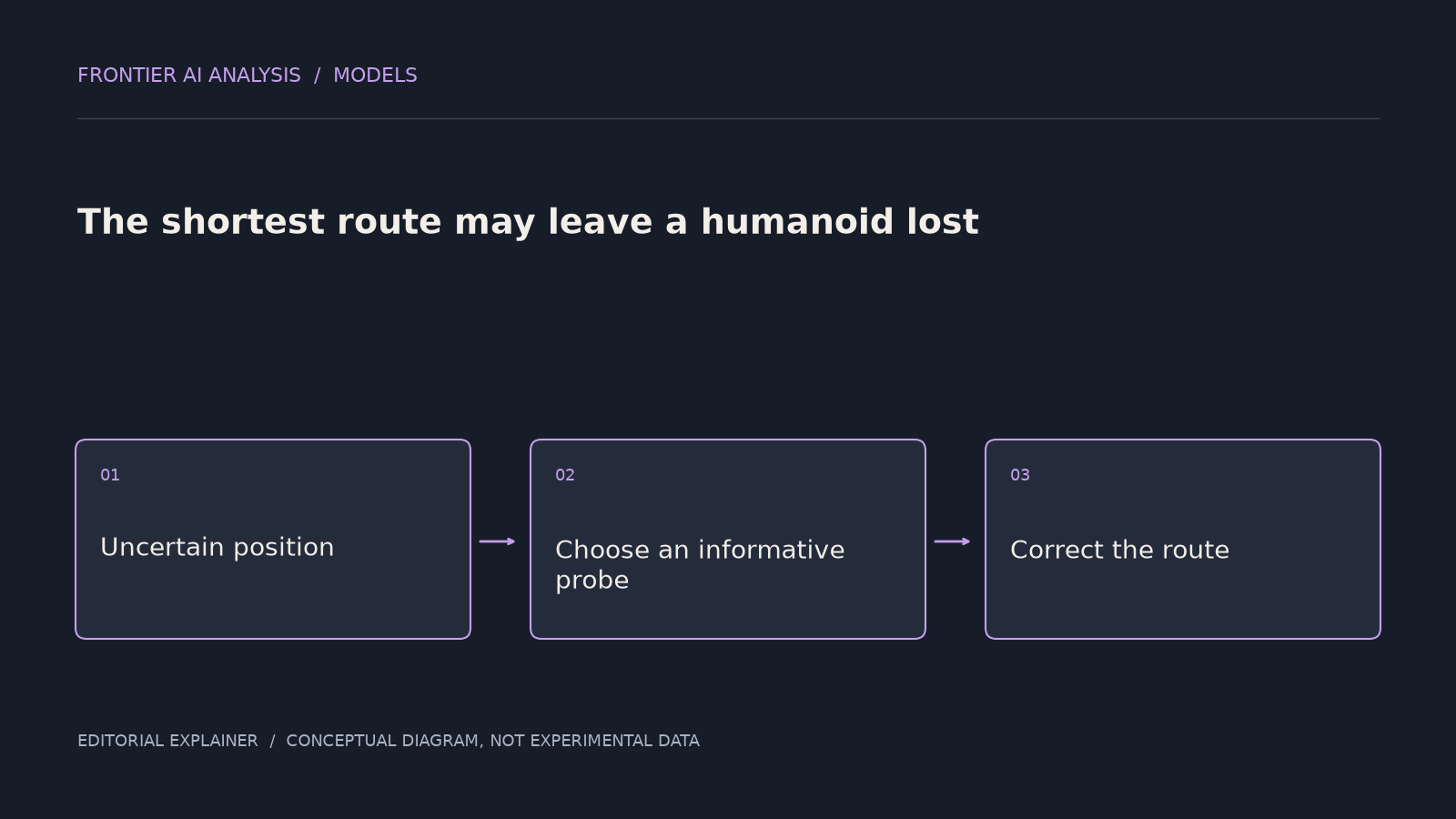
The shortest route may leave a humanoid lost
TapNav plans contact with the surroundings because a slightly longer walk can produce a better estimate of position.
Basis for selection: Selected for a concrete October development and a distinct physical-AI implication; not a measured popularity ranking.
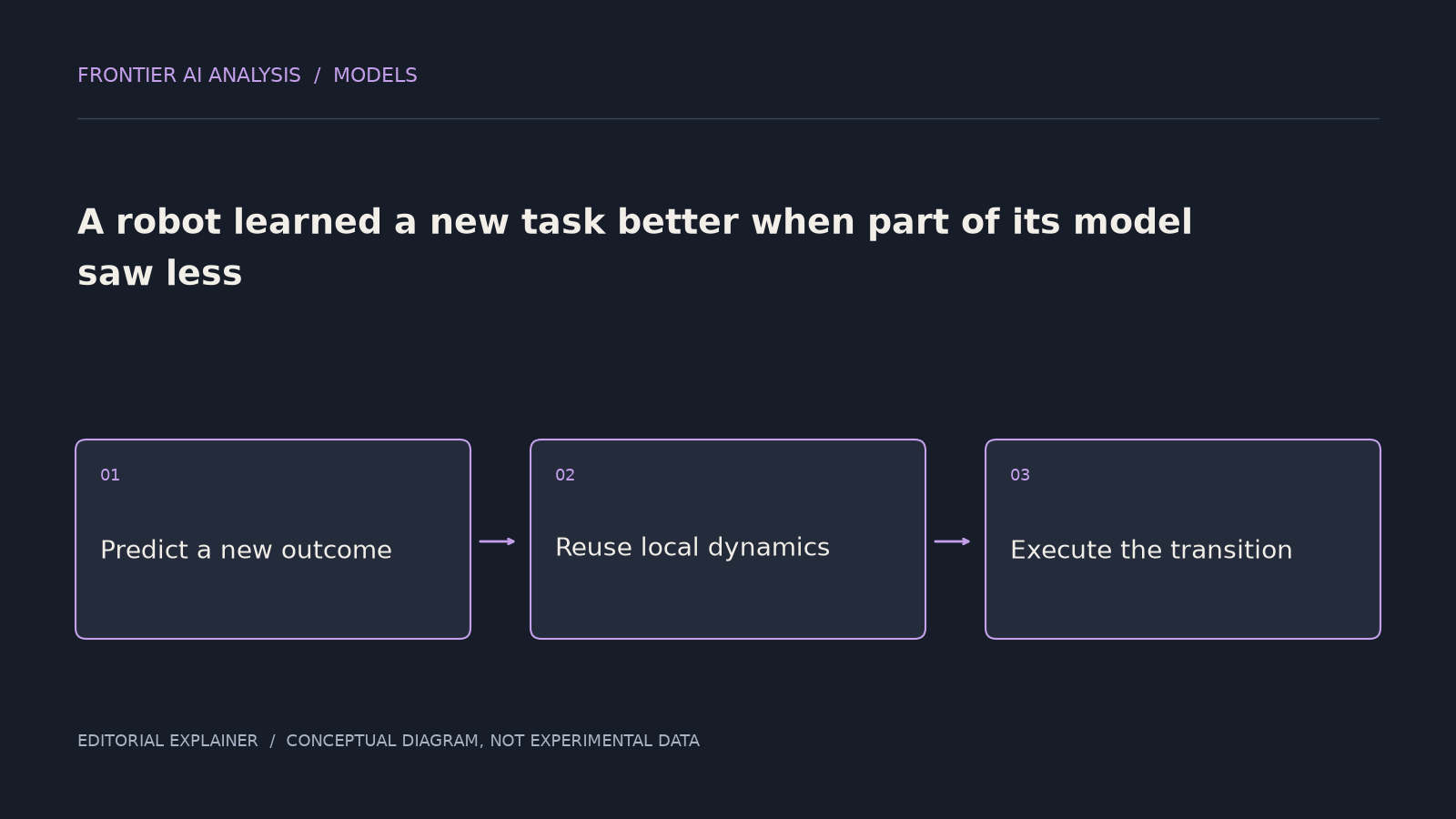
A robot learned a new task better when part of its model saw less
An OpenWAM experiment suggests that stripping context from a motor component can make it easier to reuse.
Basis for selection: Selected for a concrete October development and a distinct physical-AI implication; not a measured popularity ranking.
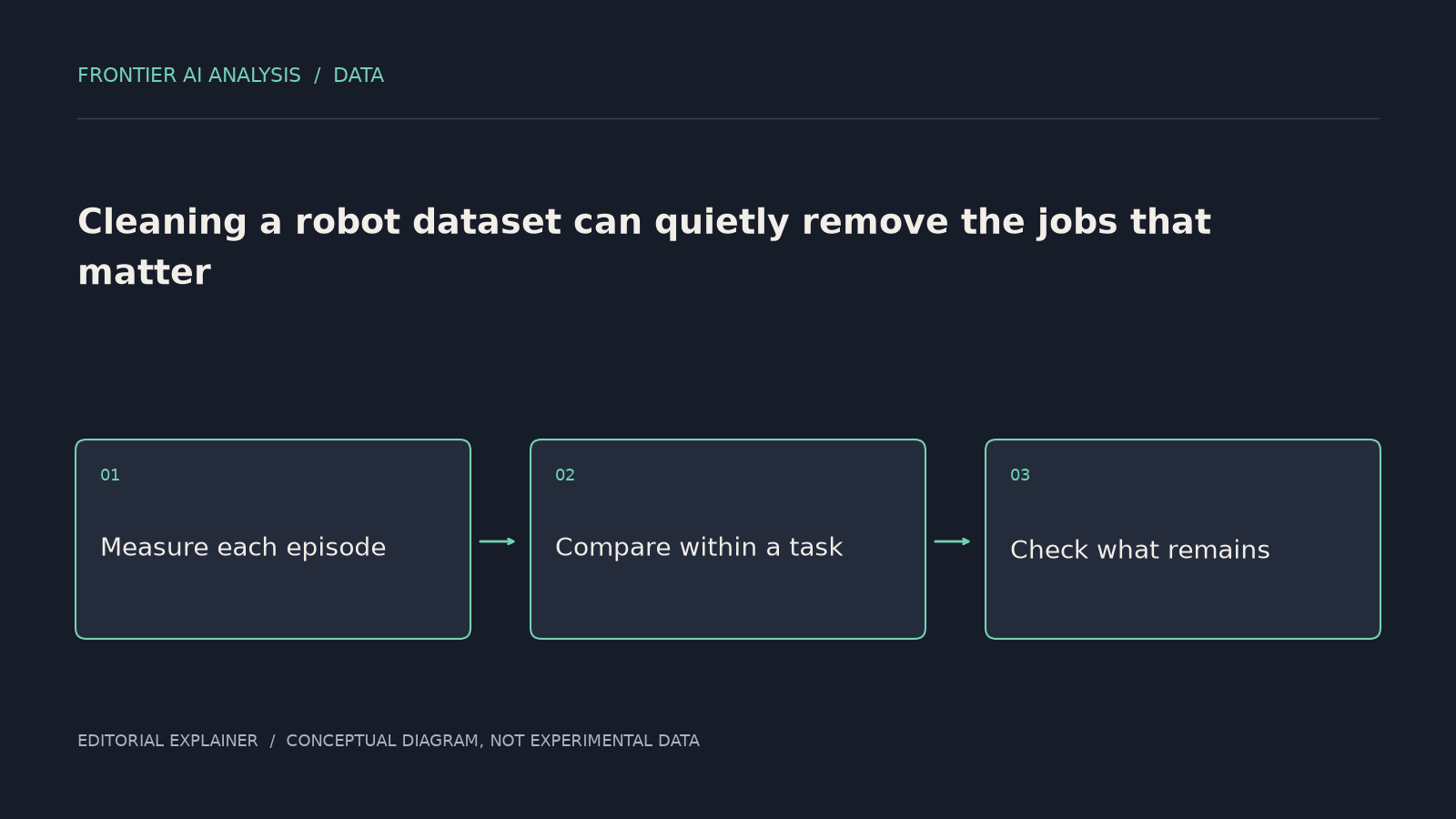
Cleaning a robot dataset can quietly remove the jobs that matter
A practical LeRobot guide exposes a trap in ranking demonstrations: difficult work can look like bad data.
Basis for selection: Selected for a concrete October development and a distinct physical-AI implication; not a measured popularity ranking.
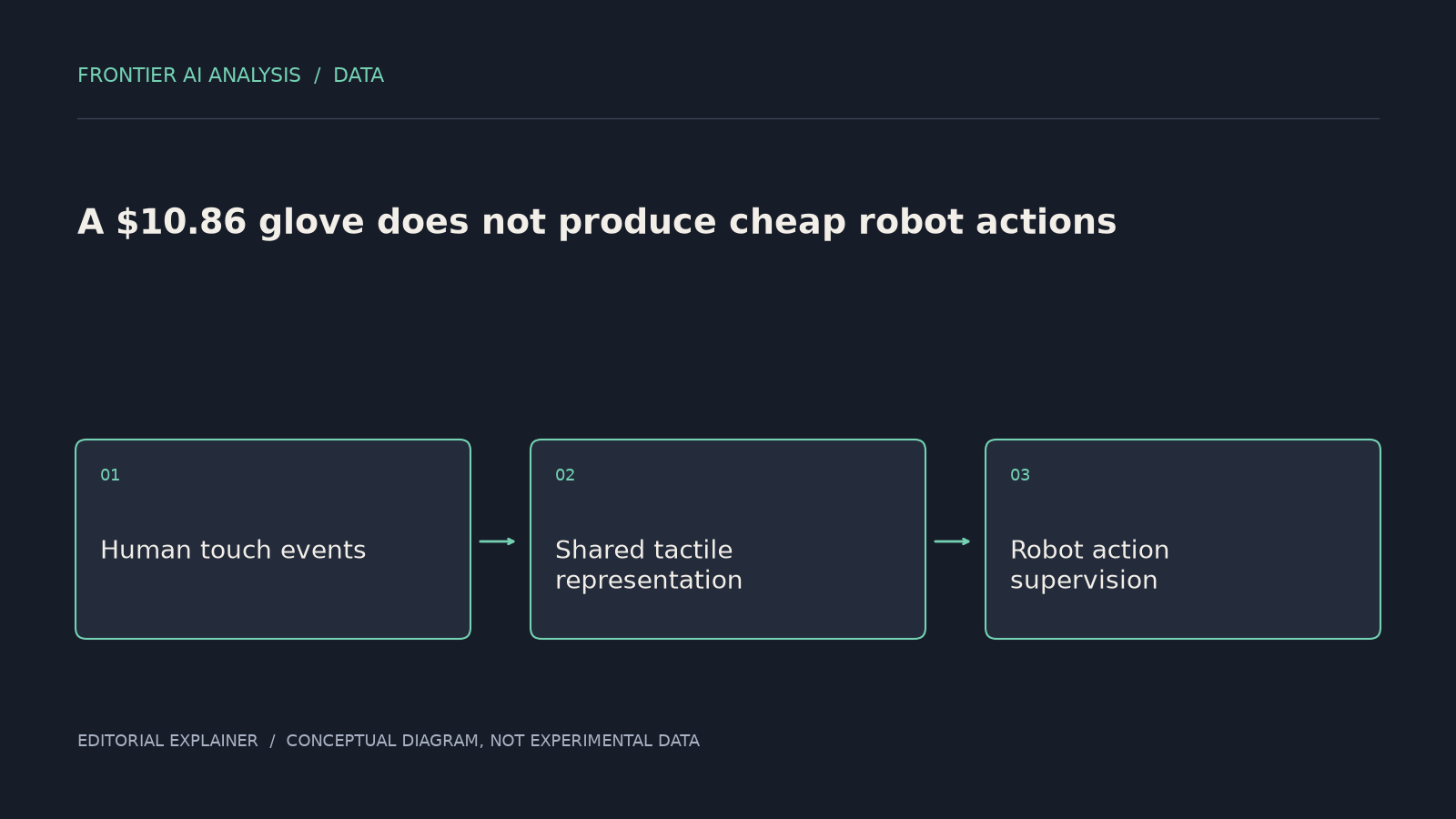
A $10.86 glove does not produce cheap robot actions
TACROSS makes human touch easier to collect while keeping robot demonstrations responsible for action supervision.
Basis for selection: Selected for a concrete October development and a distinct physical-AI implication; not a measured popularity ranking.