The price of the glove is the easy part of the TACROSS story. The difficult part is deciding what its readings mean to a different hand.
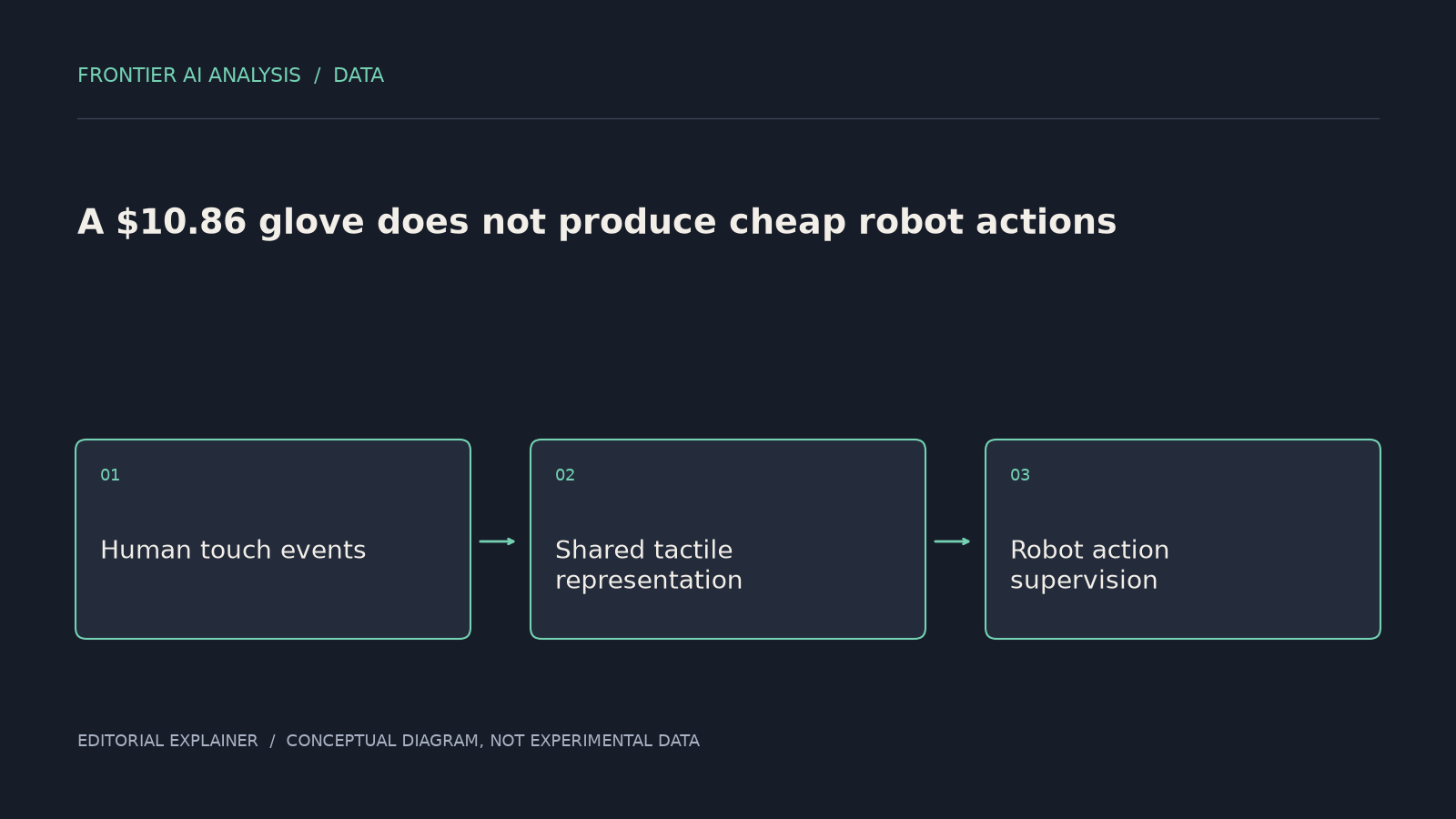
The October 8 paper describes a $10.86 piezoresistive glove with 285 sensing points. Rather than matching its raw channels directly to robot sensors, TACROSS aligns contact events in a shared representation. Robot demonstrations remain the sole source of ground-truth action supervision; human recordings help representation learning and supply confidence-weighted auxiliary targets. The authors evaluate four manipulation tasks and describe a future release of more than 150 hours of tactile recordings.
The low hardware price makes collection attractive. The separation of supervision makes the method interesting. It recognises that sensing a human interaction and knowing which robot action should reproduce it are different kinds of evidence.
A sensor reading has no universal unit of meaning
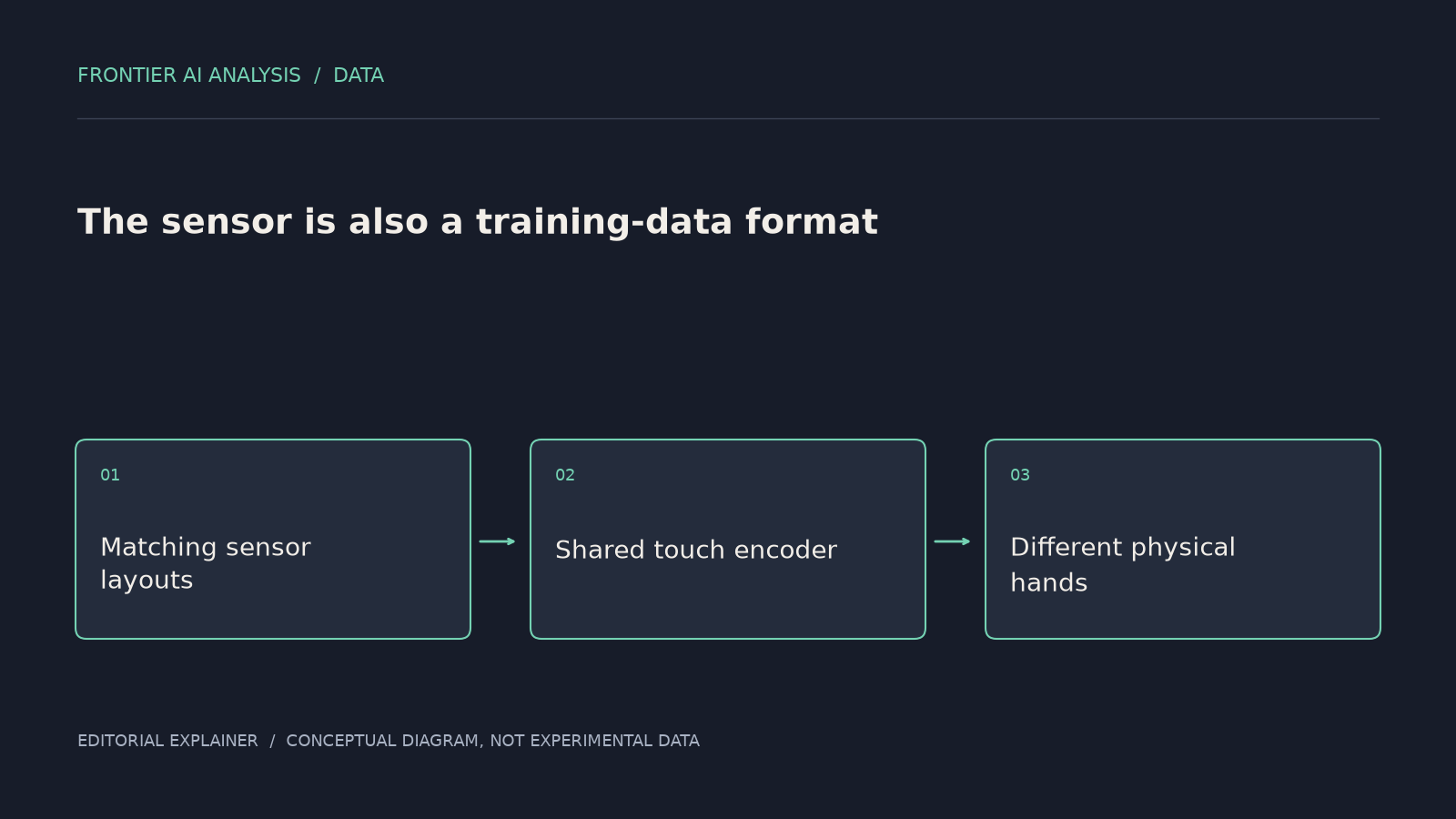
Two sensors touching the same object need not produce comparable signals. Their placement, sensitivity and physical construction can differ. A high reading on one glove may not correspond to a high reading on another device, let alone to the same contact geometry.
Trying to align channels directly can therefore spend model capacity learning a translation that is partly meaningless. An event-level description offers another route: identify what happened in the interaction, then learn how each sensor expresses it.
There is a familiar software analogy. Two databases can record the same event using different field layouts. Matching column positions is less useful than agreeing on what the record represents. For touch, however, the translation must also respect time: contact begins, shifts and ends while the hand moves.
Keep the action labels honest
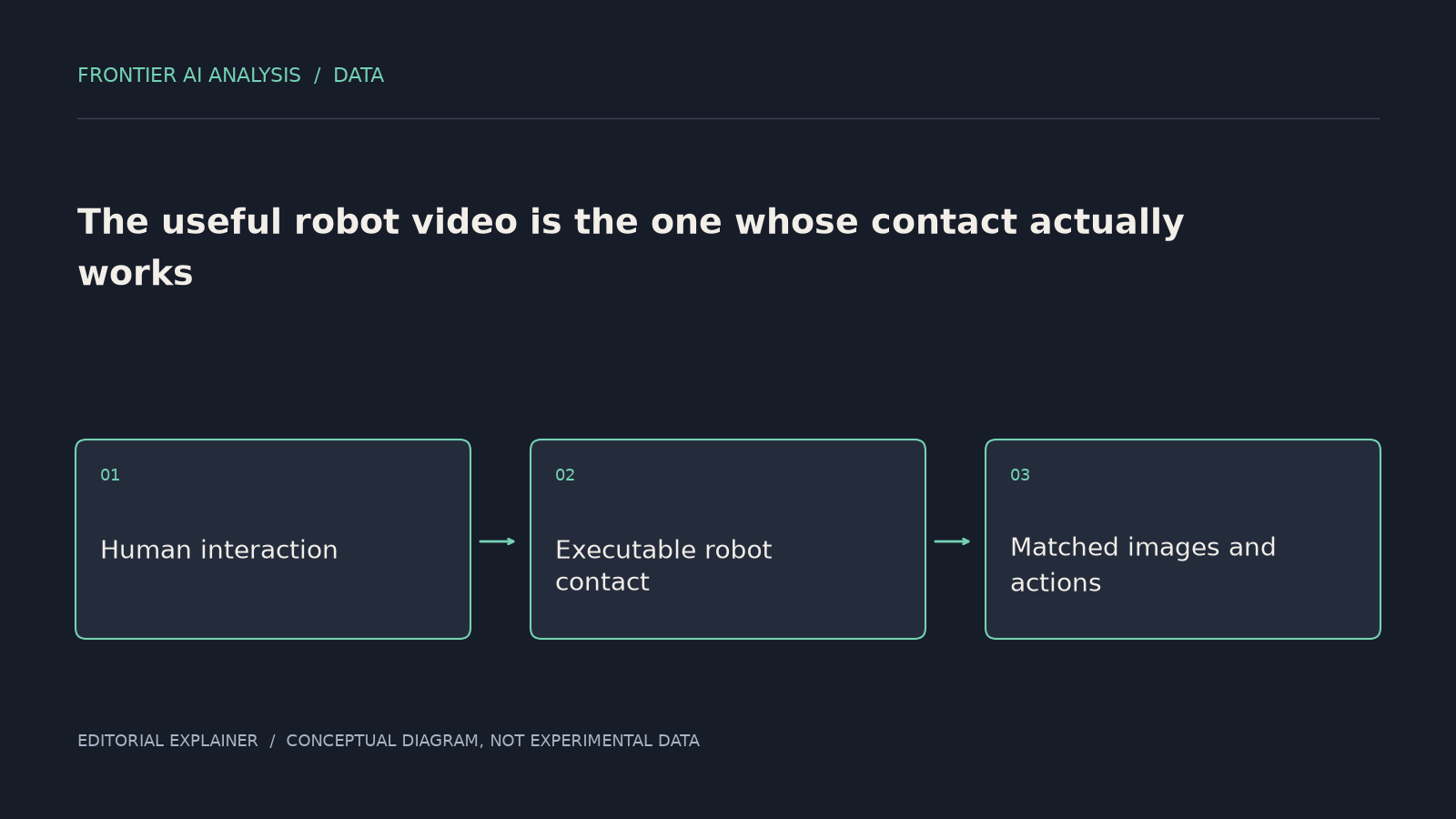
The temptation with inexpensive human recordings is to count every frame as another robot demonstration. That would overstate what has been collected. A human finger trajectory may be unreachable by a robot, and a human can apply forces that the robot cannot reproduce in the same way.
TACROSS’s division suggests a more careful accounting system. Report human sensory hours separately from robot action-labelled hours. Then measure what the human data contributes when the robot demonstration budget stays fixed. That comparison would tell a buyer more than a single combined dataset-size figure.
The same distinction should survive into failure analysis. A policy may recognise a contact event correctly and still choose an ineffective action. More glove data could improve the former without fixing the latter. The next collection round should depend on which part failed.
Cheap sensors can expand the supply of observations dramatically. They do not repeal embodiment. The valuable question is how much expensive robot supervision a new source of human data makes more effective, not how many hours can be placed under the heading “robot training data.”
References
Questions, news tips or corrections? Contact [email protected].