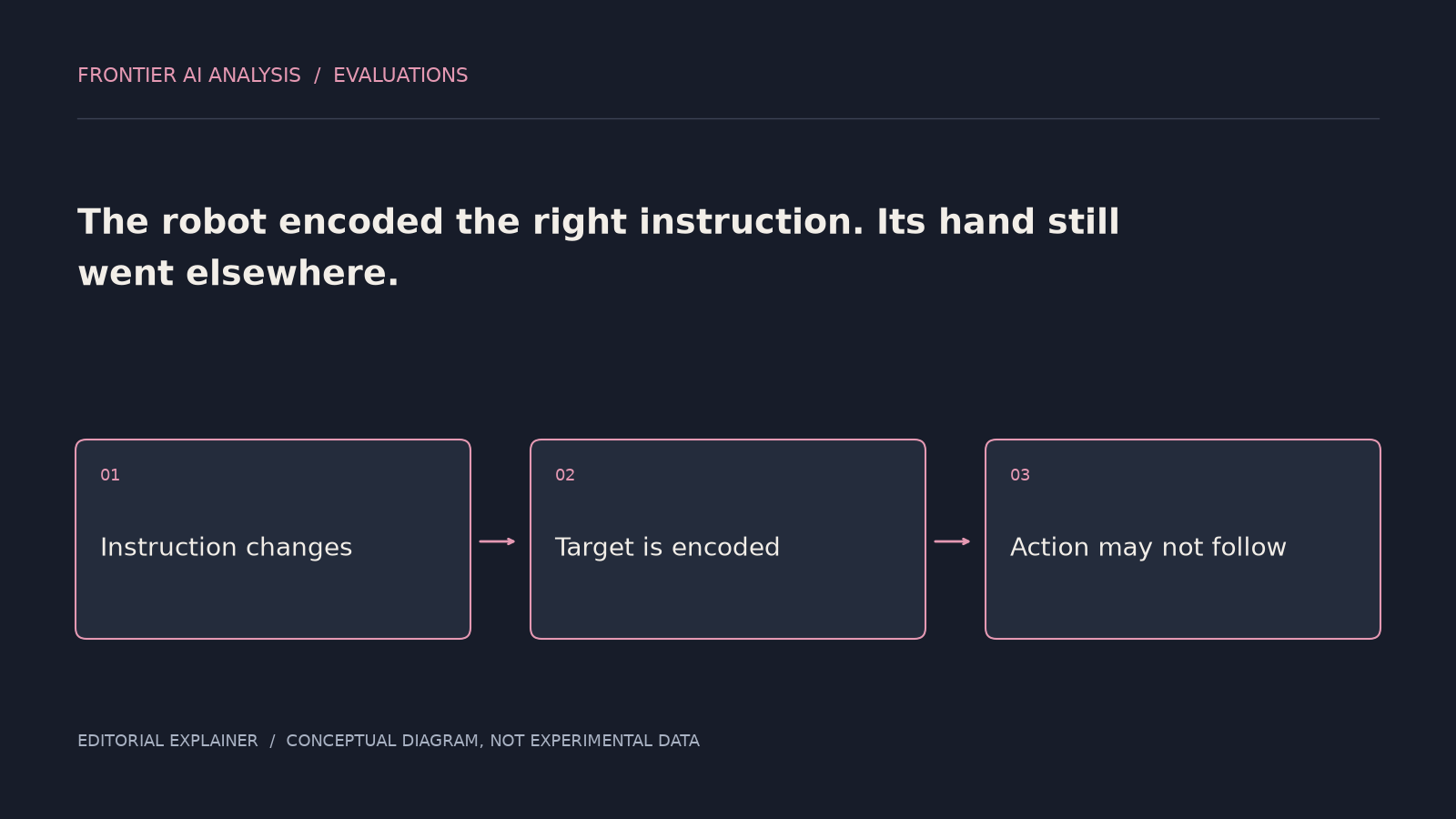
A tool can be the obvious answer to a question and still be a poor choice for the robot asked to use it.
HumanoidToolBench, posted October 1, evaluates tool selection alongside manipulation and, where needed, locomotion. Its 18 tasks span three scenarios, three execution levels and two tool-set modes. The accompanying ToolBook contains 3,100 demonstrations from simulation and a Unitree G1. The researchers find substantial gaps between selecting an appropriate tool and completing the task.
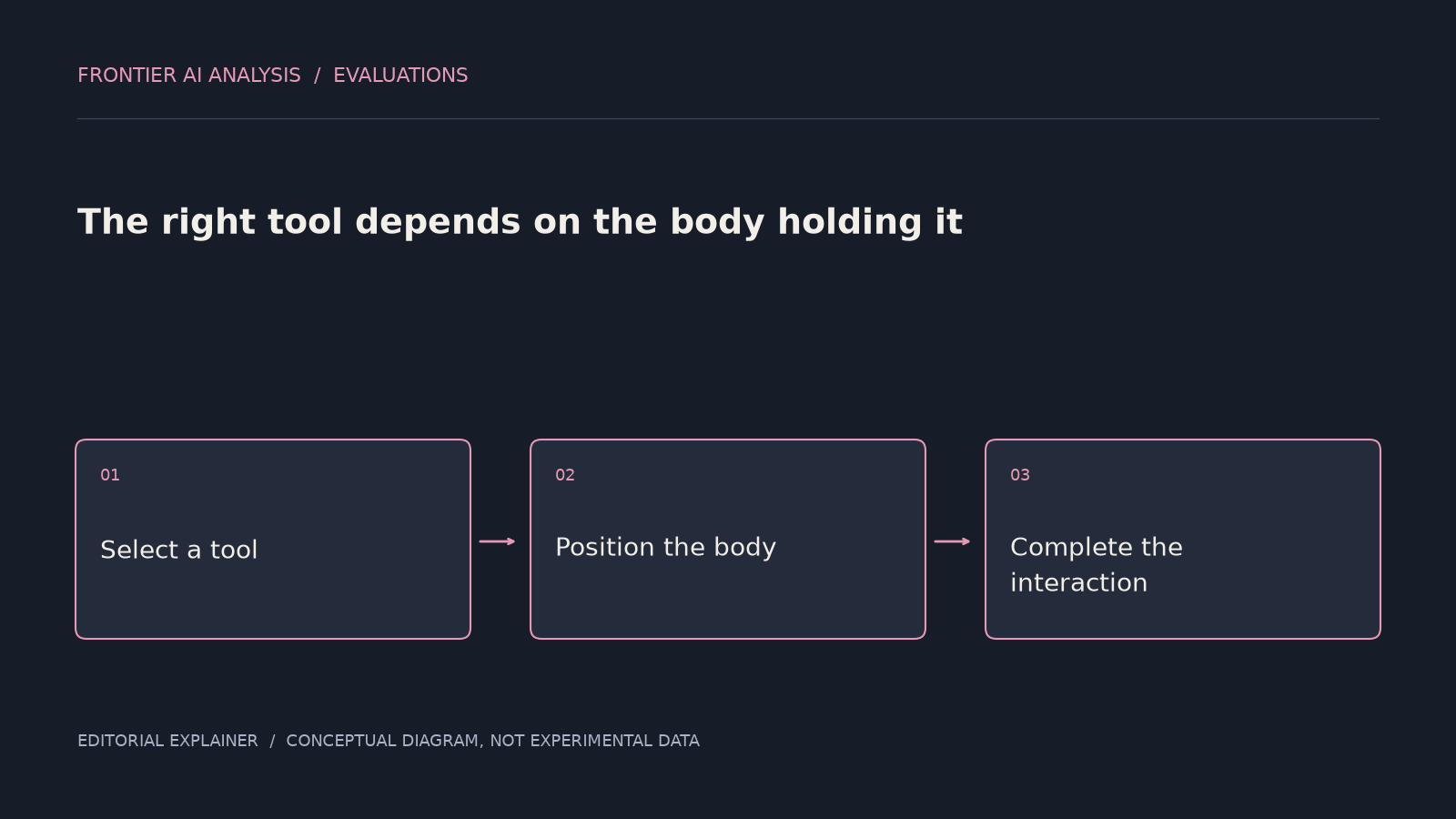
That gap suggests something more specific than “robots struggle with tools.” The meaning of appropriate changes when the chooser has a particular body, balance controller and set of learned skills.
Affordance belongs to a relationship
Imagine a hypothetical choice between a long implement that reaches a target and a shorter one that requires stepping closer. A visual question-answering system may favour the long tool immediately. For a humanoid, its weight, grasp position and effect on balance could make the shorter tool easier to use successfully.
The object’s familiar function is only one input to the choice. The policy must also consider whether it can pick the tool up, carry it through the available space and place its working end correctly. Failure at any of those stages can make a semantically sensible choice operationally wrong.
This is why evaluating selection in isolation can overestimate useful tool knowledge. A robot may name the right category without possessing the physical sequence that gives the category meaning in the current task.
Let execution inform selection
One implication is that a selector should be tested against the capabilities of the executor it actually serves. If a manipulation policy improves, the set of useful tools may expand. If a gripper changes, a previously preferred tool may become awkward. A static list of correct selections can miss that dependency.
An informative evaluation would record where the chain breaks: selection, acquisition, transport, positioning or contact. It could also compare the nominally preferred tool with an alternative that the robot handles more reliably. These are proposed analyses, not additional benchmark results.
There is a training consequence as well. Demonstrations that begin with a tool already placed in the hand omit acquisition and setup. Such data can teach the final motion while leaving the robot unable to reach its starting condition. Reporting only the successful use segment would conceal that missing capability.
The broader point is that tool intelligence cannot be fully detached from embodiment. A hammer does not become useful merely because a model associates it with a nail. It becomes useful when this robot, from this position, can turn that association into a controlled interaction. The best choice may be the tool whose entire path to use the machine can actually complete.
References
Questions, news tips or corrections? Contact [email protected].