

 Inference
Liquid AI’s fast decisions still have to read the world
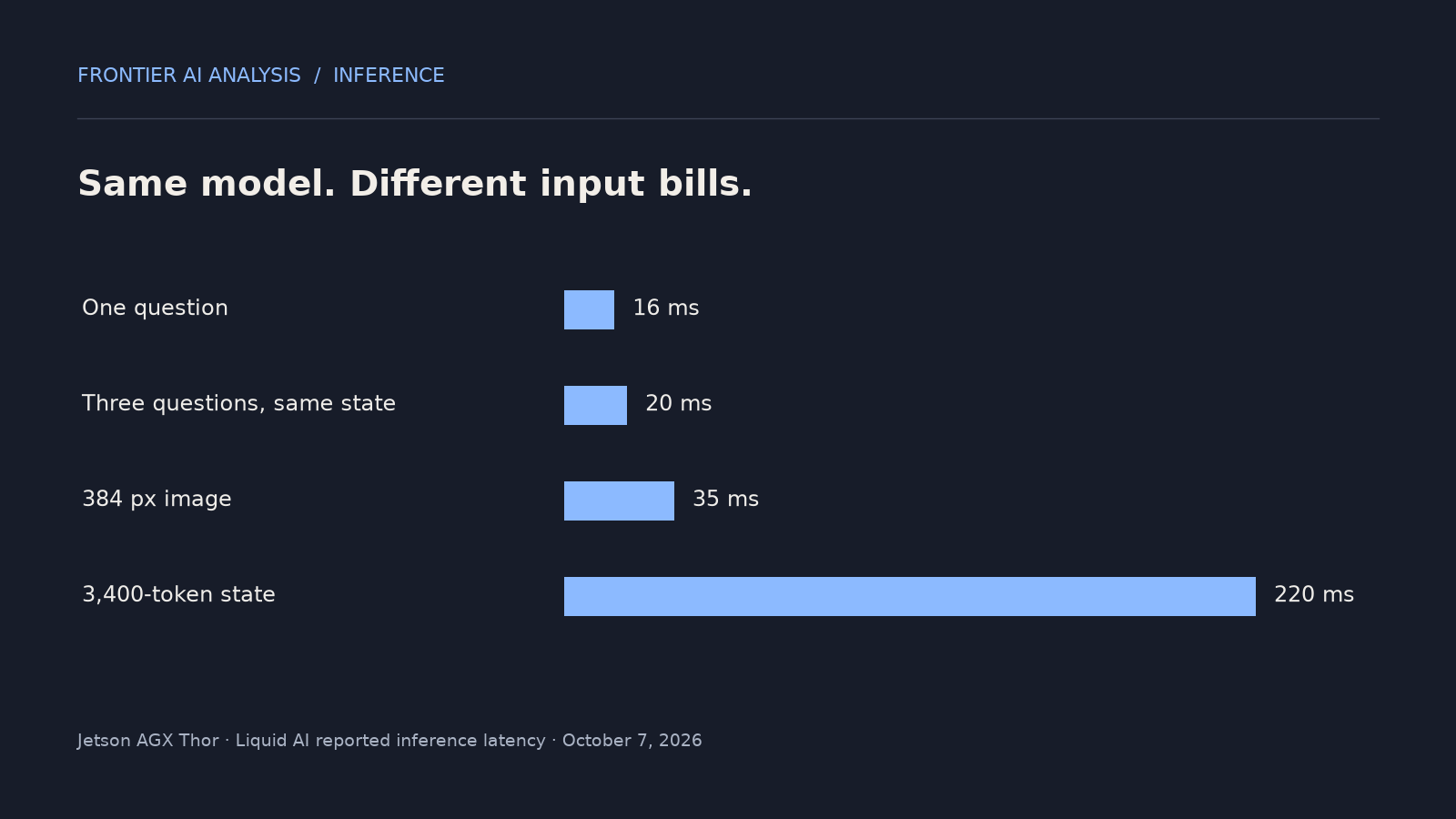
The revealing number in the d1 release is the small cost of asking three questions about the same scene.
How models reason and run: serving speed, memory, inference-time compute and cost per useful result.
Serving & runtime · Compression & efficiency · Inference-time reasoning
8 articles
InferenceThe revealing number in the d1 release is the small cost of asking three questions about the same scene.
 Inference
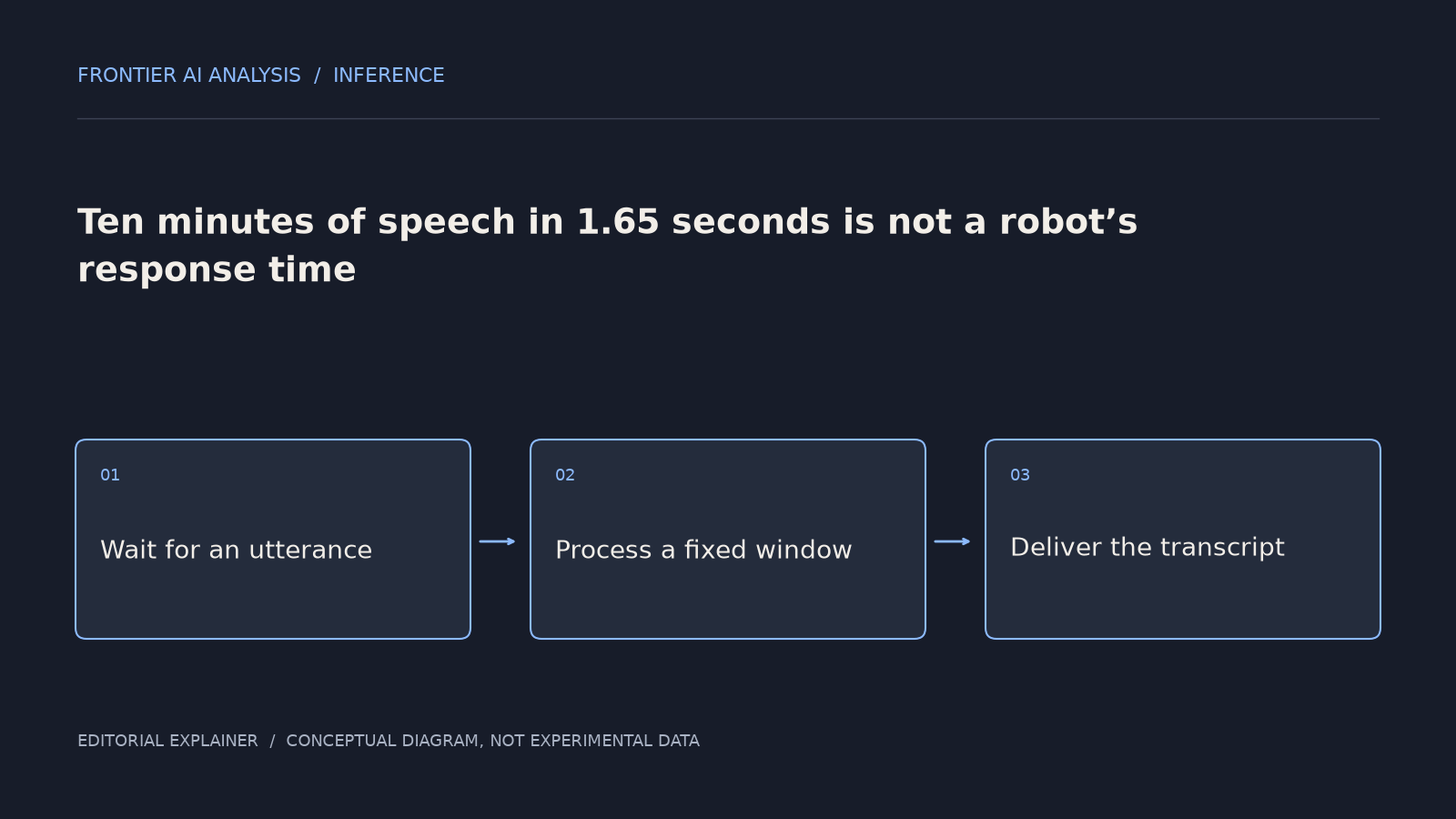
QVAC’s new on-device recogniser makes the distinction between bulk throughput, short-utterance latency and first-load cost unusually visible.
 Inference
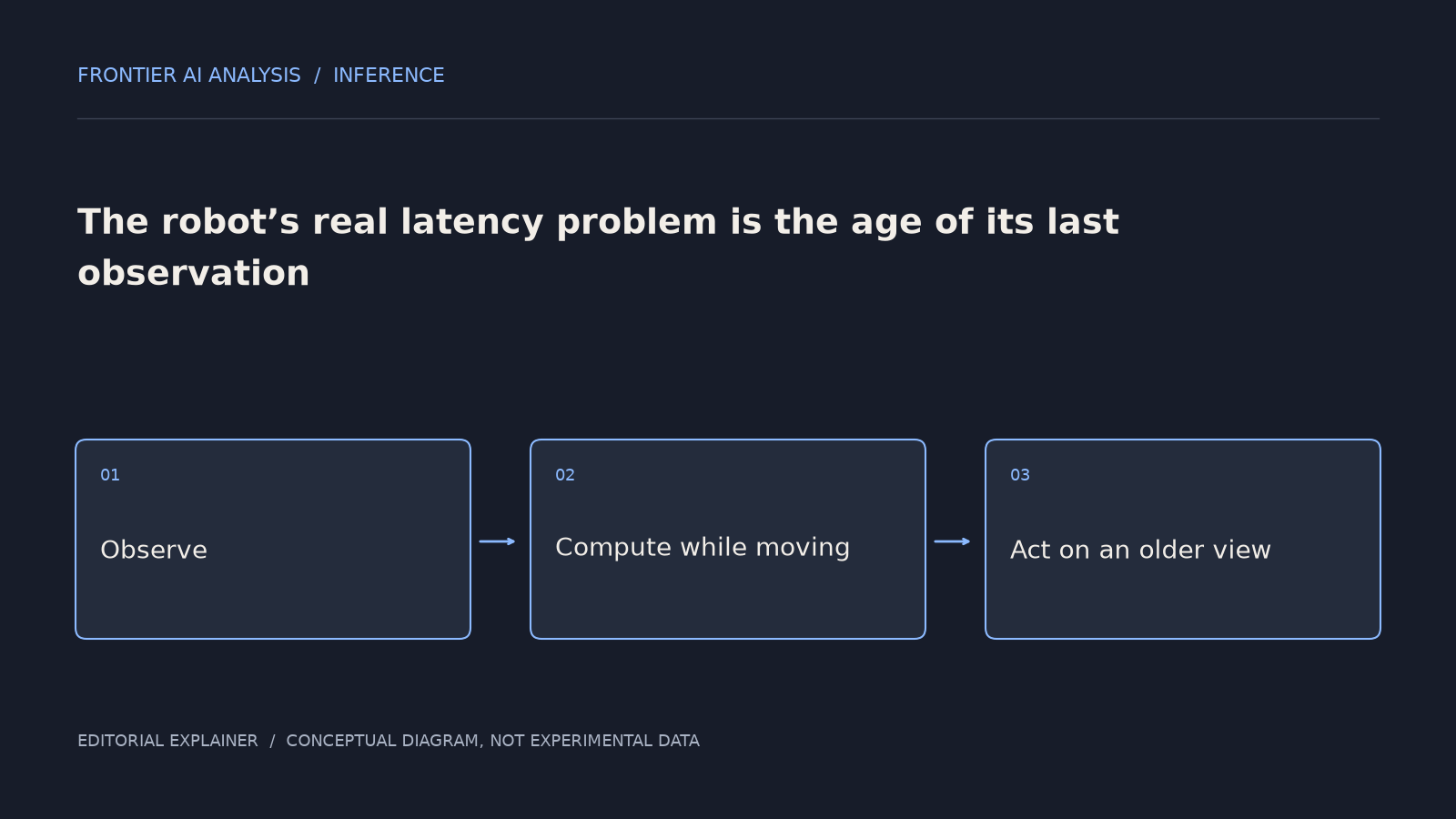
A KAIST workload study shows why faster inference and more aggressive action overlap do not produce a single best operating point.
 Inference
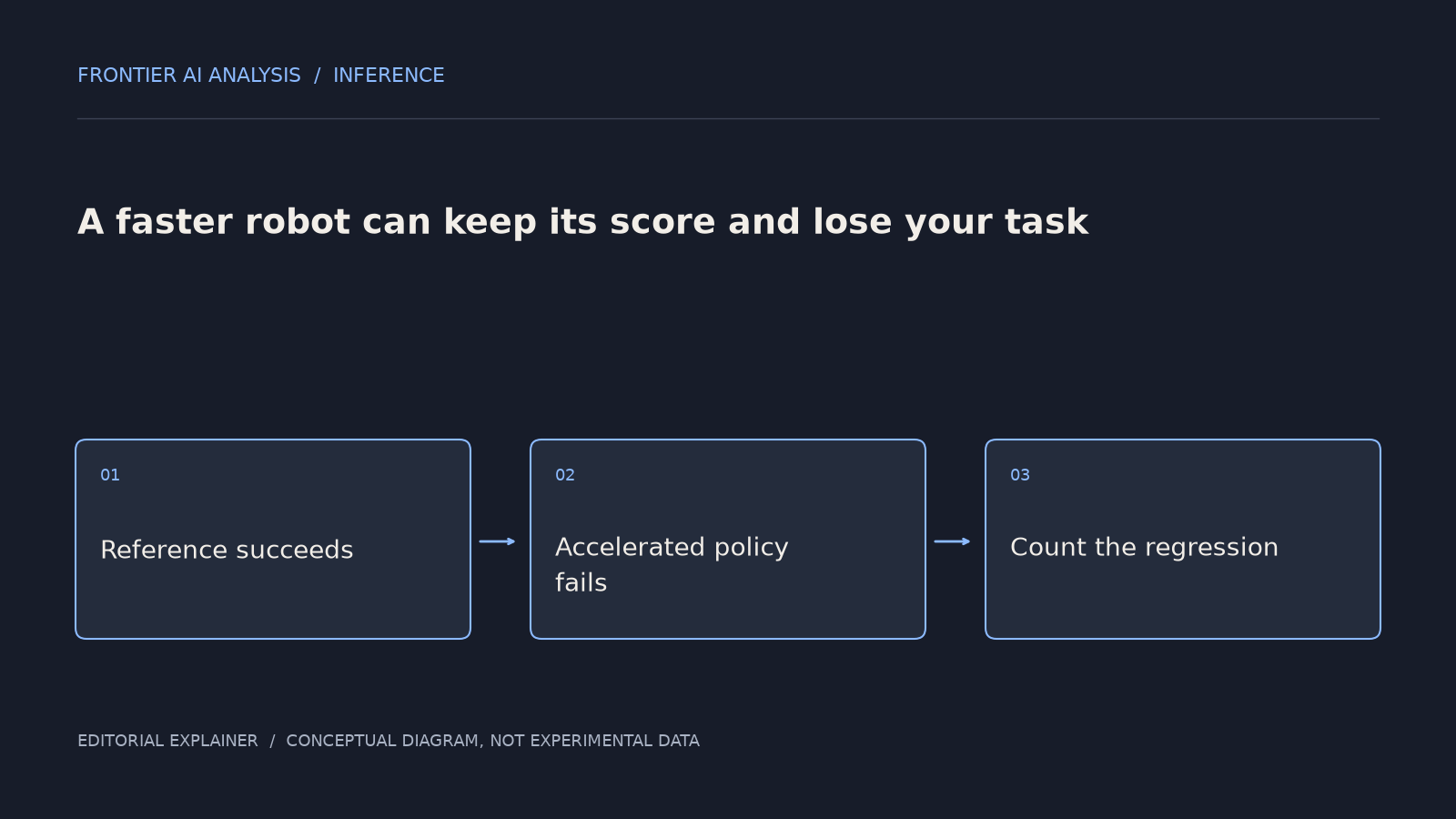
CARE measures the episodes broken by acceleration, revealing regressions that an unchanged average success rate can hide.
 Inference
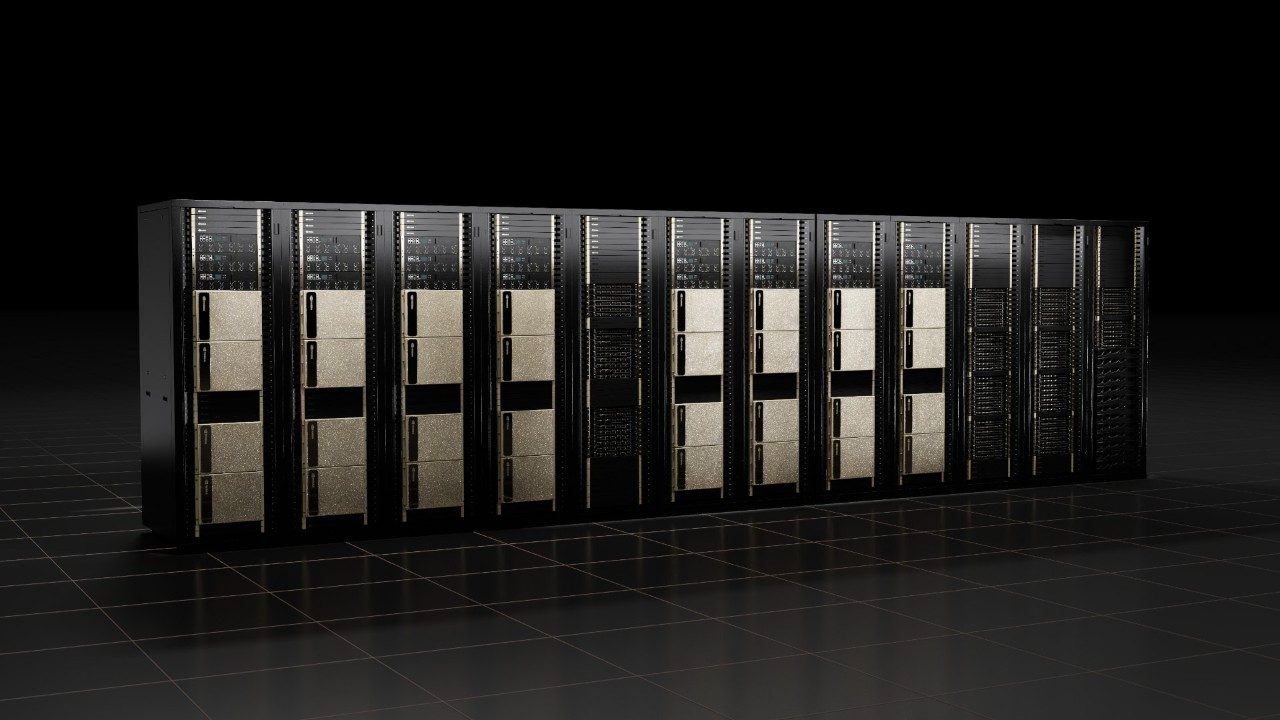
Separating long-prompt processing from answer generation can prevent one request from slowing everyone else. The trade is extra transfer time and a more complex service.
 Inference
SGLang, Qwen and NVIDIA compress the memory used by long conversations. The useful saving depends on which answers change and how much repair they need.
 Inference
A small model proposes several tokens at once; the main model checks them. Better accepted guesses can reduce expensive model passes without handing the final answer to the smaller model.
 Inference
Bonsai 2’s reported 5.9 GB footprint raises a deployment question: can the compressed model meet your task standard locally, after context memory and fallback costs are included?
Explore the other topics in this desk.