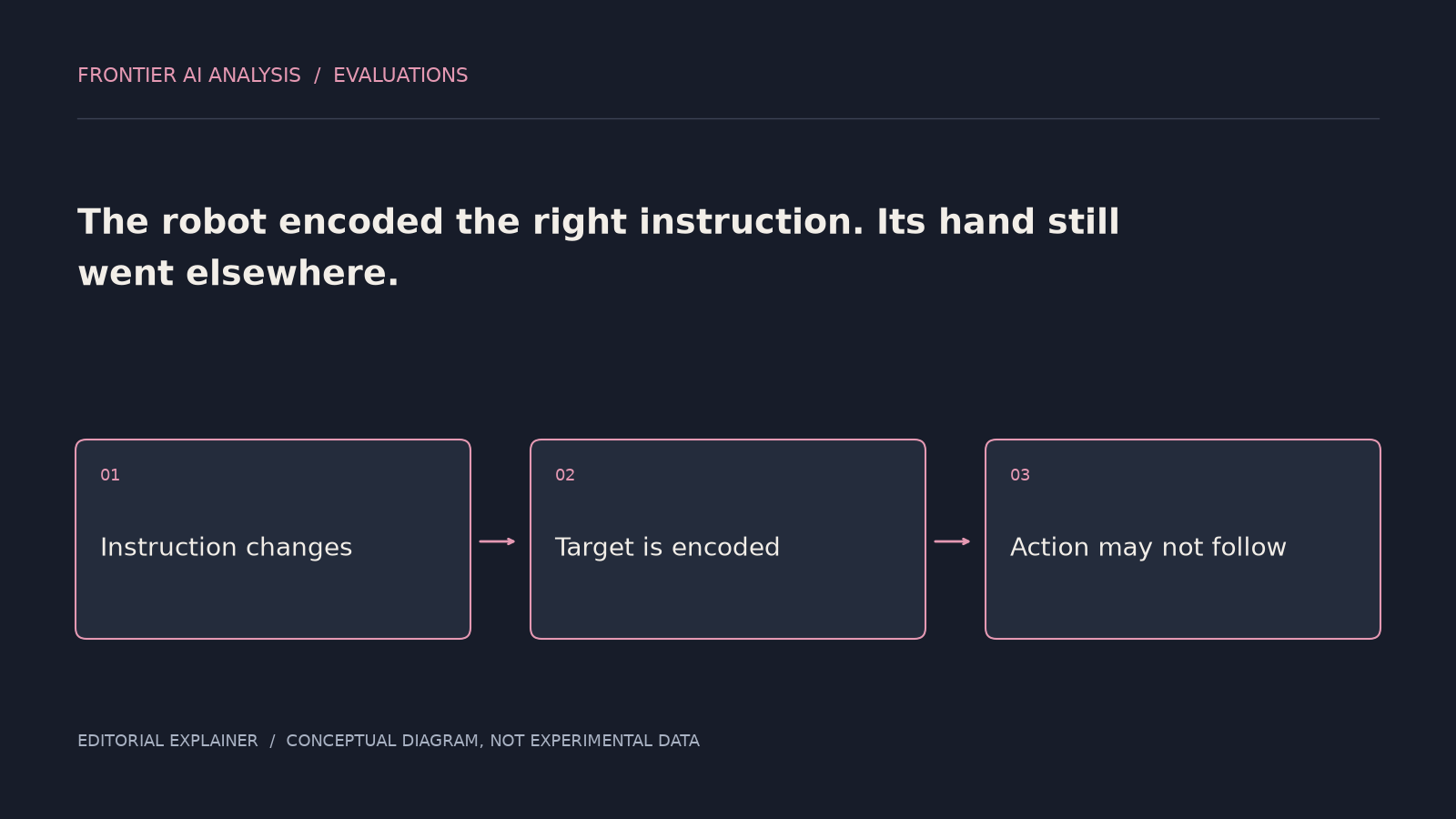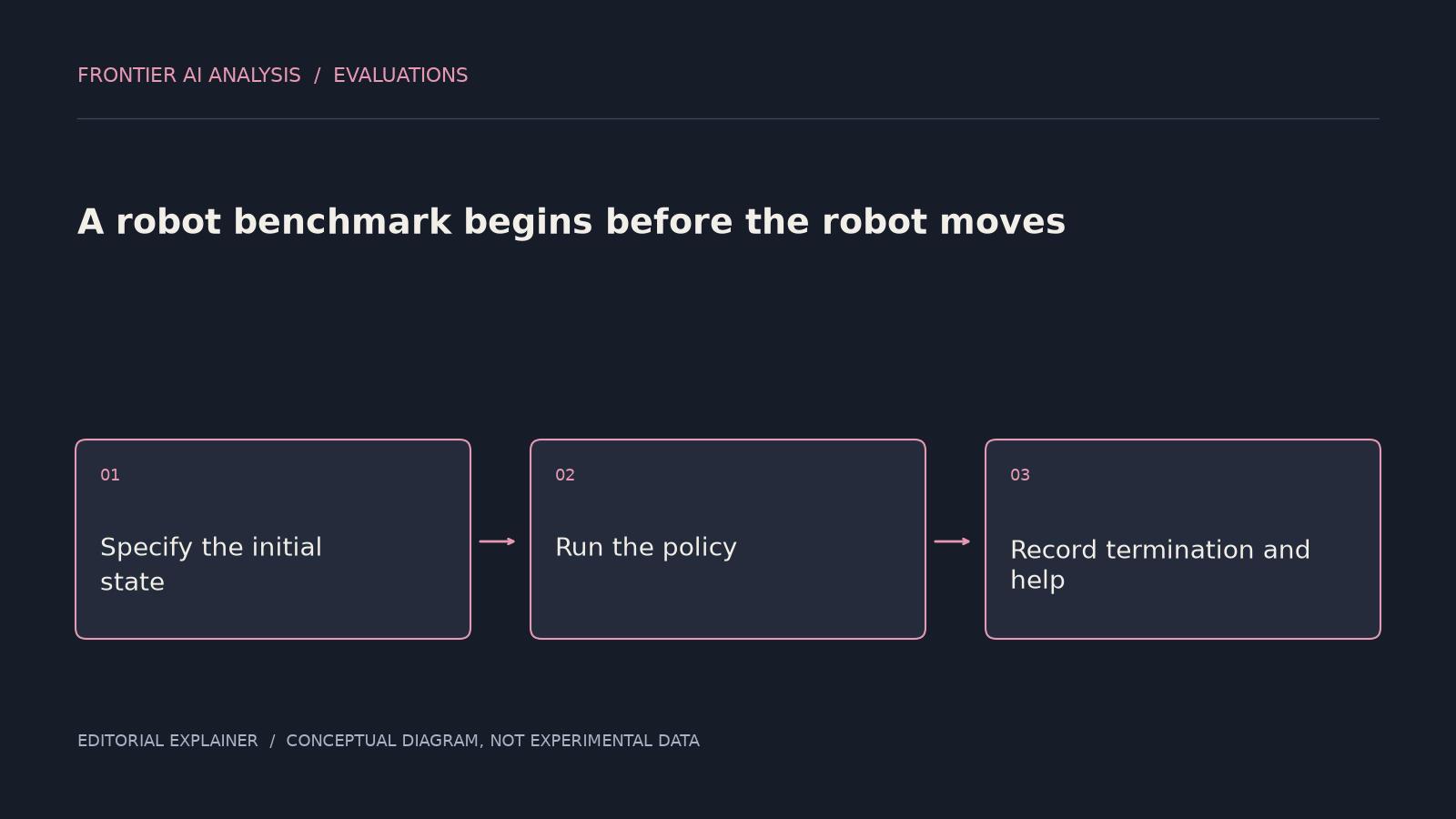
Adding a sensor gives a policy another input. It does not guarantee that the policy has learned when that input should change its behaviour.
OpenViTac, posted October 7, organises tactile manipulation around four capabilities: physical-property perception, fragility-aware handling, contact-rich manipulation and precision manipulation. It pairs simulated and real tasks, compares several policy families and studies tactile representation and integration. The authors’ OpenVTLA reaches 68.7 percent average success in simulation and 54.6 percent in their physical evaluation.
Those results support investigation of tactile learning. The deeper evaluation question is whether a model uses touch for the physical distinctions that vision alone cannot settle.
Give the sensor something only it can answer
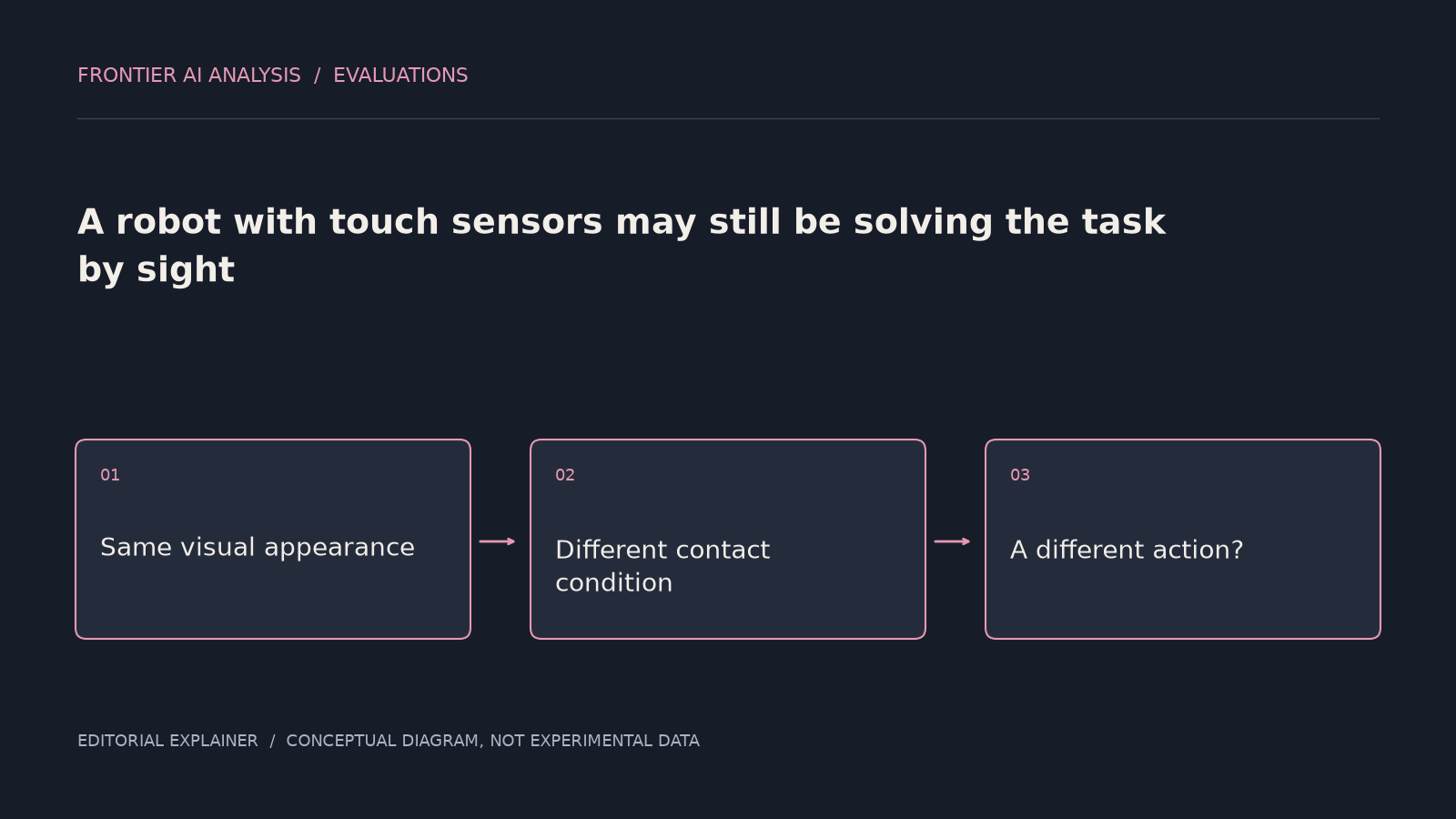
Imagine two objects with similar appearance but different resistance to squeezing. A policy that relies on visual familiarity may apply the same grip to both. A policy using contact feedback should have an opportunity to adjust as the interaction unfolds.
That kind of comparison is more diagnostic than adding tactile channels to a task already solved reliably from images. In the latter case, a higher score could reflect useful redundancy or some correlated cue. It would not by itself show that the policy responds correctly to an unexpected contact event.
One proposed test is to hold appearance approximately fixed while varying a physical property. Another is to perturb the tactile stream in a controlled evaluation and check whether the expected part of the action changes. Neither should be confused with indiscriminately corrupting inputs: the test needs a physically meaningful hypothesis about what the sensor should contribute.
Simulation must preserve the distinction
Paired simulated and physical tasks offer a way to examine whether the same capability transfers. But pairing task names is not sufficient. A simulated contact may contain cleaner or more accessible information than the real sensor supplies. A policy can exploit that convenience without learning a robust physical response.
The useful comparison is therefore at the level of failure. Does the same unexpected slip, resistance or alignment error provoke a similar correction in both settings? If not, more simulation data may reinforce the wrong cue rather than close the gap.
This changes how one might interpret multimodal progress. The number of modalities is a description of the interface. Capability depends on whether each modality acquires the right influence over decisions, especially when the inputs disagree.
For physical AI, the strongest evidence of touch may be a changed action in a visually unchanged scene. That is the moment the extra sensor stops being a specification-sheet feature and starts supplying information the robot could not otherwise use.
References
Questions, news tips or corrections? Contact [email protected].