An analyst perturbs a label to test how it influences a model. If the software first standardises all labels, the perturbation changes more than the analyst intended.
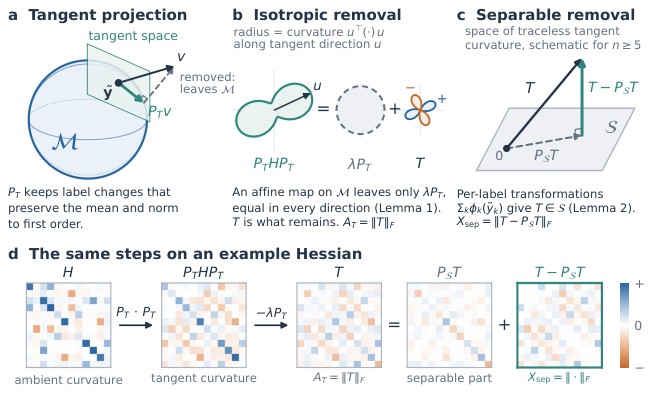
An October 6 paper shows how ordinary derivative tests can examine behaviour outside the standardised label set used by public tabular models. Its alternative certificates operate on valid inputs and find joint label processing in the evaluated systems. Read the research paper.
The package is part of the model being explained
A fixed-weight explanation can be falsely rejected if the test inadvertently includes preprocessing effects. Conversely, ignoring preprocessing can make a simple-looking model appear to have a mechanism it never uses in normal operation.
The certificates distinguish fixed weighting from independent nonlinear transformations. They do not supply a complete explanation of every tabular foundation model.
For interpretability experiments, document the valid input domain after transformations, then design interventions inside it. Compare model-level and package-level behaviour explicitly.
The lesson extends beyond tables: an intervention is only informative when it changes the intended variable. Sophisticated probes cannot repair a mismatch between the mathematical object being analysed and the software pipeline that actually receives the data.
Questions, news tips or corrections? Contact [email protected].