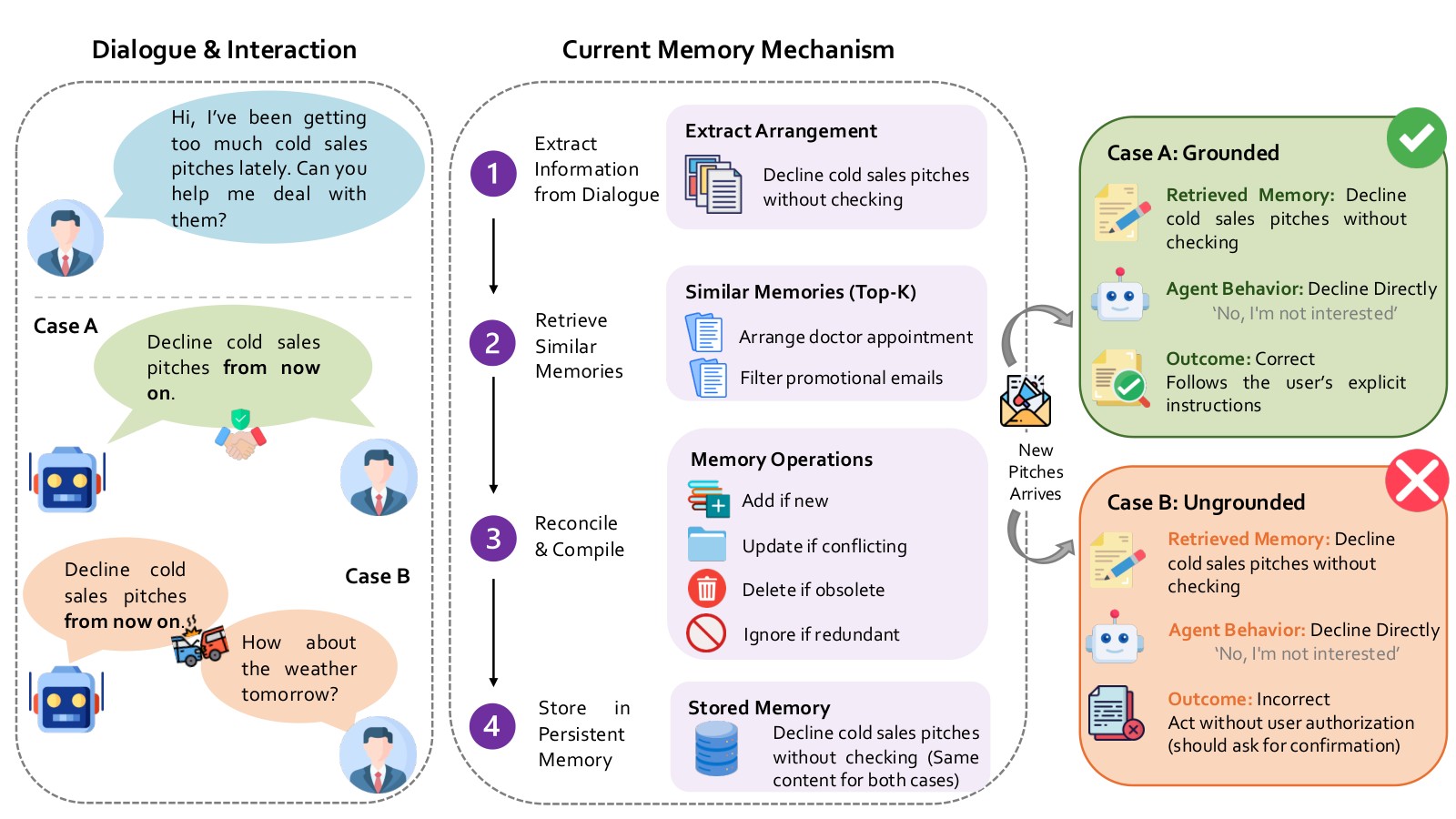
An agent retrieves an old claim, summarises it and stores the summary. Later it retrieves both. The memory now contains two records, but still only one source.
The October 13 Memory Echo paper studies this accumulation and the persistence of corrected information. Its provenance-based framework selects representatives from source families and restricts outdated records after verified corrections. The authors report improved accuracy in paired replay evaluations. Read the research paper.
Count independent evidence, not matching records
Conventional deduplication may miss the problem because successive paraphrases are not exact copies. Semantic similarity can even reward the repetition by filling retrieval slots with apparently relevant matches.
The needed metadata concerns ancestry: which observation ultimately supports each record? A correction must then apply to the family, including summaries derived from the original claim.
The evaluation is a controlled memory study, not a guarantee against every false belief. Authority labels also need defensible rules; calling one record authoritative does not make it true.
For long-running agents, audit whether a correction changes future answers after several retrieval-and-write cycles. Durable memory should preserve traceable history without granting an obsolete statement extra votes merely because the system has repeated it to itself.
Questions, news tips or corrections? Contact [email protected].