A model that predicts one missing table entry well does not automatically know how to generate an entire useful table. Generation must preserve relationships across the distribution, including combinations that are rarely observed.
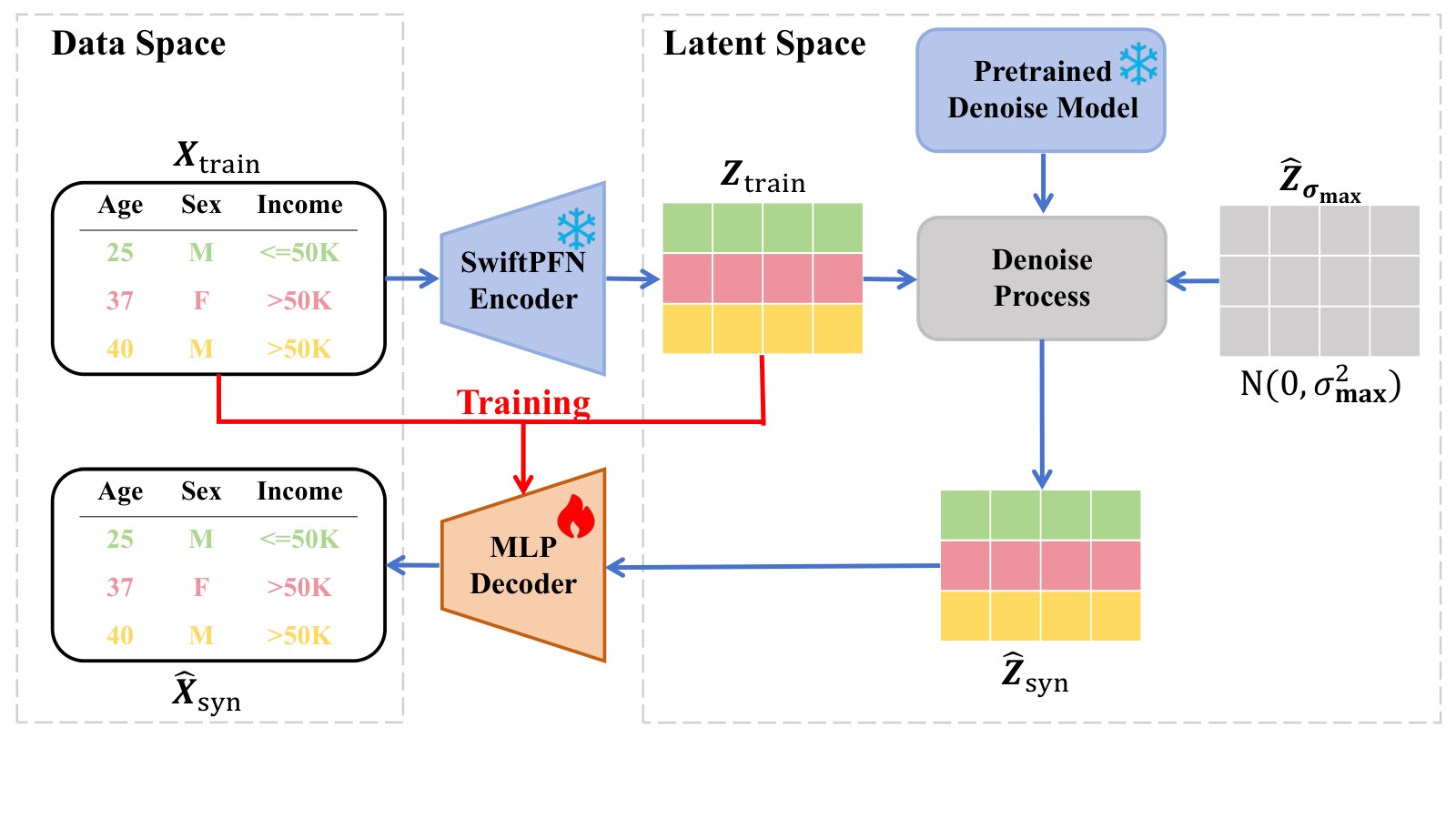
TabGift, introduced October 12, combines a pretrained tabular encoder with in-context diffusion and a dataset-specific decoder. Its authors report strong synthetic-data quality under limited-context conditions on classification and regression datasets. Read the research paper.
Plausible rows can still form the wrong population
With few examples, a generator inevitably relies on prior experience from other tables. That transfer can fill gaps, but can also import relationships absent from the target setting.
Evaluate downstream utility alongside distributional checks. A synthetic table may support a convenient classifier while erasing minority cases or distorting an important correlation. Realistic marginal histograms are insufficient.
The dataset-specific decoder also means adaptation is not entirely absent. Count its training cost when comparing the system with alternative generators.
TabGift addresses the awkward setting where generation is needed precisely because data are scarce. Its promise rests on learning reusable statistical structure; its limitation is the same dependency. The fewer observations available, the more carefully users must examine what the model supplied from its prior rather than learned locally.
References
Questions, news tips or corrections? Contact [email protected].