A paper can mention the right disease, assay and outcome without reporting the experiment a researcher needs. Relevance is a broad match; curation requires those facts to belong together.
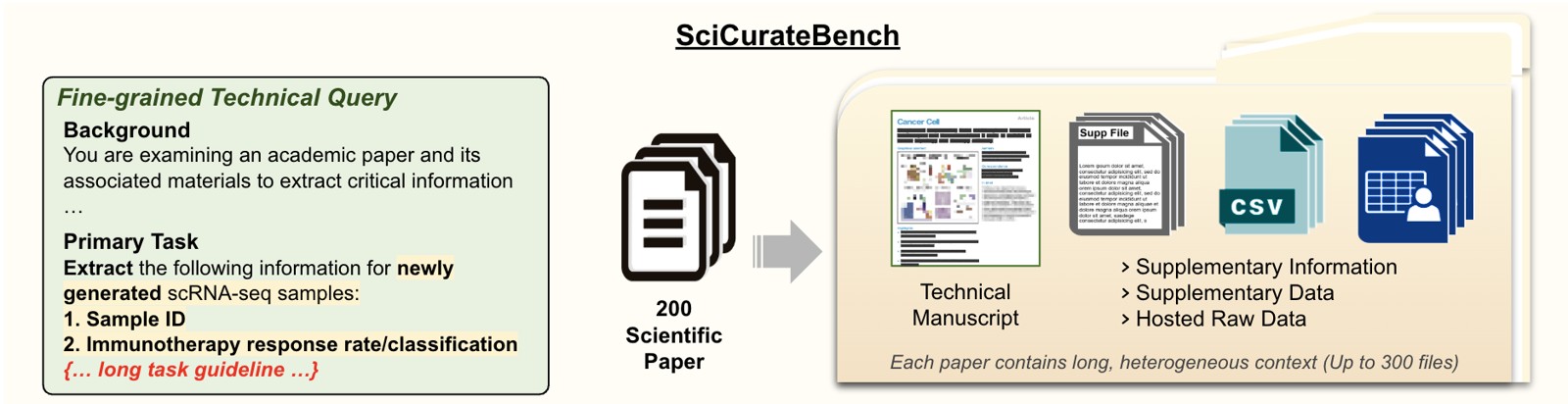
SciCurateBench, posted October 9, uses expert-annotated papers to test conjunctive experimental criteria in raw scientific documents. Its LangPoli system turns natural-language policies into executable retrieval actions and improves over the evaluated base model. Read the research paper.
The unit of evidence is an experimental configuration
A search result may retrieve each requested term from a different section or study arm. Combining them into one answer manufactures a relationship the source never established.
This makes provenance more demanding than attaching a paper link. A curator should retain the passages supporting each criterion and the evidence that they refer to the same experiment.
The benchmark covers a selected life-science corpus; its scores do not certify scientific review in general. Tool construction also introduces errors that need execution checks.
The useful shift is from document relevance to condition verification. Scientific agents become more valuable when they can explain why a candidate fails one necessary criterion, saving experts from reading a promising paper that never contained the required evidence.
Questions, news tips or corrections? Contact [email protected].