A research agent runs another experiment and gets a better in-loop score. It is tempting to call that cumulative improvement. The held-out model may tell a different story.
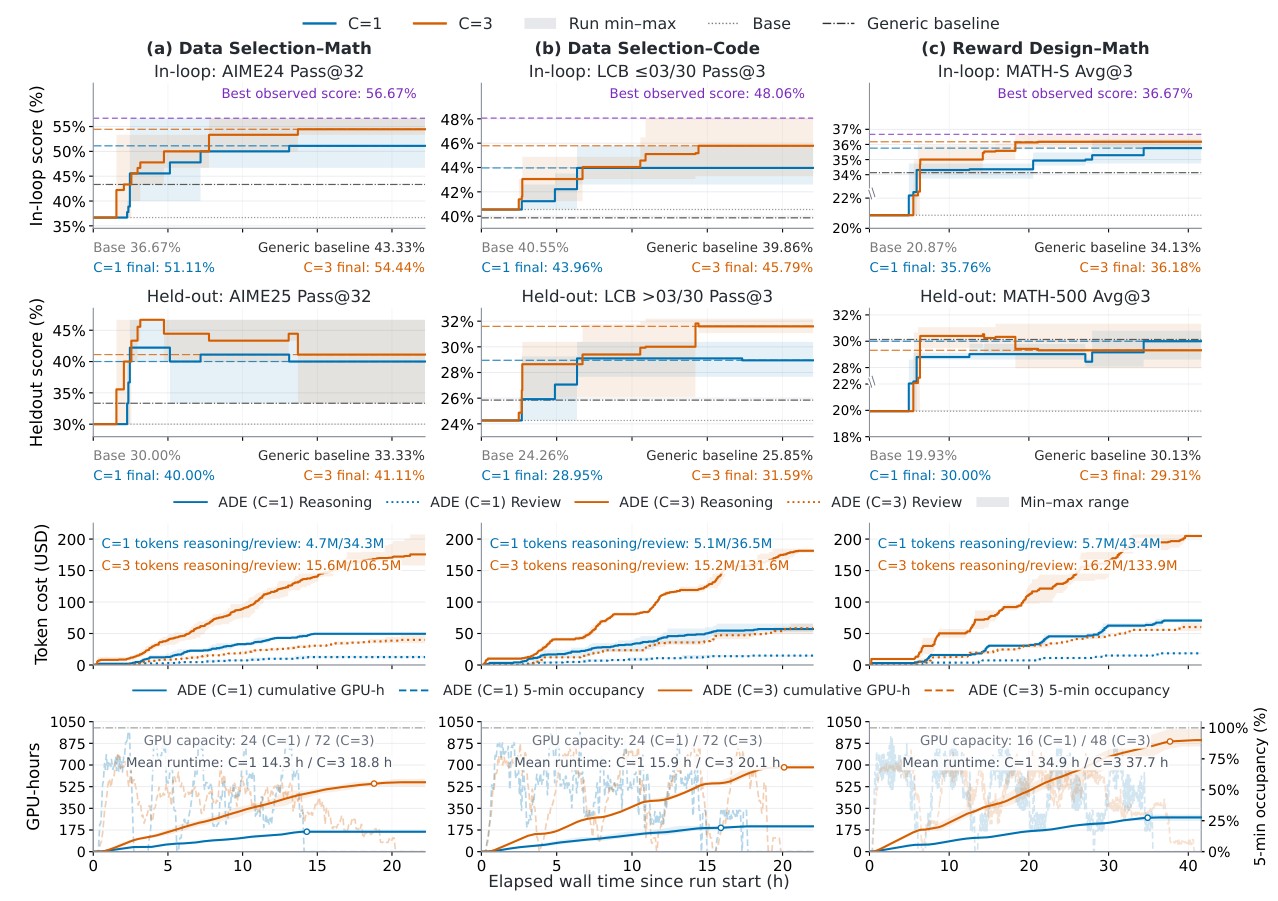
An October 9 study of Agentic Data Engineering examines data selection, rewards and curricula under fixed training protocols. Selected strategies improve held-out performance over generic baselines, but later in-loop gains do not always generalise. Read the research paper.
The experiment history can become another training set
An agent choosing its next idea from previous scores is adapting to those scores. Even without directly training model weights on evaluation examples, repeated selection can exploit peculiarities of the feedback process.
The study therefore separates strategy selection from final assessment. That distinction becomes more valuable as autonomous experimentation grows cheaper and the number of attempted ideas rises.
For a lab deploying such systems, log every attempted strategy, not only the winner. Compare the trajectory of internal scores with periodic untouched evaluations. A growing gap is evidence about the research loop itself.
The work supports agents as useful data-engineering researchers. It also shows why a busy experimental pipeline is not sufficient evidence of accelerating science. Progress must survive the boundary between the evidence used to choose an idea and the evidence used to judge it.
References
Questions, news tips or corrections? Contact [email protected].