Predicting a robot's future view and selecting its next action draw on overlapping knowledge. Yet forcing both jobs through an identical interface can erase differences that matter for control.
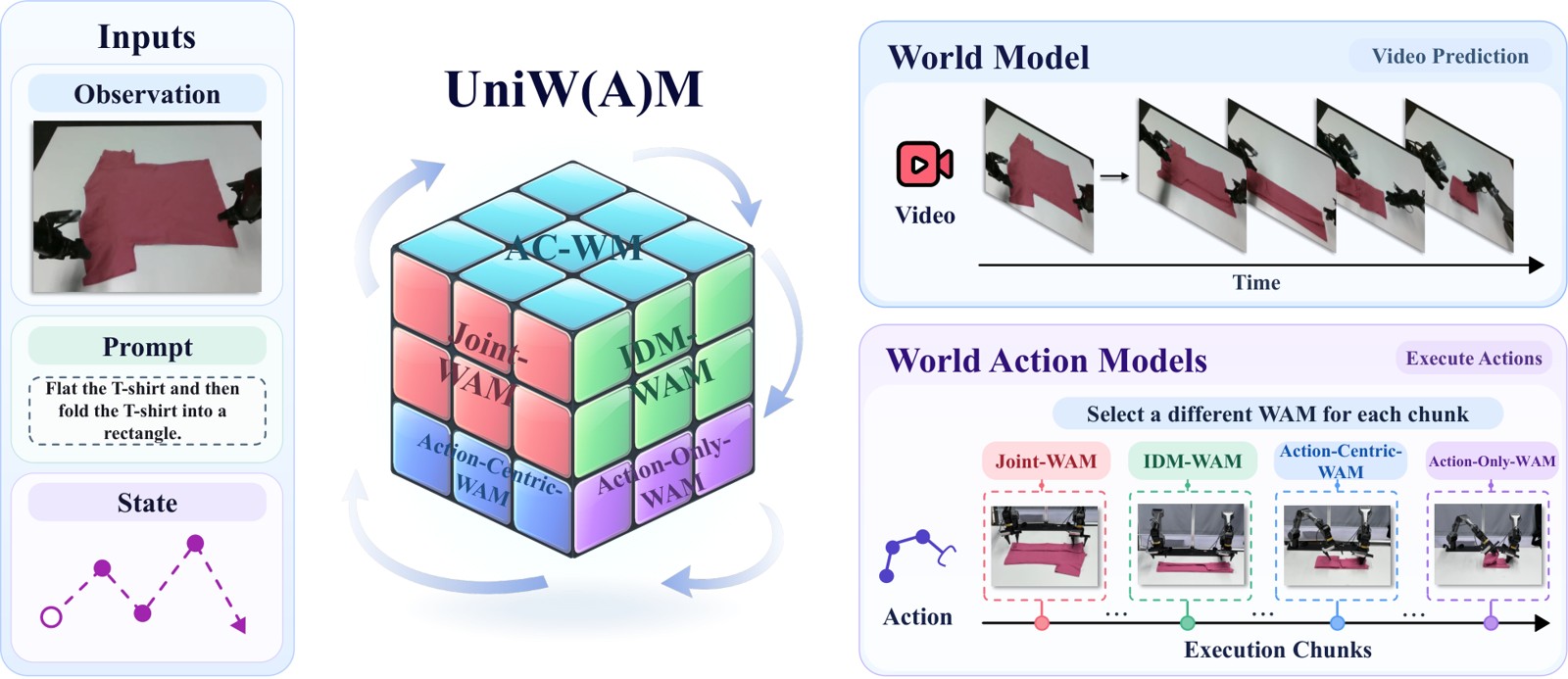
UniW(A)M, posted October 13, combines shared dynamics experts with capability-specific experts in a diffusion-transformer framework. A separate router chooses an action interface while keeping the backbone frozen. The authors report gains in simulated benchmarks and three real manipulation tasks. Read the research paper.
Reuse the dynamics, preserve the decision boundary
The architectural bet is that common physics belongs in shared computation, while distinct ways of requesting predictions or actions retain specialised pathways. Sharing everything and sharing nothing are both coarse choices.
The router introduces another source of adaptation. A policy may fail because it predicts badly, or because it selects an unsuitable interface for a particular action chunk. Those failures should be measured separately.
Three real tasks provide useful evidence but leave broad deployment questions open, including unfamiliar objects and changing contact conditions. Compare the frozen-backbone router with a fixed interface under equal adaptation budgets.
The expert split makes transfer more specific than the usual promise that a bigger world model will improve robotics. It identifies which knowledge should travel across functions and where a new deployment still needs to learn how to use it.
References
Questions, news tips or corrections? Contact [email protected].