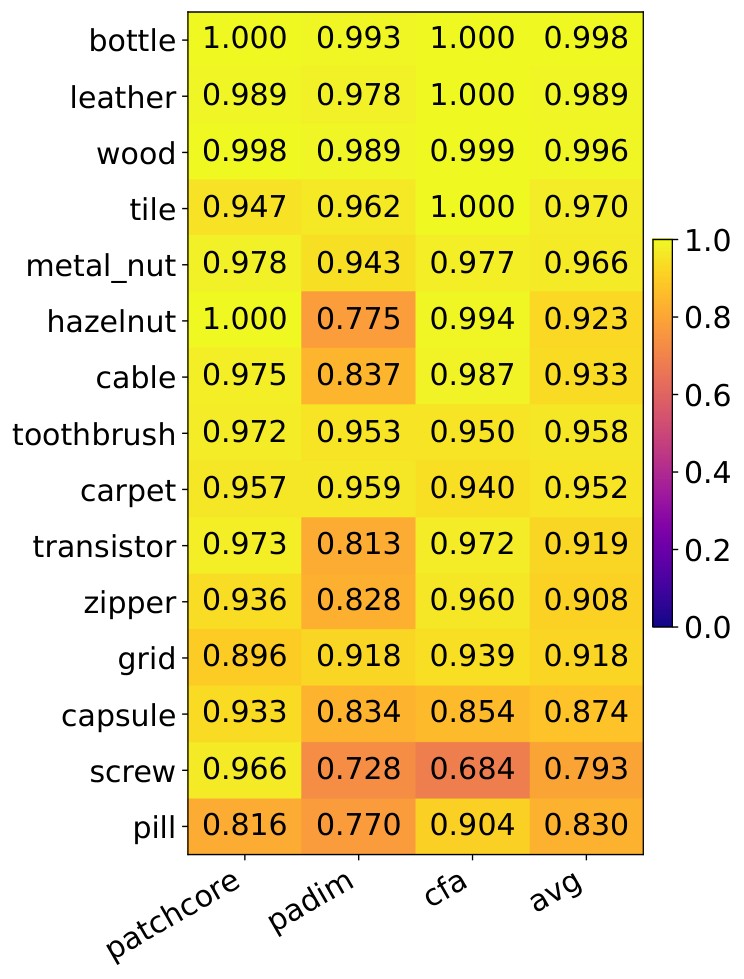
An inspection model can perform well on one component and fail after being adapted to another. A static benchmark sees the two good checkpoints separately and misses the production problem.
InCLAD's October 10 paper organises industrial anomaly detection as a sequence of component-level tasks. It includes different task orders and cross-dataset settings, with separate image-level detection and pixel-level localisation assessments. Read the research paper.
Task order becomes an experimental variable
Easy-to-hard and hard-to-easy sequences can expose different dependencies. A method that looks robust under a favourable order may rely on knowledge established early rather than a general retention mechanism.
Localisation also matters independently of detection. Flagging a defective item does not show that the model still identifies the defective region accurately after later training.
The benchmark's semi-supervised setting reflects a particular industrial learning problem, not every inspection workflow. Results need interpretation against the available labels and component distributions.
For deployment, evaluate the model after every addition on all previous components. Continual learning is successful when the operating inspection system remains useful through change. It is not established by showing that a separate model could perform well for each component before the next update.
References
Questions, news tips or corrections? Contact [email protected].