Long-context inference has two expensive obligations: retaining information and finding the part needed next. Compression addresses the first, while sparse attention tries to reduce the second. These strategies can undermine each other if a compact summary loses the clue that would have directed the model back to exact evidence.
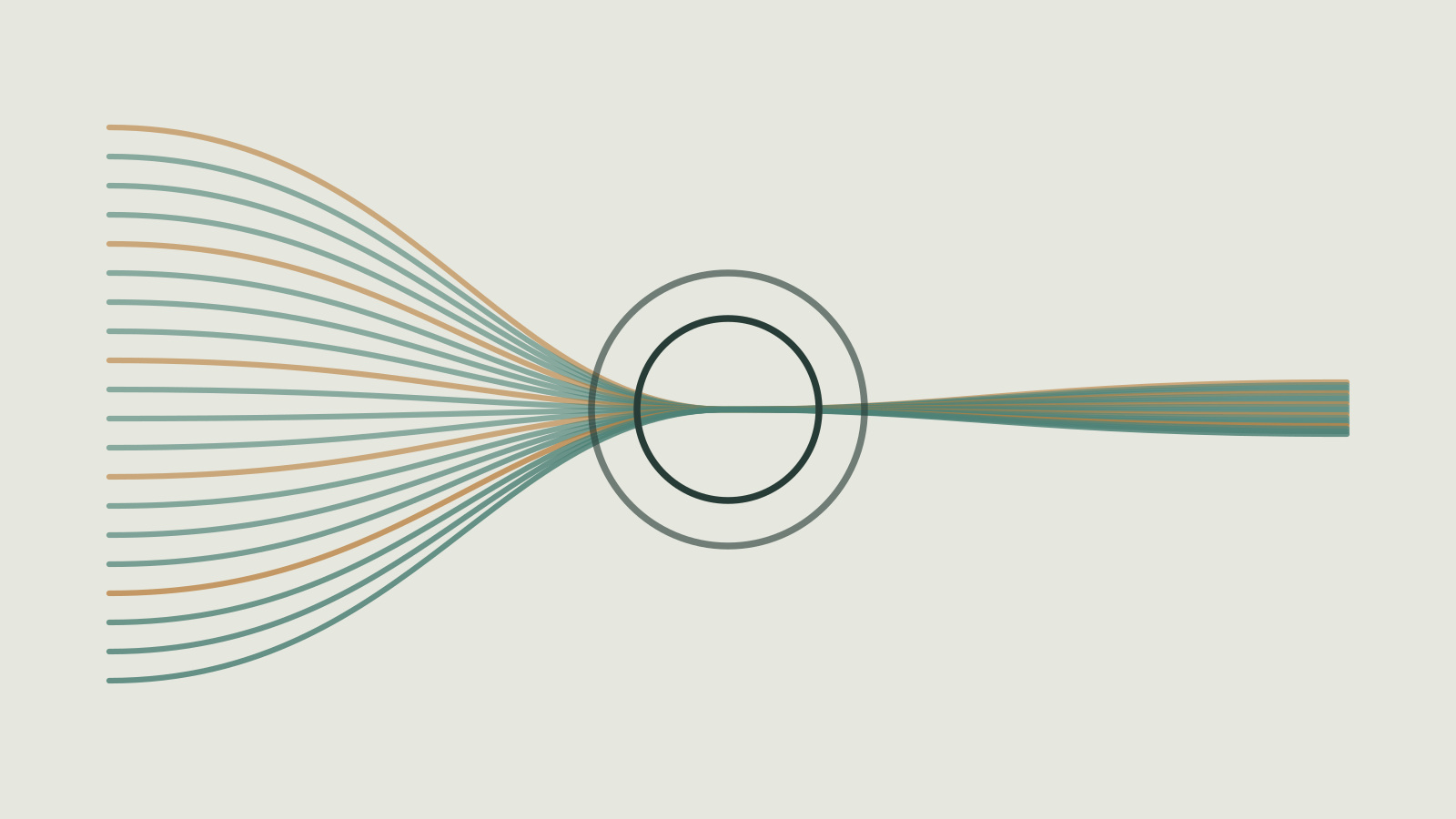
Kwai Summary Attention V2 links the two jobs. A summary token is not only a reduced representation of a chunk; it can also guide attention toward that chunk. The proposal makes compression quality partly a question of navigation, rather than judging the summary solely by how much original text it can reproduce.
A hybrid can keep paying the original bill
KSA V2 assigns summary tokens two roles: compact key-value memory and an index for sparse attention. The October 13 report identifies a cost in earlier hybrid designs: full-attention layers still paid to process the original sequence, even when summary tokens were available. Read the research paper.
The report identifies limitations in earlier hybrid KSA/full-attention designs. Summary tokens flowed through layers with a common compression chunk size, limiting flexibility. Meanwhile, full-attention layers still paid quadratic prefill costs over the original sequence, despite the presence of summaries.
KSA V2 gives summaries a sparse-indexing role as well as a key-value memory role. The architectural intent is to make the compressed structure useful on the computation side too. Merely inserting summary tokens does not reduce the full-attention bill if later layers continue processing the original sequence as before.
More flexible compression needs a real implementation comparison
A reduced token count does not by itself determine runtime. Sparse attention introduces indexing, gathering and kernel behaviour that can alter memory access and parallelism. Compression can save capacity while a poor implementation gives back the benefit in irregular work. The report’s proposed computational role for summaries therefore deserves evaluation separately from the nominal cache ratio.
For a serving team, useful measurements would distinguish prefill, decoding, resident cache and indexing overhead at the context lengths actually used. They should also include queries that repeatedly revisit a small region and queries that jump across many chunks. These are suggested workload checks, not new results attributed to the report. The point is to connect the architectural promise to access patterns. A summary is doing two jobs, so both its storage cost and its ability to direct economical computation need to be accounted for.
The index must preserve exceptions
A navigation summary can be useful even when it omits most of a document’s wording. But the details it does retain must be sufficient to route a query toward an unusual qualification, not just the dominant theme. A summary that consistently captures the main topic could still be a poor index for rare but decisive facts.
That suggests evaluating retrieval of exact supporting evidence alongside downstream answers. This is an analytical recommendation, not an additional benchmark result asserted here. The failure to inspect would be an index that sends attention away from the very passage needed to overturn its compressed impression.
Layer budgets can follow function
Allowing different compression choices across layers opens a useful allocation problem. Some layers may need broad, cheap access; others may need precise information about a smaller selected region. A single compression ratio can obscure those different functions, just as one global retrieval depth can be wasteful across unrelated questions.
The practical saving still depends on kernels, sequence lengths and the workload’s access pattern. Sparse indexing has its own overhead and errors. The wider contribution is the proposed reuse of a memory representation as a computational guide: a well-designed summary can help decide where detail must be preserved rather than simply replacing detail everywhere.
Questions, news tips or corrections? Contact [email protected].