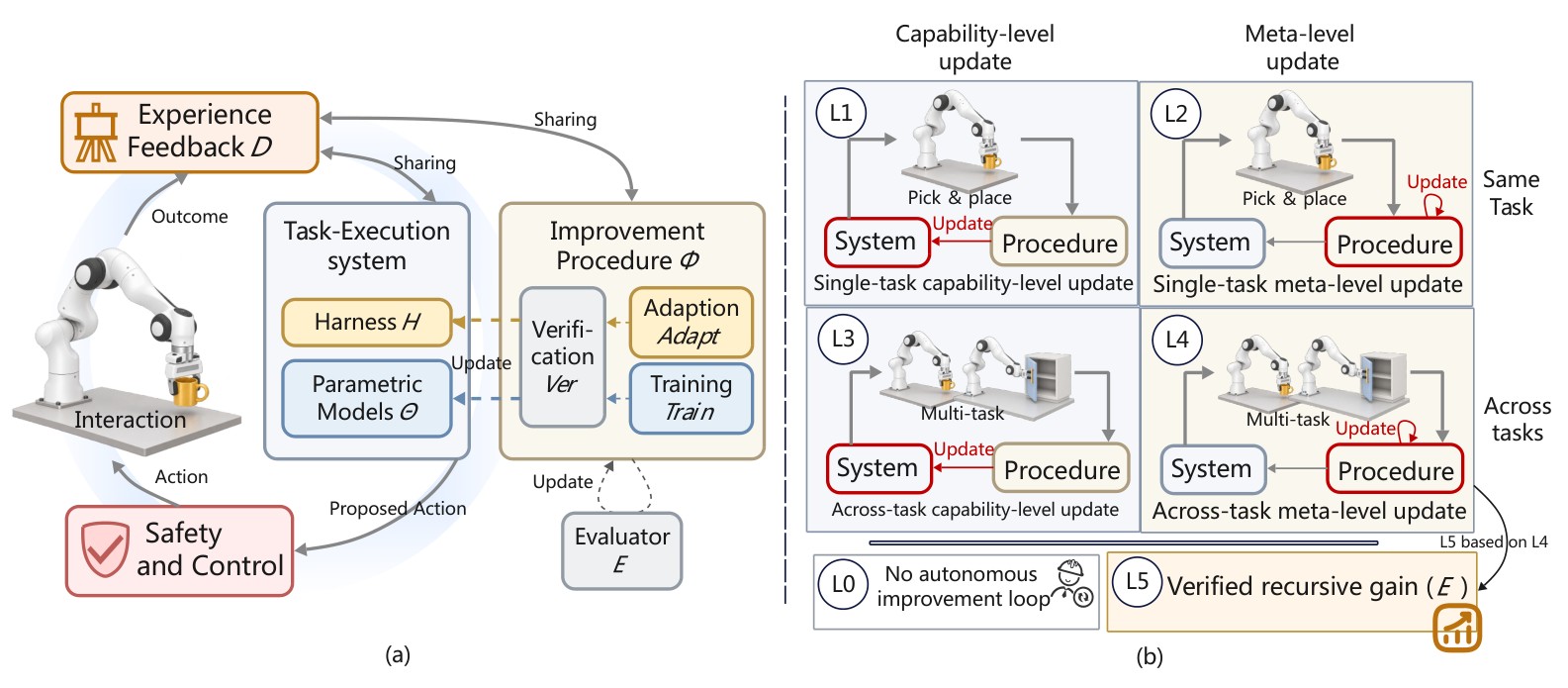
Independent sampling asks a model to try again without necessarily using what the previous attempt revealed. For a verifiable problem, that can mean paying repeatedly for the same wrong answer.
LEAF's October 13 paper inserts problem-specific memory containing recent responses, rewards and feedback before new rollouts. Policy updates use self-distillation separately from exploration. The authors report faster exploration and held-out accuracy gains on their tested models. Read the research paper.
The training aid need not become a runtime dependency
Memory helps the system search for useful behaviour. Distillation then transfers some of that behaviour into the policy. Those are different stages, with different evidence requirements.
A rollout improvement alone would not show that the final model learned. The relevant check removes the exploration memory and evaluates unseen problems. The paper includes held-out assessment; broader transfer remains a separate question.
Also count verifier calls and memory processing. A smaller number of successful samples can still be expensive if each attempt requires much more feedback.
The practical opportunity is to make exploration cumulative without forcing every deployed answer to carry its entire training history. A memory can earn its cost by helping find the lesson, then disappear once the learner has absorbed enough of it.
Questions, news tips or corrections? Contact [email protected].