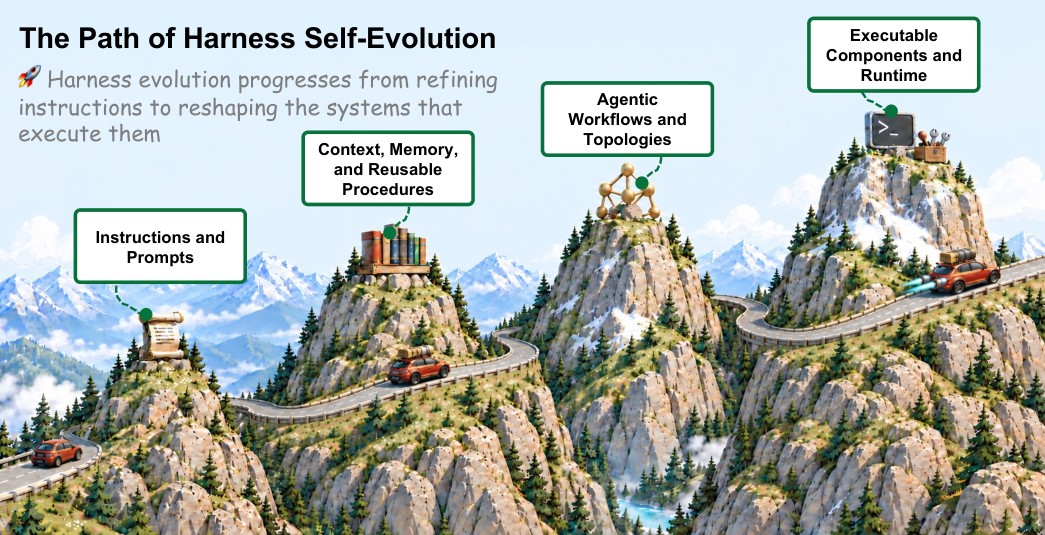
“The model learned” can describe a system whose neural weights never moved. A revised prompt, tool or memory policy can change every future run just as persistently as a parameter update.
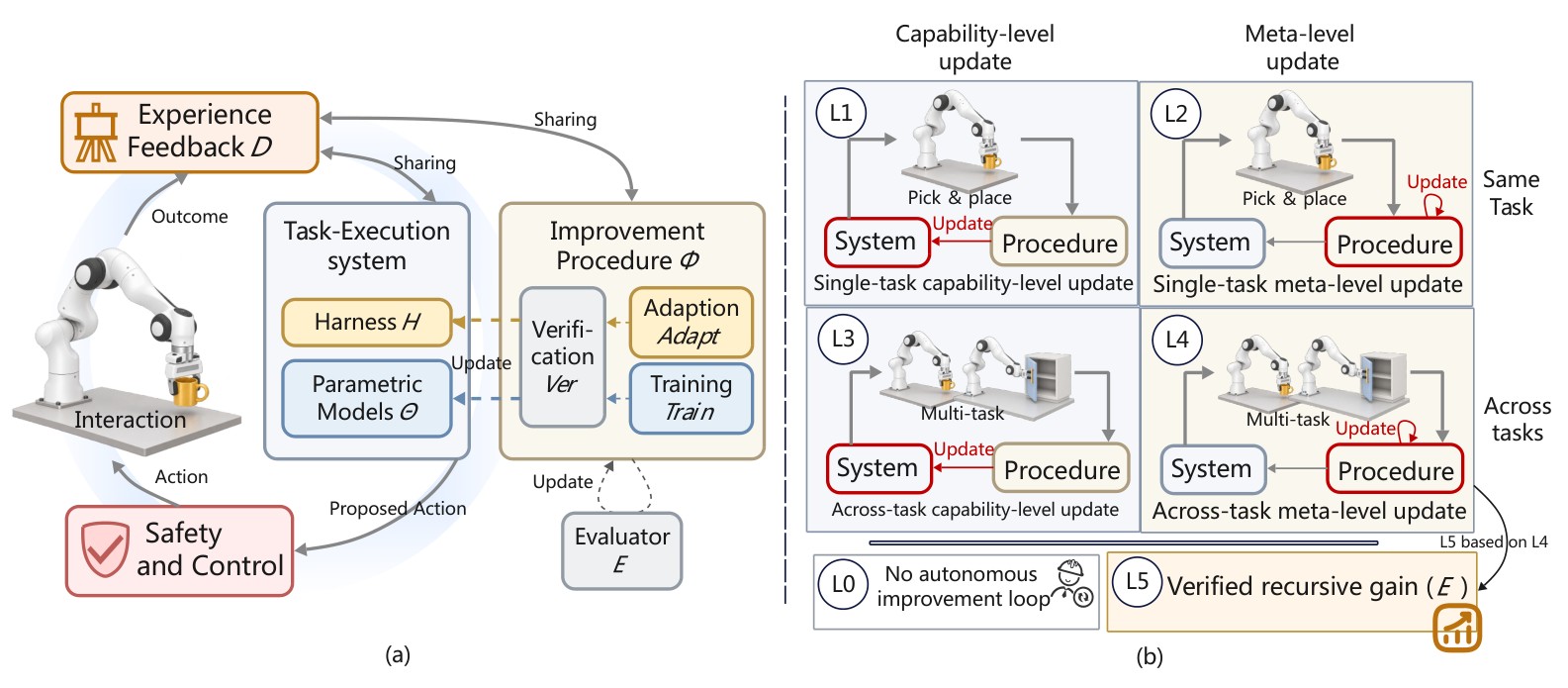
An October 13 paper formalises harness self-evolution, separating what changes from how proposed changes are admitted. Its theoretical guarantees depend on explicit validation and regression assumptions; the paper also discusses prior systems rather than reporting a universal autonomous-improvement result. Read the research paper.
Persistence is the important boundary
A correction used once is different from a correction installed into the next run's control logic. The latter becomes part of the system other users encounter, even if the base model is frozen.
For engineering teams, this means versioning the complete harness alongside the checkpoint. Reproducing an answer may require the memory snapshot, tool implementations and accepted workflow changes.
Fresh validation matters because the optimiser adapts to its feedback. A theoretical admission rule does not remove the need to check whether its assumptions hold for a changing task distribution.
The paper makes the object of self-improvement more precise. Useful learning can happen outside weights, but it still needs an audit trail and evidence that the retained change improves future tasks without quietly breaking earlier ones.
Questions, news tips or corrections? Contact [email protected].