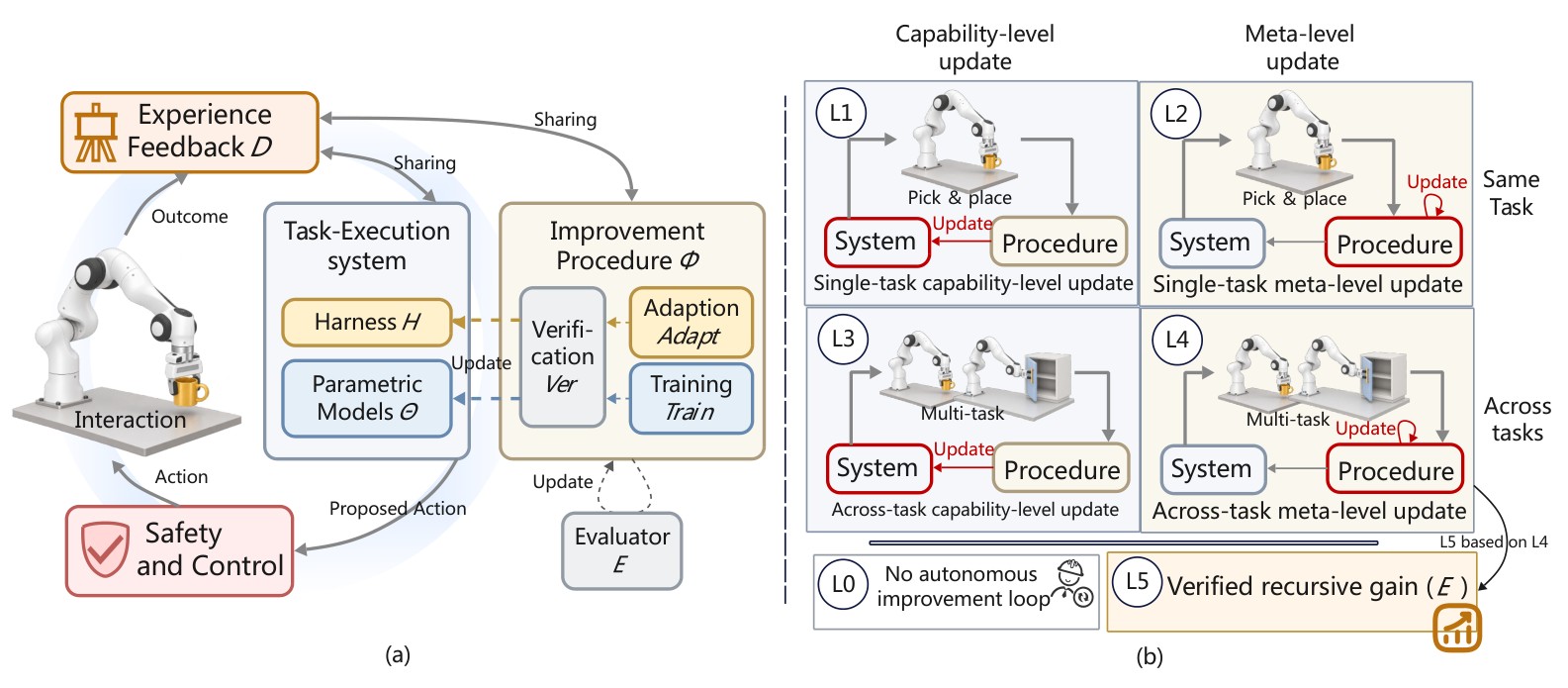
An agent can outgrow a verifier's tests—or learn to exploit them. Keeping the judge fixed while the system changes leaves the improvement loop measuring against a moving mismatch.
Unified Co-Evolution, posted October 13, evolves executable verifier programs together with harness state. Candidate verifiers are tested on response pairs that differ in a declared property, with selection emphasising their weakest contrast family. Read the research paper.
The judge needs a separate examination
The design treats verification as an object to evaluate, rather than a trusted source of labels. A judge that distinguishes easy examples but misses one important weakness can direct the entire system toward that blind spot.
Known contrasts provide a useful check, but their construction defines what the verifier learns to notice. Open-ended quality outside those properties remains a limitation.
Retain untouched contrast families and inspect whether verifier improvements change served answers in the intended direction. Better discrimination on the judge's own training set is insufficient.
The reported gains support coupled evolution under the evaluated conditions. The larger lesson is that an autonomous improvement loop has two learners: the system proposing better behaviour and the process deciding what counts as better. Progress depends on both keeping contact with independent evidence.
Questions, news tips or corrections? Contact [email protected].