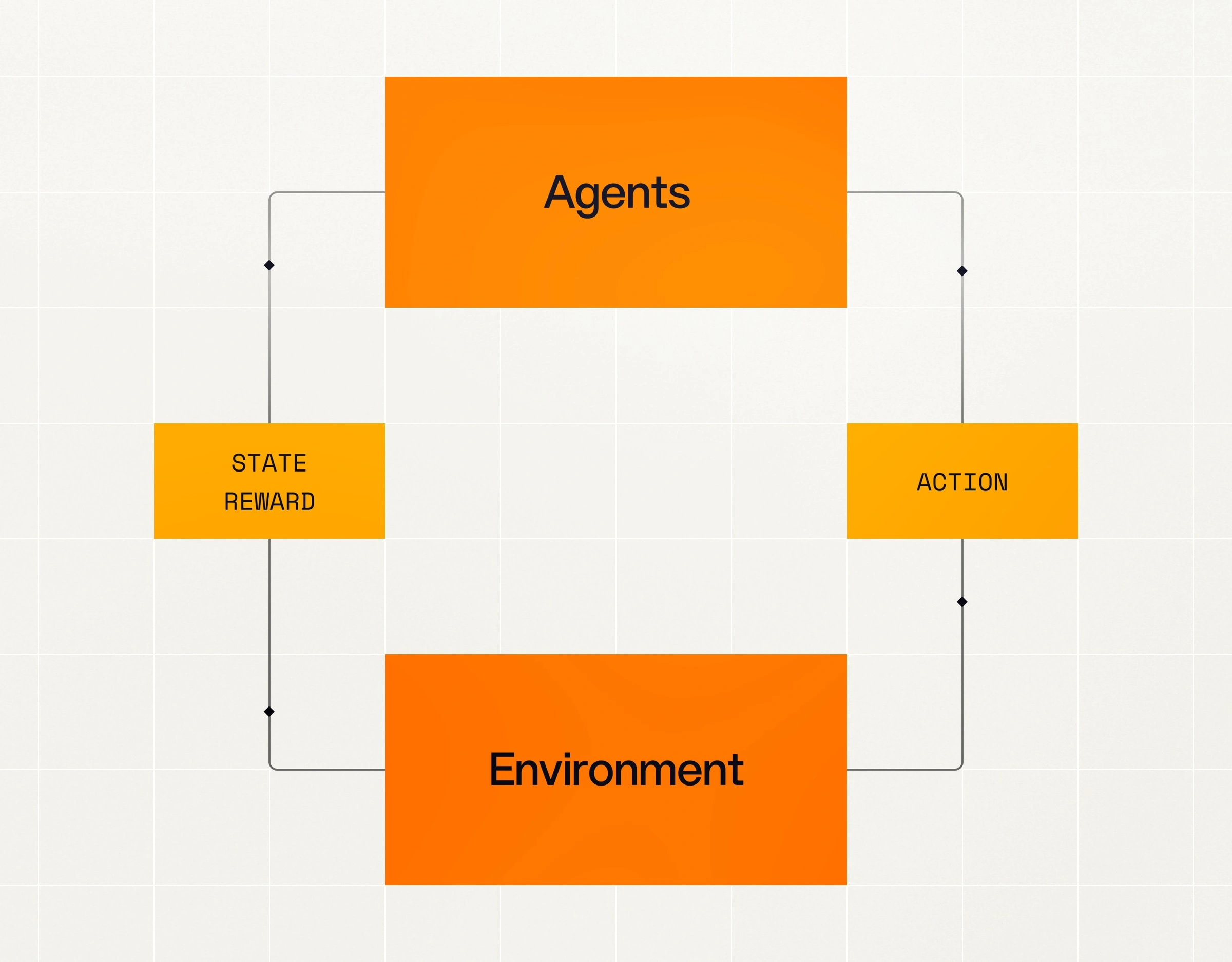
A robot learning from demonstrations eventually encounters a supply problem: who will demonstrate the next, better strategy? Skild AI’s September 23 physical self-play announcement explores a different source of difficulty. A policy competes against recent versions of itself. As the player improves, the opposition improves too. The training curriculum can move with the learner instead of waiting for another human recording.
Scoring supplies a goal; opponents supply the difficulty
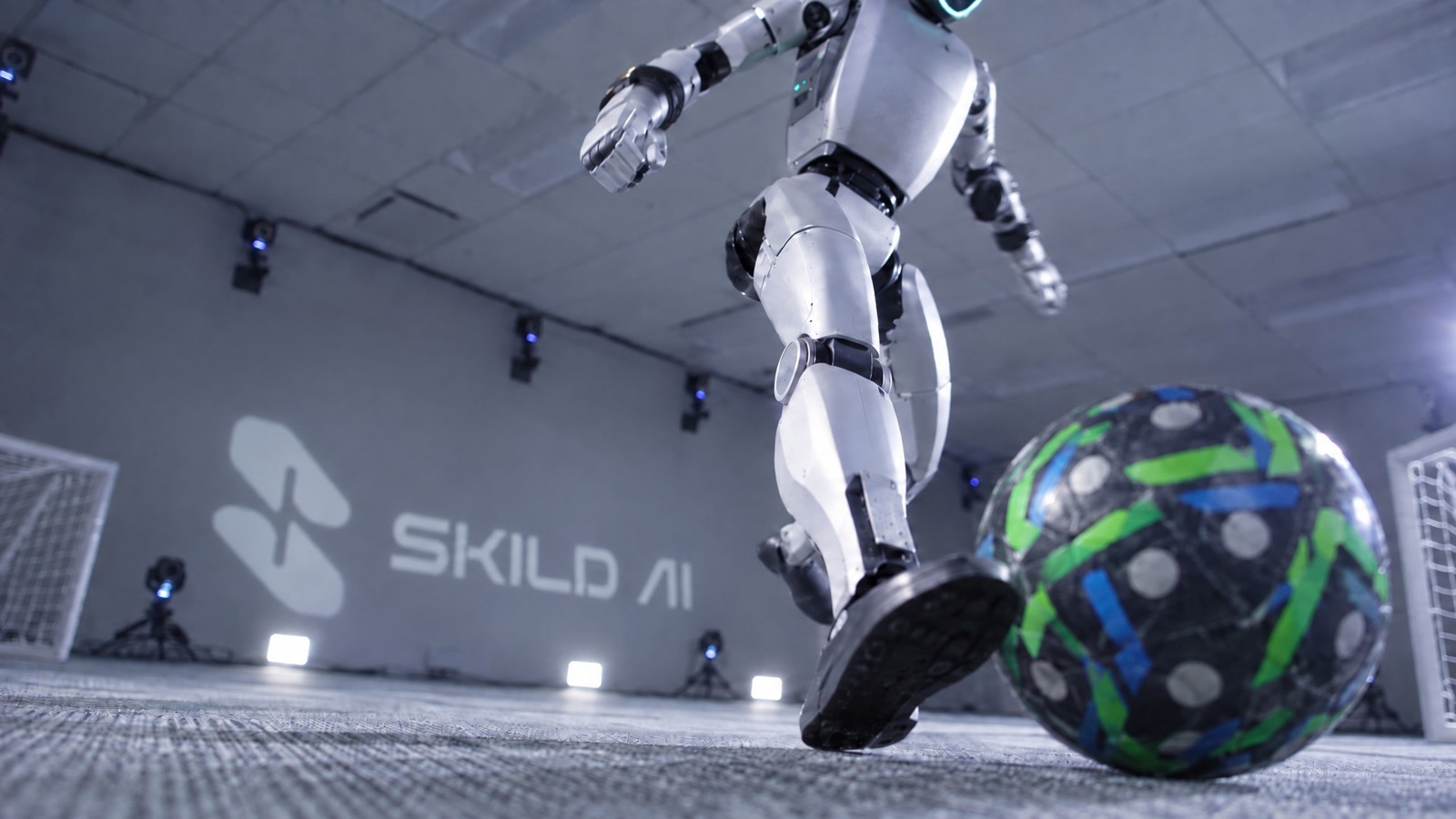
Skild describes soccer training in NVIDIA Isaac Sim, followed by transfer to a humanoid. The stated objective is to score. Dribbling, shielding and tackling are presented as strategies that emerge because they help achieve that objective, rather than behaviours assigned their own handcrafted rewards.
The company reports roughly one hundred and forty simulated years of play. That is accumulated virtual experience, not elapsed development time. The announcement includes simulation and physical demonstration footage, but it does not release an open checkpoint or establish a shipping robot-soccer product.
The result is still more specific than an agent claiming it has improved. A goal outside the model’s own verbal judgement creates pressure, and an opponent can punish a strategy that merely looks effective.
S1 supplies breadth before competition adds pressure
Skild places this work after its S1 foundation programme. S1 uses demonstrations as context to specify a task, including tasks whose ordering and duration are more demanding than an atomic pick-and-place action. Its pretraining combines several forms of physical experience rather than beginning the soccer experiment from an empty policy.
This separation matters when interpreting self-improvement. Competition does not eliminate the need for a capable starting model, a simulated body and a useful training environment. It creates a way to refine behaviour after those investments exist. The interesting question is what the post-training loop can add that simply collecting more examples would not.
A moving opponent closes one kind of feedback loop
A fixed opponent can become too easy. A fixed demonstration library can stop exposing weaknesses once the policy imitates it. Recent versions of the learner offer a succession of adversaries closer to its current ability. An effective move changes the next round’s conditions because the same improvement can appear on the other side.
That mechanism makes the curriculum partly endogenous. It can generate novel combinations of challenge without someone writing a new instruction for every failure. It also creates a testable source of progress: compare an evolving-opponent schedule with fixed opponents and the same experience budget.
The announcement does not provide enough comparative evidence to assign every improvement to that schedule. The curriculum explanation follows the stated training design; the size of its independent contribution remains an empirical question.
Contact simulation belongs inside the capability account
In a separate September account of its Skild collaboration, NVIDIA describes simulation, data tools and deployment optimisation as connected parts of the stack. It also says the companies are developing contact solvers for Newton. Those infrastructure details help explain why physical self-play is harder than moving a digital game agent to another screen.
The learned strategy must pass through motors, friction, impacts and imperfect sensing. A virtual tactic is useful only if its physical execution survives that translation. The published robot demonstration is evidence of a transfer attempt succeeding in the shown conditions, not a quantified guarantee across surfaces, opponents or hardware.
Beyond soccer, the opponent may be difficult to define
Soccer provides a clear score and a natural adversary. A household task may have neither. An opponent rewarded for obstructing a robot could discover unrealistic interference; a reward for speed could encourage handling that a person would reject. Extending the method requires deciding which challenges improve the intended work and which merely exploit the simulated game.
Skild’s announcement therefore points to a concrete opportunity with a boundary. Some physical skills may improve through experience generated by other policies, reducing dependence on ever more human demonstrations. The next persuasive result would show the same curriculum principle improving a useful task with a declared success criterion, a controlled transfer test and evidence that the new behaviour remains acceptable in the real workflow.
References
Questions, news tips or corrections? Contact [email protected].