Finding the right report is different from finding the row that answers a question. A search system can repeatedly return a relevant document while an AI assistant still fails to locate a footnote, reconcile a table or verify a number. Mistral’s Agentic Search treats the material after the first search result as somewhere a model should be able to go.
Five tools, announced on August 20
Mistral introduced Agentic Search on August 20, 2026. It is available through Search Toolkit and Libraries, including integrations in Studio and Vibe. The documented system builds on an existing index and gives a model five operations: search, open, navigate, read and grep.
Search identifies likely documents. The remaining tools let the model inspect particular pages, sections or patterns before answering. This creates a loop: retrieve, inspect, decide what is missing and search again if necessary. Mistral says the tools do not require model-specific fine-tuning.
More operations can mean less wasted work
An ordinary one-shot retrieval pipeline selects chunks and asks the model to answer from them. A search-only agent improves on that by allowing repeated queries. But a model that cannot move inside a promising document may spend its turns asking the index increasingly elaborate versions of the same question.
Navigation changes the available action. Once a report is found, the model can go to the relevant location and read its surrounding evidence. The added tools can therefore replace search attempts rather than simply add work on top of them.
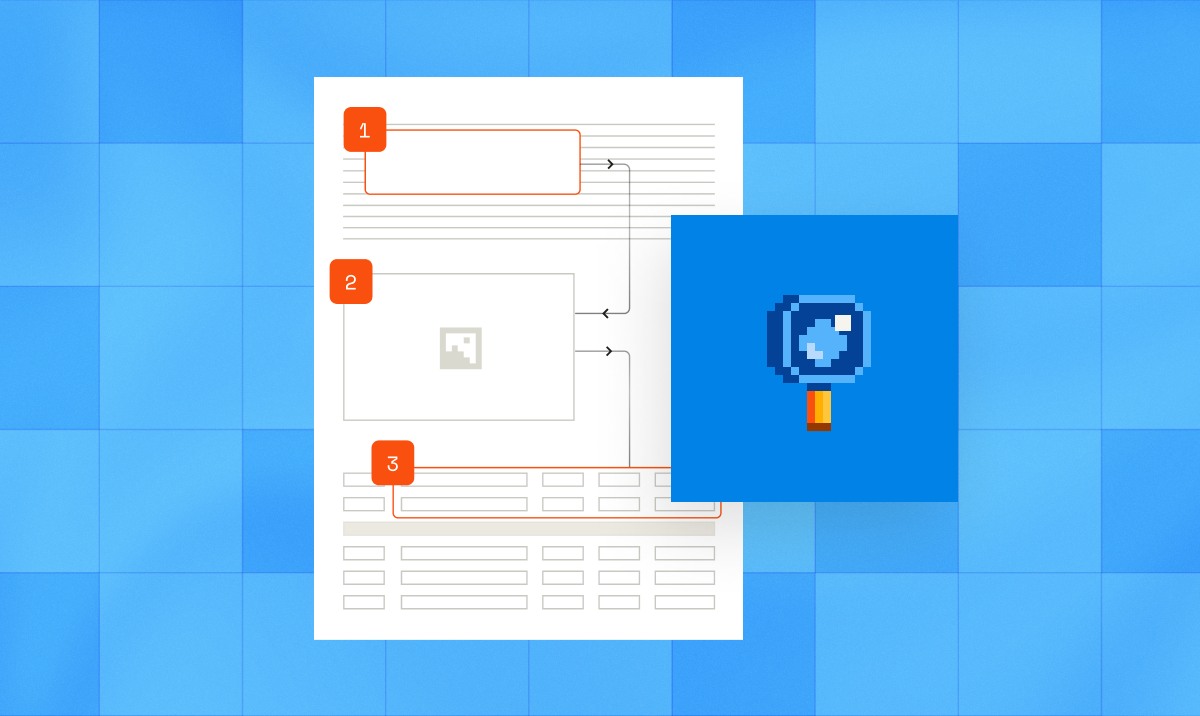
Mistral’s release illustrates this with a question about monthly US defense expenditures in 1953. A one-shot retrieval attempt found material covering only part of the year. A navigation-enabled trajectory reached a Treasury Bulletin table containing all twelve months. The useful change was access to the complete source, not a longer explanation of an incomplete one.
Separate iteration from navigation in the results
Mistral evaluated the system with its Medium 3.5 model and Z.ai’s GLM-5.2 on FinanceBench and OfficeQA Pro. The comparison separates one-shot retrieval, a search-only loop and a loop with navigation. That structure matters because it shows that much of the improvement comes before the additional navigation tools.
On FinanceBench, the company reports that moving to iterative search adds 47.3 percentage points for Medium 3.5 and 52.6 points for GLM-5.2. Navigation adds another 8.7 and 6.7 points, respectively. FinanceBench covers 150 questions across 368 SEC filings; answers were assessed by an AI judge calibrated against human labels.
Compared with the search-only loop, the full navigation loop used 23.9% fewer tokens for Medium 3.5 and 33.7% fewer for GLM-5.2. The release also reports a p90 latency change from 255 seconds to 154 seconds. These results support a narrower claim than “agents make search faster”: more precise actions can reduce the retries of an already iterative agent.
The harder corpus still leaves many questions unanswered
OfficeQA Pro tests numerical questions in scanned, table-heavy Treasury Bulletins. Mistral reports 51.9% accuracy for GLM-5.2 with the full loop, versus 6.3% with one-shot retrieval. The increase is large, and almost half the questions remain unsolved. That is an argument for inspecting actual failures alongside the aggregate gain.
These are company-run evaluations on two document collections using a particular tooling configuration. They do not establish that navigation helps every search workload. Mistral itself describes short, predictable lookups and high-volume passage searches as cases where indexed retrieval may be sufficient.
The release offers a practical intervention between buying a stronger model and rebuilding an entire corpus. Give the current model a way to inspect evidence, then measure whether that reduces retries and improves verified answers. For agents working through dense technical or business records, the costliest limitation may be the inability to move to the next page.
Questions, news tips or corrections? Contact [email protected].