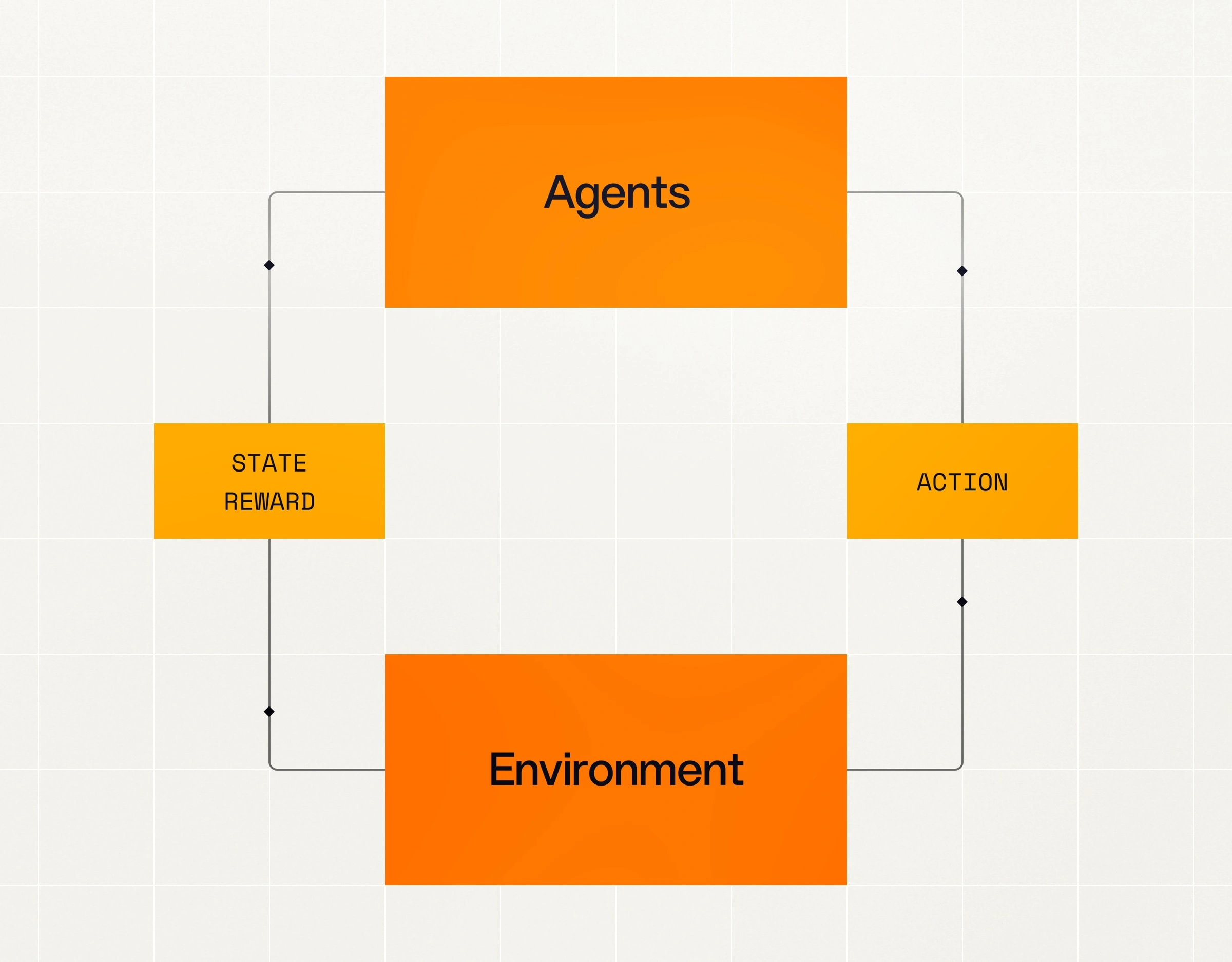
An AI training run can produce plausible answers, keep its GPUs busy and still learn from the wrong numbers. Reinforcement learning depends on a close relationship between the model generating experience and the system updating its weights. Separate software stacks can disturb that relationship even when both load the same checkpoint.
What Fireworks released on August 31
Fireworks made its Training API and Fireworks Lab generally available on August 31, 2026. Researchers can write their own training loop in Python, defining the loss, rewards, data and environment. Fireworks runs the distributed trainer and the deployment that generates training samples, or rollouts.
The API sits alongside managed training and an embedded engineering service. Serverless training uses LoRA adapters on shared capacity with token-based billing. Dedicated capacity supports full-parameter training and broader configuration choices, with GPU-hour billing; it requires consultation and provisioning. Those are materially different operating models, rather than one unrestricted self-service offering.
Identical weights can take different paths
Fireworks’ September 30 technical account explains why this integration reaches beyond convenience. Training and inference may use different numerical precision, kernels or parallel execution. Floating-point arithmetic can yield different results depending on how operations are arranged. In a mixture-of-experts model, a small difference can even change which expert processes a token.
Fireworks says it aligns numerical formats and underlying implementations across training and rollout. For supported mixture-of-experts models, Router Replay preserves expert selections between the rollout and backward pass. It also uses batch-invariant kernels and deterministic reductions. The company checks alignment by running identical sequences through both systems and measuring divergence between their predicted token distributions.
That offers a useful diagnostic distinction. A disappointing reward curve may reflect bad examples or an inadequate objective. It may also reflect two implementations disagreeing about the policy being trained. Buying more samples does not, by itself, tell those explanations apart.
The next batch need not wait for the last update
Generation is another expensive part of the loop. Some trajectories end quickly; others keep running while hardware waits. Fireworks supports asynchronous reinforcement learning, allowing rollout generation to overlap with training. Greater overlap can mean collecting experience with slightly older weights, so acceptable staleness remains an algorithmic choice.
Updated weights are hot-loaded into the running rollout deployment. For full-parameter checkpoints, Fireworks describes transmitting compressed differences between old and new weights, using XOR and zstd. It reports up to a tenfold reduction in transmission bandwidth. That is a transfer claim, not a tenfold reduction in complete training time.
The two mechanisms address different delays: overlap reduces waiting between stages, while smaller transfers reduce the cost of joining them back together. Their value depends on which stage actually holds up a particular run.
The learning strategy remains the customer’s job
Fireworks cites customers using specialization for legal work, clinical transcription and coding. These are vendor-reported examples with different objectives and baselines. They establish plausible uses for the platform, rather than a common performance guarantee. Its claim that teams obtain two to four times as many iterations on a budget likewise needs workload-specific scrutiny.
A team evaluating the service can ask for a comparison with its existing loop: identical data, reward and evaluation, with time spent generating, synchronizing and updating recorded separately. Alignment measurements should accompany throughput. Faster experiments help only if the experiment still measures the intended change.
The release makes a previously scattered engineering responsibility purchasable: keeping learning and serving consistent as a model changes. That could let smaller teams attempt more specialized training. It also concentrates responsibility in the platform provider, whose numerical checks and recovery behavior become part of the evidence that a training result can be trusted.
References
Questions, news tips or corrections? Contact [email protected].