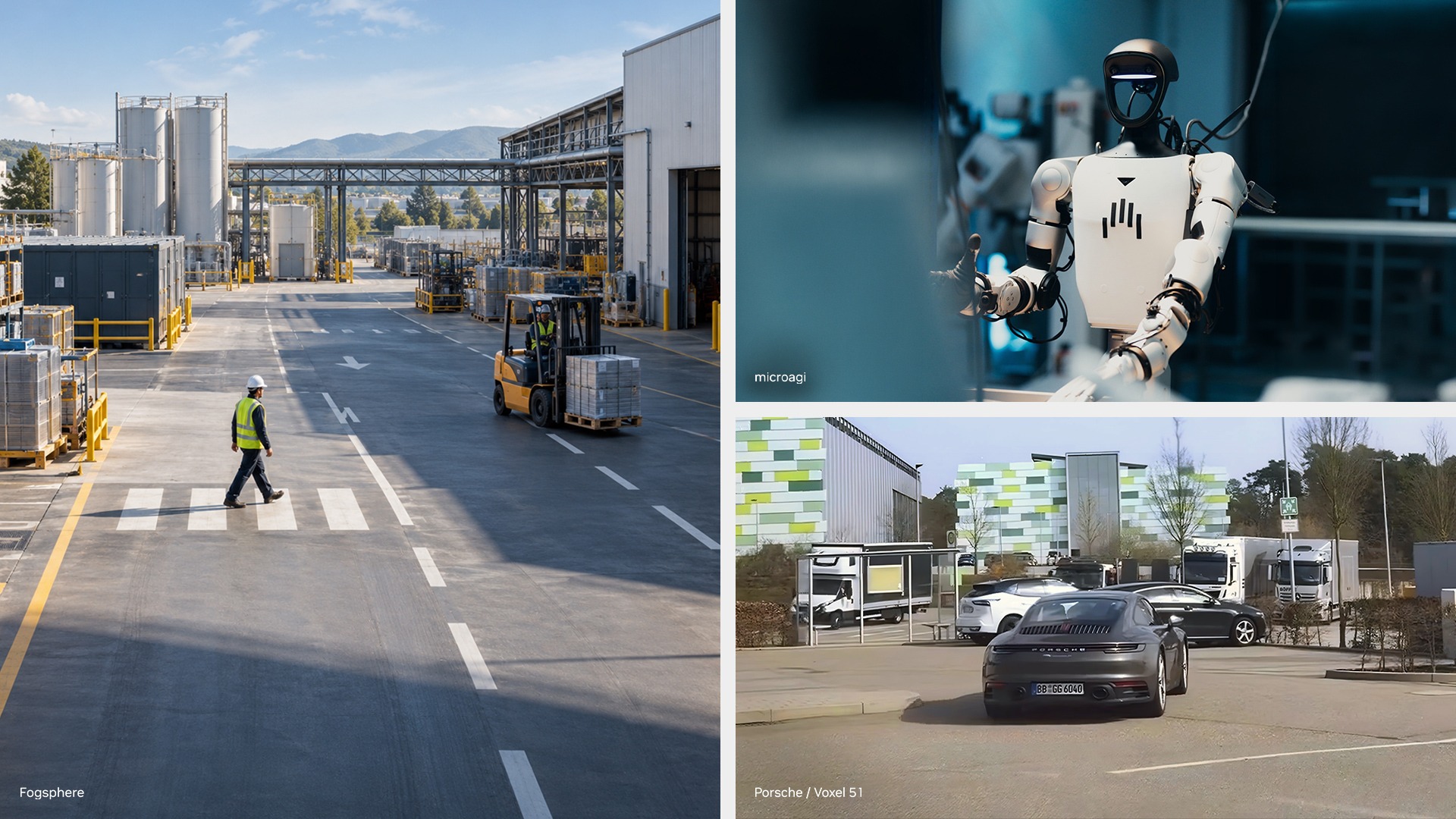
Rare events are often the most important cases for an inspection or autonomy system to recognize, yet they may be difficult or unsafe to collect repeatedly. Synthetic examples can expand a training set, but they can also teach a model shortcuts that do not survive contact with real environments.
NVIDIA’s October 21 Cosmos update adds data curation and generation workflows for physical AI. The announcement describes blueprints for driving data, image attributes, event videos, defects and video augmentation, alongside broader multimodal processing in Cosmos Curator. It names organizations using these tools and reports their results or expectations. Those accounts are supplied through the platform announcement, not independent evidence that every generated dataset improves a deployed system. Read the primary source.
Preserve the boundary between generated and observed
A synthetic spill or weather transformation is a training artifact, not a newly observed incident. Dataset records should preserve the original capture, transformation and validation history. A large count of generated clips is informative about pipeline output but says little by itself about false alarms or missed events.
Developers can investigate whether targeted generation fills a specific coverage gap. A rigorous comparison would hold out real examples of the target condition, compare real-only and augmented training under the same evaluation, and check whether other capabilities regress. Review should also reject physically implausible changes and labels that no longer match the transformed scene.
If validated carefully, these workflows could make rare-condition training more systematic and reduce dependence on staging hazardous situations. The decisive evidence is an improvement on independent real-world tests, with failure rates and domain limits reported. More synthetic data is useful only when it changes the behavior that matters.
References
Questions, news tips or corrections? Contact [email protected].