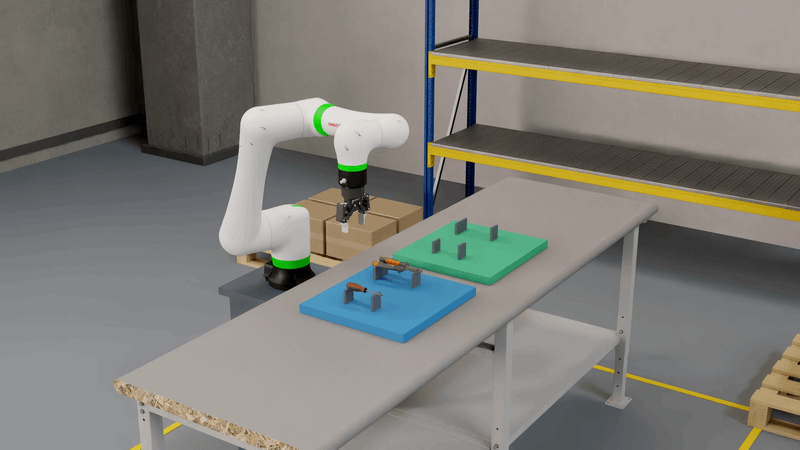
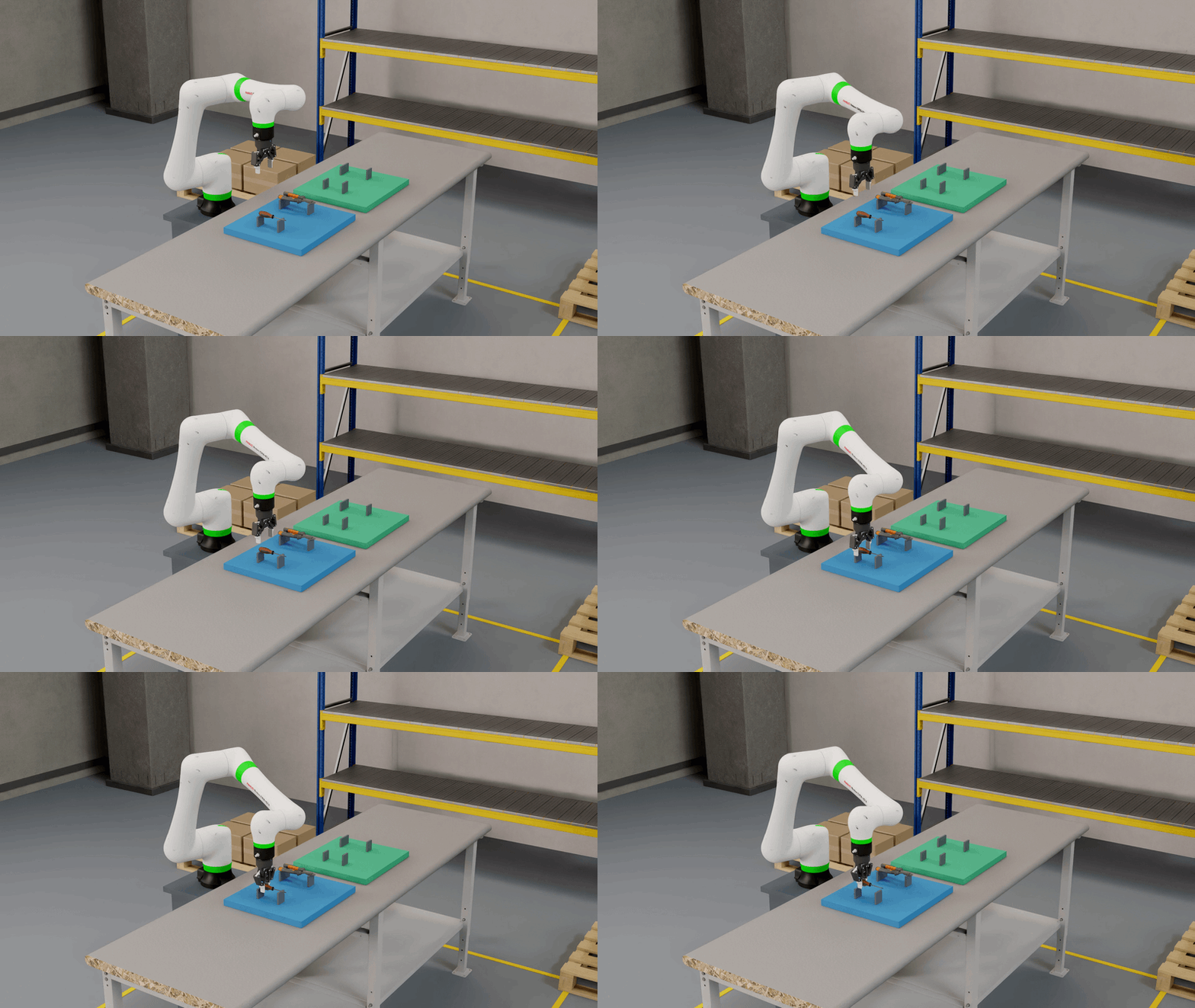
A warehouse scene can look convincing while teaching a robot the wrong lesson. Contact geometry, mass and friction influence whether a grasp or collision behaves plausibly. A realistic render does not establish that those physical assumptions match the task.
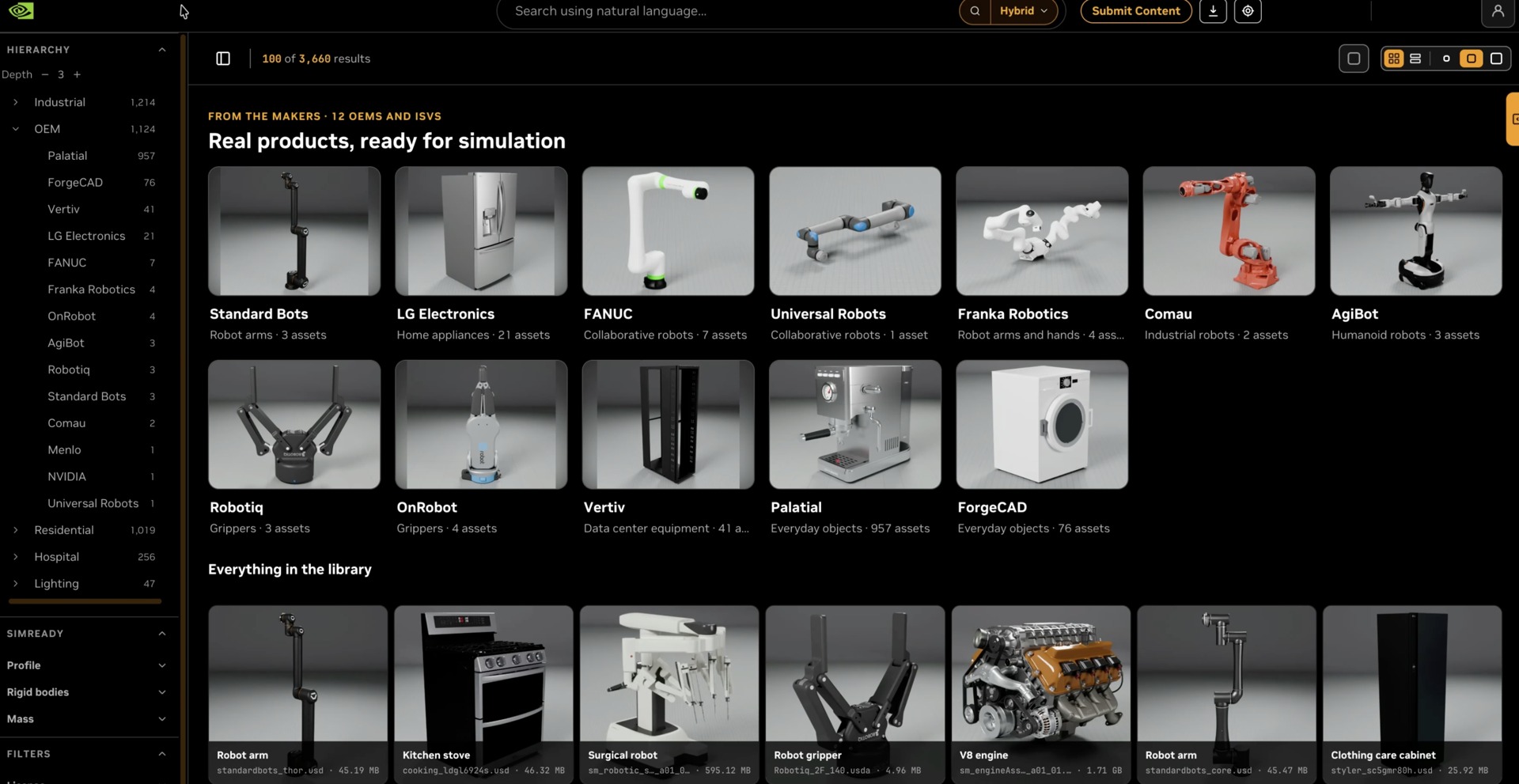
NVIDIA’s October 21 account of SimReady Central describes a library of more than 2,000 OpenUSD assets on Hugging Face. Profiles identify properties needed for particular workflows, including physical behavior, articulation and semantic labels. The release includes equipment from participating manufacturers and tools for preparing and validating assets.
Read the original source and its reported conditions.
A profile is a useful contract
Declaring what an asset supports makes missing information easier to detect. It does not mean every asset supports every sensor, simulator or contact model. A team should check the profile relevant to its task before treating the object as a drop-in component.
Reproducibility also requires the scene-building instructions, asset versions and runtime configuration. If a later asset revision changes collision geometry, an apparent improvement in a policy may partly reflect a different environment. Keeping those revisions alongside the experiment helps distinguish the two.
Test transfer against the physical task
The immediate benefit is less repeated preparation work when building training and evaluation scenes. The harder question is how errors in those scenes affect behavior outside simulation. A useful validation set deliberately varies the properties that the robot depends on and then checks representative physical cases.
The library can make simulation inputs more inspectable. Its value for deployment will depend on whether teams preserve and challenge the assumptions in those inputs, rather than interpreting a successful virtual demonstration as proof of real-world reliability.
References
Questions, news tips or corrections? Contact [email protected].