A classification system needs a decision and an escalation rule, rather than a long explanation for every routine case. Removing prose generation can change the serving cost, but the remaining input processing and the reliability of the score still determine whether automation is worthwhile.
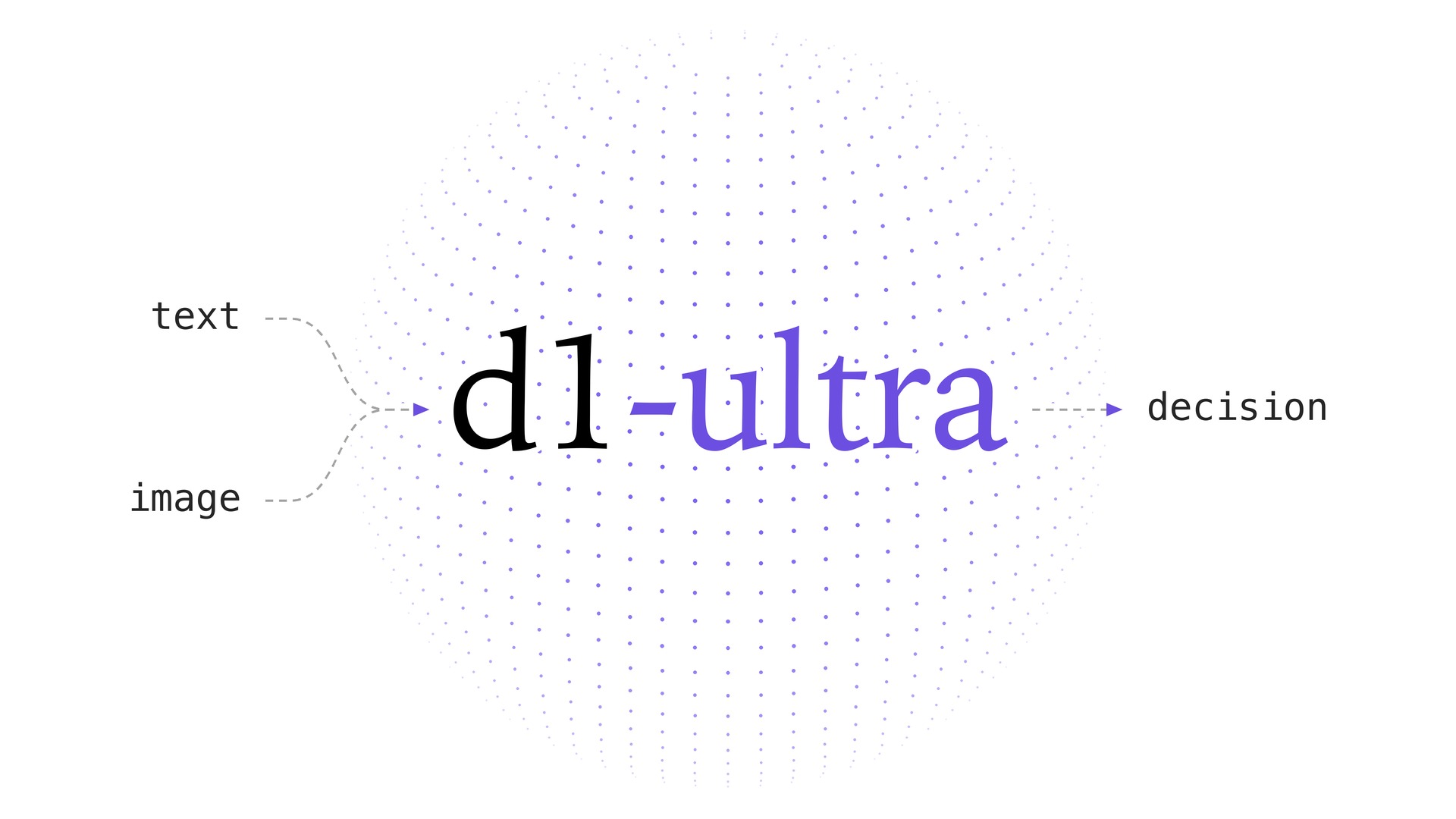
Liquid AI’s October 15 d1-ultra announcement describes a multimodal decision model that reads text and images and returns probabilities in a forward pass. The developer reports evaluation gains over its earlier model and comparison systems, with explicit attention to calibration. It bills input tokens rather than generated output and states that each question is billed as its own prompt, including the supplied media. These are launch specifications and developer-reported results. Read the primary source.
Count the complete decision workload
An application asking several questions about one image should not assume the image is charged only once. The number of fields, media dimensions and fallback behavior affect the total. Similarly, a well-calibrated average score may conceal weaknesses in a rare but consequential class.
A practical test should compare accuracy, calibration and abstention on reviewed cases from the intended environment. The evaluation can then set thresholds according to the cost of a wrong automatic decision and the capacity available for human review. It should include poor images, unfamiliar categories and inputs with insufficient evidence.
Decision APIs could simplify a class of high-volume workflows if bounded outputs remain reliable and the economics hold at production volume. The immediate opportunity is to measure that trade-off, not to infer readiness from an aggregate leaderboard. Sustained results on changing inputs will determine how much of the advertised efficiency becomes usable capacity.
References
Questions, news tips or corrections? Contact [email protected].