Human hands appear throughout the videos robotics companies want to learn from. Robot hands often have different geometry, sensing and control. That mismatch creates work between watching a useful action and reproducing it. Genesis AI’s GENE-26.5 announcement approaches the problem by changing the model’s physical and data interfaces together, rather than assuming a larger video collection will solve the translation on its own.
The company announced GENE-26.5 on May 6, 2026. It remains a distinct foundation-model story from Genesis’s later Eno robot and its Genesis World simulation platform.
A model launch with a hand-and-glove system alongside it
Genesis introduced GENE-26.5 with dexterous-hand and glove-based data-collection components. The company says matching the human hand, instrumented glove and robot hand makes captured skill easier to transfer. Tactile sensing adds information that ordinary video does not directly expose.
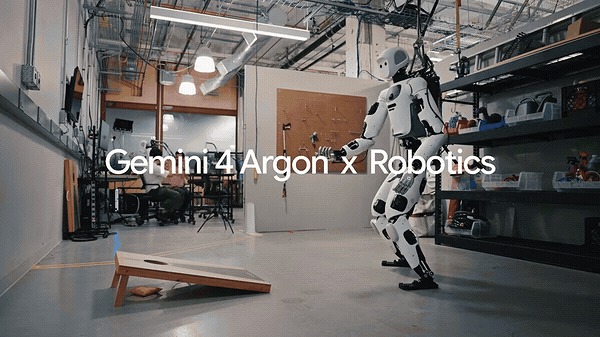
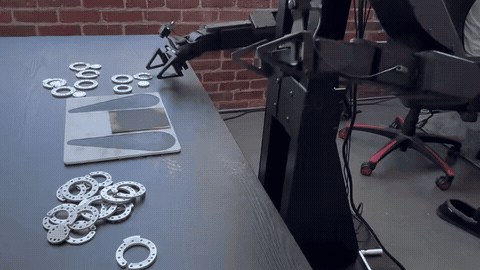
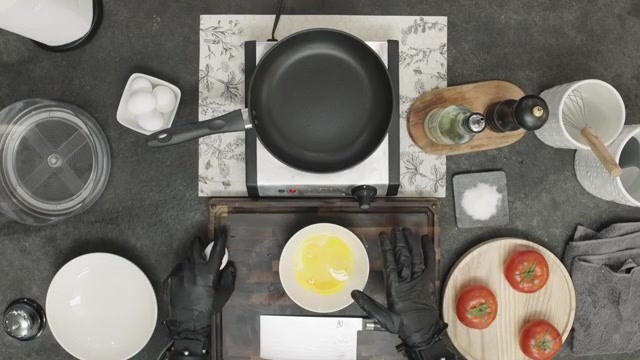
Its official film presents manipulation ranging from meal preparation to laboratory work, wire handling and cube solving. These are company demonstrations. The release’s descriptions of human-level capability do not provide an independently measured probability that the robot will repeat every task successfully.
The valuable architectural idea is more specific than that promotional claim: the physical interface can make training evidence easier to use. A data strategy includes how the demonstration is measured and which machine is expected to execute it.
A familiar shape can reduce one translation burden
A human demonstration contains intention, motion and contact. Even if a model recognises the intended outcome, a different hand may need another grasp, force pattern or approach. Similar proportions can simplify parts of that mapping. Instrumentation can capture more of what happened during the interaction.
It does not follow that the mapping becomes exact in every useful sense. Motors, compliance, friction and sensing can differ even when two hands look alike. Genesis’s stated one-to-one correspondence is therefore best understood as a design objective and company claim, rather than proof that the embodiment gap has disappeared.
The question for a customer is whether this interface reduces the amount of robot-specific collection and adjustment required for the next task. That outcome is more operationally informative than simply comparing the number of human videos available to competing models.
Eno is the body; GENE is the model
Genesis introduced Eno on June 16. The robot combines a wheeled base, articulated panels that change its height and reach, and dexterous hands. The company says GENE will provide the intelligence. Its announcement planned targeted industrial customer deployments by the end of 2026; it did not report that those deployments had already happened.
This separation prevents a misleading mental picture of the May model release. GENE-26.5 was not the announcement of an already shipping general-purpose Eno fleet. The later platform also shows that human-compatible manipulation does not require a fully human-shaped body.
The hands can be designed around access to human skills while locomotion is designed around the environments the product should enter. Those are related engineering decisions, but they need not have the same answer.
Genesis World is infrastructure, not another name for the policy
The company-supported Genesis World repository describes a simulation platform combining physics, rendering and a cross-platform compiler. It distinguishes its academic origins from the company’s support and cites a May 2026 company update. Its source is Apache-licensed; that does not make the GENE model weights open.
Simulation provides a place to test contacts, scenes and control changes repeatedly. It can accelerate development without establishing that every simulated result transfers to hardware. The model, the explicit simulator and the commercial robot are separate artifacts with separate evidence requirements.
Keeping their names straight matters when assessing access. A developer able to install Genesis World has not thereby obtained GENE-26.5 or an Eno robot. Open infrastructure can coexist with a proprietary model and a controlled hardware rollout.
The useful advantage would appear in the next skill
Genesis’s launch film demonstrates breadth, while its press release describes a strategy for expanding the supply of usable human experience. The stronger test follows a new skill through that system: what is captured, what robot data is added, what changes in training and how consistently the result executes.
If aligned hardware and richer capture reduce that work, they create an advantage before any increase in model size. The hand becomes part of the learning interface. GENE-26.5 is worth following for that integrated bet, while claims about universal dexterity still need repeatable task evidence beyond the company’s selected demonstrations.
References
Questions, news tips or corrections? Contact [email protected].