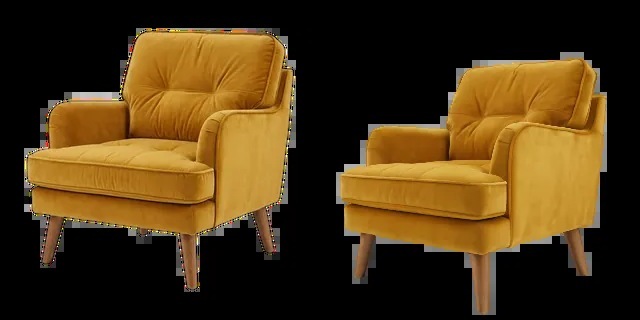
A photograph gives a model evidence about one view of an object. A turnable digital asset needs something to show when the viewer moves behind it. The missing surface must therefore be inferred rather than recovered from an observation that never existed. That distinction matters when single-image generation moves from an appealing demonstration into design, visualization or a pipeline that expects a faithful representation of a real item.
SperidLabs’ Idol release turns one input image into a three-dimensional Gaussian splat and exports a standard .ply file. The model card provides weights, an inference SDK and examples, with a core model of roughly 0.66 billion parameters. It reports peak pipeline memory of 7.2GB. The released system includes background removal and camera prediction, so the model’s parameter count and the complete request’s resource requirements describe different parts of the process. Read the primary source account.
An asset includes more than the denoiser
The card identifies external image encoders, including gated DINOv3 and FLUX.2 components whose terms must be accepted separately. A permissive license on Idol’s own release does not make those dependencies disappear. Teams evaluating practical accessibility should inspect the whole chain: the weights, preprocessing, encoders, inference implementation and resulting file. That is a deployment question as well as a licensing question, because access to one missing component can prevent the first run.
The pipeline saves the processed input and a predicted camera alongside the splat. Those records help explain what the system actually saw. Background removal or framing can alter the information presented to the generator, especially for a photograph with shadows, occlusion or several nearby objects. Keeping the intermediate image makes a failed result easier to diagnose without assuming the error originated in the same stage on every example.
Request time needs a hardware label
Idol’s card reports 6.8 seconds in an H100 comparison at fifty sampling steps and 262,144 Gaussians. Its separate hardware table reports substantially different request times on consumer GPUs. These are developer measurements, with settings that should travel with the numbers. The phrase consumer-compatible describes accessibility, not a promise that every consumer machine reproduces a data-centre timing. First-run compilation also needs separate treatment when comparing interactive use with a warmed process.
Users can vary the number of Gaussians and the sampling steps. More representational detail is not automatically more faithful geometry: the unseen side remains inferred, however many elements represent it. A useful application test should therefore specify the intended viewing distance, acceptable artifacts and downstream operation. A small object preview, a close inspection and a manufacturing reference impose different requirements on the same output.
Different metrics reward different properties
The supplied comparison evaluates the input view and several new views against other image-to-three-dimensional methods. The results are informative within that harness, while they do not establish a universal ranking across objects or workflows. Similarity at the photographed viewpoint and plausibility from a new viewpoint are related but distinct objectives. A method can preserve visible appearance while inventing an incorrect back surface, or produce a coherent object that does not match the source closely enough.
That makes the intended use decisive. For a creative prototype, a plausible unseen surface may be a useful starting point. For an inventory record or an inspection decision, the same inference could be mistaken for evidence about the actual object. Applications should preserve the input photograph and identify the generated asset as a model output. A viewer should not have to infer whether a particular surface was observed or synthesized.
The exported representation also matters to integration. A Gaussian splat is a rendering-oriented asset, so a downstream workflow should verify what its viewer or editing tool can actually do with the file. Successful display does not establish that the output supplies a watertight surface or the dimensions required for another operation. A short end-to-end acceptance example—input, generated file, imported asset and intended use—would expose these practical constraints more clearly than a screenshot viewed only in the release’s own interface.
The near-term contribution is a downloadable, relatively modest-memory route from an image to a standard splat. It gives developers a concrete system to inspect and integrate, while leaving the complete dependency chain and task-specific acceptance criteria visible. The longer-term value depends on whether generated assets remain useful after rendering, editing and export into real workflows. Multi-view checks against actual objects would strengthen the case for reconstruction uses; attractive single-image examples alone cannot settle that question.
Source organizations: SperidLabs.
References
Questions, news tips or corrections? Contact [email protected].