Task specialization usually focuses on training examples and model weights. The way those examples are split into tokens can also determine how much computation the application repeats. A fixed response format is especially important because the model writes its structure on every request.
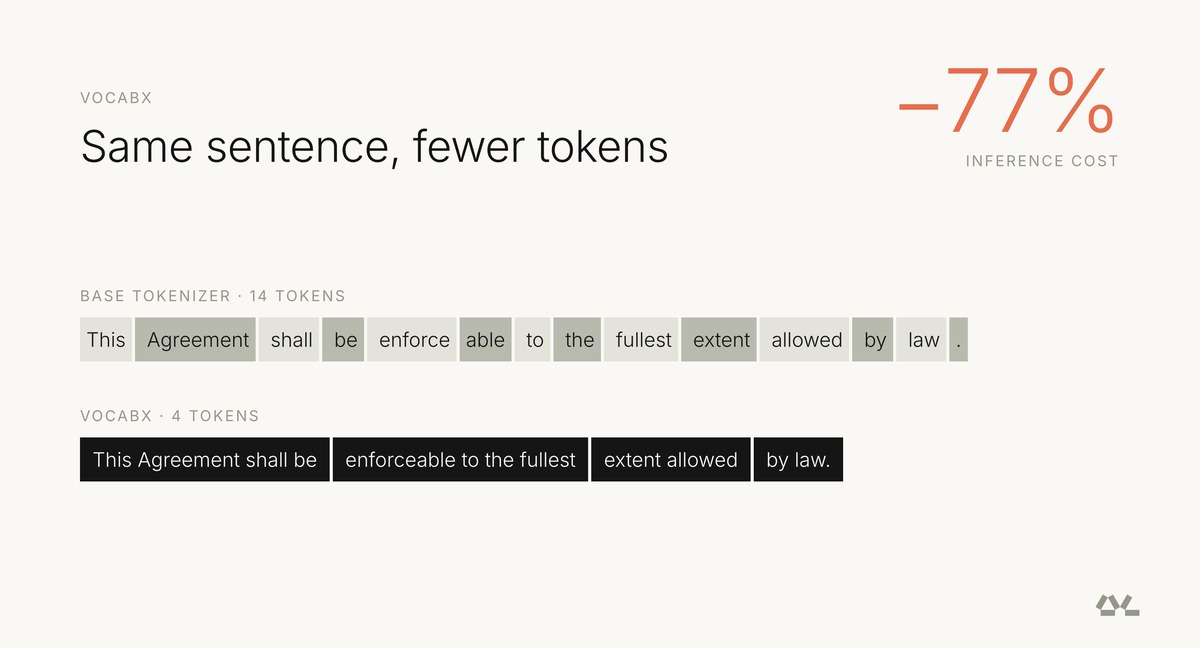
Dharma AI’s October 21 VocabX preview describes adapting a Qwen3-4B vocabulary for a Portuguese essay grader. The company reports a 77% measured inference-cost reduction on 500 requests using an RTX 5090 and vLLM. The comparison keeps the base model and training recipe fixed; the full paper is still pending.
Read the original source and its reported conditions.
Compress the structure without hiding the decision
VocabX prioritizes tokens according to serving cost and combines subword changes with repeated multiword spans. The authors also describe a failed design: merging a grade into surrounding JSON reduced quality. Separating the grade restored a more useful balance between compact output and the task’s actual decision.
That failure is as informative as the headline saving. Data preparation can accidentally couple a meaningful prediction to a convenient text template. Tests should therefore inspect the decisions inside the structured response, not merely confirm that the response parses.
Treat the result as workload-specific
A specialized vocabulary creates new dependencies between training, tokenization and serving. A deployment must keep the matching components together and evaluate unusual inputs that fall outside the common format. Savings on a repetitive grader do not predict savings on open-ended conversation.
The next useful evidence is the full method and independent reproduction across workloads. For now, the case provides a concrete reason to measure input and output token costs separately and to test whether compression preserves the information the application is supposed to produce.
References
Questions, news tips or corrections? Contact [email protected].