A model can give a poor answer because it reasoned badly, because a tool returned the wrong information or because the application supplied incomplete context. An evaluation that sees only the final response has difficulty separating those causes. Better traces can make the next corrective action more specific.
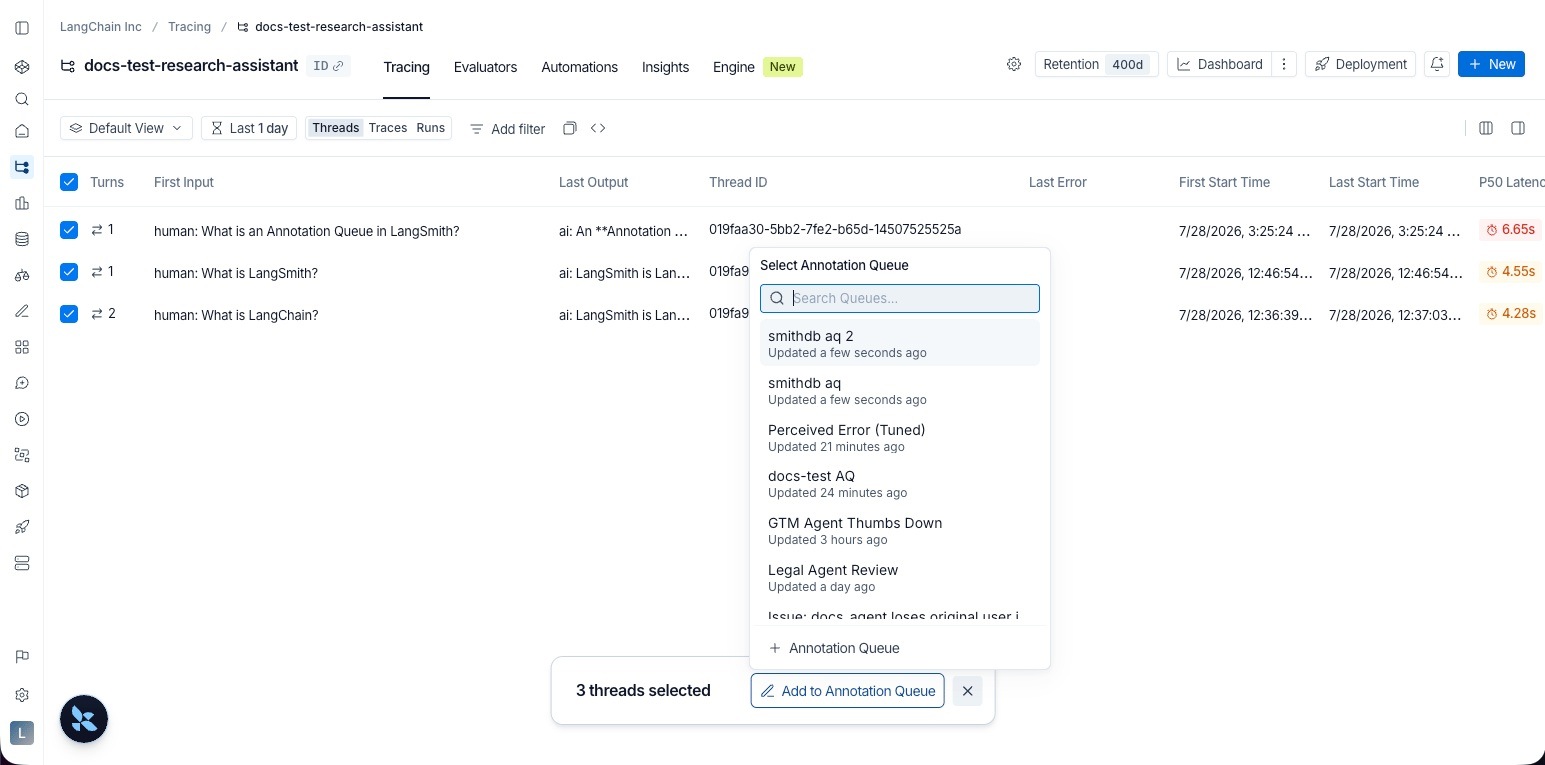
Braintrust’s October changelog adds MCP tracing in Python SDK 0.49.1 and TypeScript SDK 3.42.0 or later. The company lists tool calls, prompt requests, resource reads and server notifications among the captured interactions. Its Python SDK also traces outgoing MCP client requests and propagates trace context between clients and servers. This is an observability product update; it does not by itself provide a new measure of model quality. Read the primary source account.
Connect the failure to its cause
Our analysis is that context propagation is useful when it preserves the relationship between an agent decision and the external operation that followed. A failed task may contain several individually successful calls. Seeing their order and connection can reveal whether the agent requested the wrong resource, received an unsuitable result or failed to use a correct result.
That record can support a more targeted evaluation example. Instead of assigning one broad failure label to the whole conversation, a reviewer can identify the interaction that needs a regression check. The resulting test is useful only if it preserves enough surrounding context to reproduce the problem without embedding unrelated or sensitive material unnecessarily.
More captured events do not automatically produce better judgments. Teams still need to define what a successful interaction means and distinguish expected tool errors from failures that should change the release decision. A complete-looking trace can also be misleading if an important component has not been instrumented.
Turn observability into evaluation material
The immediate change is broader visibility into supported MCP interactions. A team adopting the SDK versions can check whether requests remain connected across its actual client-server arrangement. That is a practical prerequisite for using the traces to investigate failures rather than simply accumulating more logs.
Longer term, consistent traces could make evaluation datasets more representative of how agents fail in use. They can connect an observed issue to a specific task, tool boundary and expected correction. The dependency is a deliberate review process: recording an interaction is not the same as validating it.
The next useful evidence is a known failing workflow whose complete trace can be followed, turned into a bounded evaluation case and used to verify a fix. That chain would demonstrate the update’s operational value more clearly than event volume alone.
Source organizations: Braintrust.
References
Questions, news tips or corrections? Contact [email protected].